
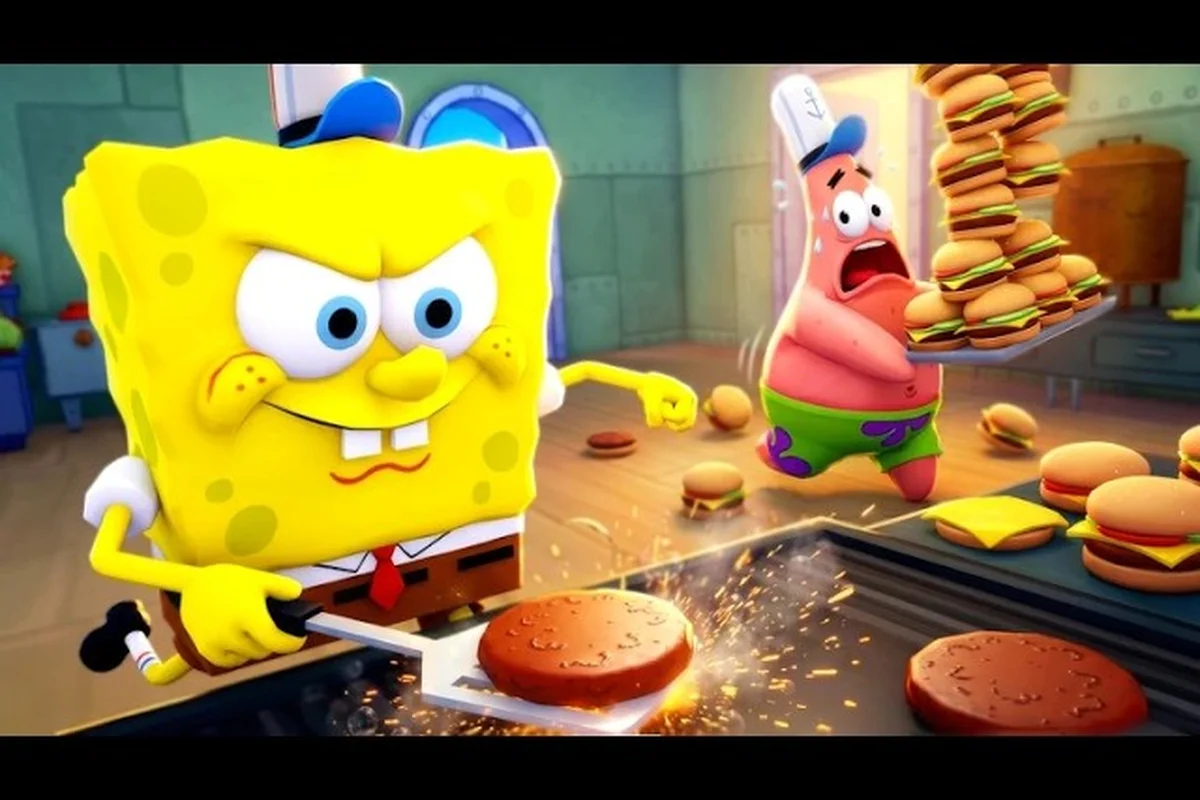
Public-server coordination matters because a four-person crew can complete more orders, recover from mistakes, and earn larger rewards. This Save the Krusty Krab public server guide explains the practical limits, role habits, revive options, and communication patterns that make random groups work smoothly.
Public Server Size and Crew Capacity
A public match works best when players accept one simple rule: coverage beats crowding. More workers can increase output only if each station has a clear owner and the kitchen does not become a bottleneck. Before taking a role, check which stations are occupied, watch the current order flow, and ask what the crew needs before choosing a task.
| Public-server factor | Practical expectation | Best response |
|---|---|---|
| Four-player crew | Community reports describe coordinated four-player sessions | Divide into grill, order, counter, and support roles |
| Partial crew | Fewer players can still function with careful task sharing | Avoid letting one station remain unattended |
| Full stations | Extra workers create duplicate actions and confusion | Rotate, rescue, or perform support duties |
| Early match | Orders may arrive faster than role assignments settle | Name one temporary coordinator |
| Busy rush | Station switching can leave gaps | Finish the current order before moving |
| Late cleanup | Some stations appear finished but still need attention | Confirm with the player closest to that area |
The exact Save the Krusty Krab max players value should be treated cautiously. The supplied community field notes confirm coordinated four-player sessions, but they do not establish a stable, official server cap. That distinction matters because a crowded server can still function like a small team when everyone has a defined responsibility.
Choosing a Role Before the Rush
Random matchmaking should not mean random behavior. As soon as the lobby loads, compare the available characters and select the station that others are not covering. If you choose the grill, commit to patties and cleanliness. If you take orders, remain available for clear requests. If you handle the counter, watch for arriving customers and payment prompts.
| Your station | Primary responsibility | Useful signal | Common failure |
|---|---|---|---|
| Grill | Prepare and flip patties | “Need another patty” | Leaving cooked food unattended |
| Order station | Receive and organize requests | “Order posted” | Repeating the wrong request |
| Counter | Serve customers and collect payment | “Customer ready” | Ignoring the front of the kitchen |
| Cleanup | Remove mess and clear hazards | “I’ll clean” | Wandering without a declared task |
| Flexible support | Fill short-term gaps | “I can cover orders” | Changing roles every few seconds |
When the team is still learning, the Save the Krusty Krab beginner guide can help with individual stations. The multiplayer addition is communication: announce your task, finish it, and then check the kitchen instead of taking control of another station without warning.
Handling an Overcrowded Kitchen
An extra player should create redundancy, not a traffic jam. A useful rule is to claim one of three types of coverage: primary station, named backup, or task runner. Avoid making several people responsible for the same station, because each may assume someone else is handling the order or customer.
-
Identify the stations with active orders.
-
Name the player responsible for each critical task.
-
Keep one person mobile when possible.
-
Ask before taking over a station.
-
Rotate only after the current order is resolved.
These habits work because a four-person match has enough hands to prevent narrow bottlenecks, even when the kitchen becomes crowded. For example, if one player handles the fryer while another takes orders, a third can serve completed dishes and the fourth can collect or revive teammates, reducing the risk that every station stalls at once. This shared structure also gives Save the Krusty Krab random teammates a simple way to coordinate without requiring formal voice chat or constant text messages.
Random Teammates and Communication Signals
Good communication should be short, timely, and connected to an action. “Sorry” does not repair a missed order, while “I’ll cover orders, please send grill to counter” tells the crew what will happen next. A public server is usually a temporary team, so the fastest workable signal is the one every player can understand.
| Signal | Meaning | When to use it |
|---|---|---|
| “Station clear” | No work is needed at that station | Before rotating |
| “Need patties” | The grill needs a specific ingredient | When another player can deliver |
| “Order ready” | Food can move to the counter | After preparation is complete |
| “Customer waiting” | Someone must serve promptly | During a rush |
| “Taking cleanup” | A task has been claimed | Before beginning cleanup |
| “Revive available” | Someone can recover a downed teammate | After checking the cause of the knockdown |
A Low-Message Communication System
Use three levels of communication, depending on urgency. Routine updates can be short. Directional requests should identify a task and a location. Emergency notices should immediately interrupt routine play, especially when a teammate is down or the kitchen is about to burn.
-
Routine: “Taking cleanup.”
-
Directional: “Need patties at the grill.”
-
Urgent: “Stop grilling, order is burning.”
This structure is especially useful when players are spread across a busy kitchen. It reduces the chance that everyone runs to the same station after hearing a single short message. The crew also gains a simple way to identify who has a task without repeatedly asking who is free.
Handling a New or Quiet Teammate
A quiet player may be focused, new to the game, or using voice chat that other players cannot hear. Do not label someone as unhelpful without checking. Offer a simple task, point to the relevant station, and observe whether they respond. If they perform the task, reinforce the callout; if they cannot, assign them a more straightforward backup duty.
The Save the Krusty Krab support class guide is useful for understanding which characters contribute indirectly, but the public-server test is practical. Can the player deliver items, clear messes, answer orders, or recover teammates? A capable player does not need to occupy the most visible station to make a meaningful contribution.
Preventing Misunderstandings
A duplicated order usually comes from two players accepting the same request without confirming ownership. Before starting a task, say who has it: “I have order three” or “I’m taking the mess.” This tiny confirmation prevents wasted motion and reduces accidental station swaps.
If a mistake occurs, focus on recovery. Example: “I dropped that patty; taking another.” Blaming a teammate does not stop the food loss, while a recovery message lets nearby players know whether help is needed. Random teams stay functional when mistakes remain low-stakes and visible.
Station Assignments for Four-Person Crews
The strongest four-player arrangement uses one person for each critical point of the service loop. The exact stations may vary, but responsibility should remain clear. SpongeBob’s automatic patty flipping, for example, can support the crew grill according to community field notes, allowing a player to focus on a different task without abandoning the cooking area completely.
| Crew role | Main focus | Secondary task | What to communicate |
|---|---|---|---|
| Cook | Grill and patty readiness | Check cooking condition | “Patties ready” or “Need ingredients” |
| Order handler | Read requests and organize preparation | Deliver finished food | “Order three ready” |
| Cashier | Serve customers and take payment | Check completed orders | “Customer waiting” |
| Floater | Clean, deliver, and cover short gaps | Revive teammates when possible | “Taking cleanup” |
This structure does not require everyone to change characters after the match begins. It requires everyone to understand the flow. A player at the counter may need an order from the order handler, who may need a patty from the cook, while the floater removes obstacles or assists wherever the delay appears.
When One Player Leaves
A four-player crew can absorb one departure if the remaining players redefine tasks. The cook can take orders only when the grill is safe, the cashier can still receive items, and the floater becomes the dedicated mover. Avoid pulling the cashier into grilling during a rush unless the front counter is genuinely clear.
| Available players | Recommended coverage | Main risk |
|---|---|---|
| Four | Cook, orders, counter, floater | Station overlap |
| Three | Cook, combined orders and counter, floater | Counter delay |
| Two | Cook, combined service and delivery | Missed orders |
| One | Prioritize the most immediate customer and order | Slow service and no recovery |
If you are still developing the fundamentals, the Save the Krusty Krab class level up guide can help with character progression. In a public match, however, level should not override communication: a lower-level teammate with clear instructions can still prevent a costly mistake.
When One Station Is Consistently Overworked
Watch the same failure twice before changing the entire formation. Maybe the order station is overloaded because the cashier keeps taking over it. Maybe the grill is neglected because the cook is chasing cleanup. Record what happens, then move one responsibility rather than replacing every assignment.
A good temporary fix is to name the bottleneck out loud: “I’m handling grill; nobody else needs to flip patties.” Keep the role narrowly defined for the current rush, then restore a balanced layout afterward so one player does not become the permanent grill specialist. For example, if the grill falls behind while the cashier repeatedly covers the order station, let the grill player own patties and orders without interruption for two or three orders, then reassign the extra task. This prevents a useful temporary role from turning into permanent confusion, especially when random teammates join the public server.
Reviving Teammates With Gary
Revive systems are most valuable in multiplayer because one mistake does not have to end another player’s participation. Community field notes specifically identify Gary’s magic conch as a means of reviving a downed teammate. This is the clearest documented Gary revive ability in the supplied data, making Gary more than a decorative character in a four-player session.
| Revive scenario | Best response | Why it matters |
|---|---|---|
| Teammate downed away from danger | Gary uses the magic conch | Restores a player without ending their run |
| Teammate downed near active hazards | Clear the area first | Prevents an immediate repeat knockdown |
| Two teammates downed | Prioritize the one in the safest reachable spot | Protects Gary’s positioning and improves success odds |
| Gary unavailable | Other players provide cover or handle the objective | Limits the impact of a missing revival tool |
| Revive causes a delay | Assign a floater to cover stations | Prevents the rescue from creating a wider queue |
The Save the Krusty Krab Gary revive ability should be treated as a team resource rather than a personal panic button. If Gary is the only player capable of reviving teammates, the crew may need to protect that character while the rest of the team handles urgent orders. A short message—“Gary down, cover the kitchen”—tells everyone why the formation changed.
Reviving Without Ruining the Shift
Do not revive during a moment when the rest of the kitchen is unprotected if that creates a larger failure. First identify the immediate threat: a burning order, an unattended customer, a hazard, or another incoming order. Once the area is stable, move toward the downed teammate and use Gary’s magic conch.
The Save the Krusty Krab revive teammates process is especially valuable when a random group lacks a dedicated support player. If Gary is on the crew, another teammate can cover the grill or counter during the recovery attempt. This is why a four-person crew often has more resilience than a smaller team, provided its members communicate.
When Revival Is Not the Best Task
Sometimes reviving a teammate is less urgent than preventing a complete station collapse. A player should not cross a dangerous kitchen if doing so will leave several customers waiting. In that case, clear the immediate hazard, stabilize the situation, and approach the downed teammate when the route is safe.
This is also a good reason to avoid permanent formation changes based on one event. A temporary rescue may be necessary, but the crew should return to its normal station plan afterward. For longer progression goals, the Save the Krusty Krab day guide can help separate match play from daily objectives without making the public match harder than it needs to be.
Kicking Players and Managing Public Lobbies
Player management is a last resort in a Save the Krusty Krab public server. Because matched players are usually temporary teammates, kicking someone for a minor disagreement can leave the kitchen understaffed. Use removal only for behavior that clearly harms the session, such as deliberate interference, persistent abusive communication, or repeated refusal to contribute while blocking others.
| Situation | Better first step | When removal may be appropriate |
|---|---|---|
| Player is confused | Send a station and simple task | If they repeatedly ignore directions |
| Player is quiet | Assign a visible task | If behavior becomes disruptive |
| Player makes mistakes | Explain the correct step | If mistakes become deliberate obstruction |
| Player is AFK | Ask remaining players to cover | If the player repeatedly returns and blocks tasks |
| Player is disruptive | State that behavior is stopping play | If the behavior continues after a clear warning |
Before Using the Kick Option
Try a direct message first. Explain the problem, identify the impact, and state the expected change. For example, “Please stop taking completed orders; it slows the counter.” A specific correction is more useful than “Stop being bad,” and it gives the player a fair chance to adjust.
When Save the Krusty Krab how to kick players controls are available to the party leader or host, use them as an administrative tool rather than a way to settle every disagreement. A removed player takes one set of hands with them, so kicking a weak helper may reduce completion quality more than retaining them with a clear task.
Setting Expectations Early
At the beginning of a random match, agree on two basic standards: answer callouts, and do not take another player’s active task without asking. These are easier to enforce than a long list of rules. The Save the Krusty Krab public server guide should therefore prioritize communication over punishment.
If a player continues interfering after one correction, another player can report the behavior to the host. Keep messages factual: what the player did, when it happened, and how it affected the crew. This is more effective than escalating over minor mistakes and turning the match into a social conflict.
What to Do After Kicking a Griefer
When the roster shrinks, immediately reorganize. The remaining players should combine orders and counter duties, keep the cook focused, and use the floater for cleanup and delivery. Avoid leaving the front counter unmanned simply because one visible station needs help. A smaller crew succeeds by reducing task overlap, not by rushing every station at once.
The supplied community data does not provide a verified official kick procedure, player limit, or exact moderation policy. Avoid presenting interface-specific claims as permanent facts. If controls move between updates, confirm them in the current lobby and favor host instructions over outdated advice.
Advanced Team Play and Match Recovery
Even coordinated crews can lose their rhythm when an order is missed, a teammate goes down, or several players switch stations at once. Advanced public-server play is about recovering without blaming and without duplicating work. The crew should recognize the failure, assign one response, and return to normal service.
Diagnose the Bottleneck Instead of Blaming a Role
A delayed order may be caused by preparation, delivery, service, or cleanup. Ask where the item stopped moving rather than assuming the cook forgot. If the patty was ready but the order handler did not know, improve the handoff signal. If the counter was occupied with payment, ask the floater to stage completed orders nearby.
| Symptom | Likely coordination gap | Quick correction |
|---|---|---|
| Patties accumulate | No one is receiving finished food | Assign a delivery pickup |
| Orders remain idle | Cook and order handler are disconnected | Repeat requests with location |
| Customers wait at the counter | Cashier is chasing another task | Clear and protect the counter |
| Mess slows every station | Cleanup has no owner | Name a dedicated floater |
| Several orders are repeated | Ownership is unclear | Announce who has each order |
This diagnostic approach prevents a common error: rearranging the entire crew whenever one task fails. Make the smallest correction that restores the flow instead—for example, assign a floater to carry one ready Krabby Patty from the grill to the order handler before changing the cook’s position. That keeps prep, delivery, service, and cleanup responsibilities intact while testing the suspected handoff. If orders still stall after that change, inspect the next layer, such as a blocked counter or an ambiguous order announcement, rather than adding more announcements that can overlap with existing calls.
Build a Two-Person Rescue Plan
The minimum effective rescue plan identifies who acts, who covers, and who confirms completion. Gary handles the revival while a teammate covers the exposed station. Another teammate clears the surrounding path. Once Gary returns, the floater resumes mobile duties. Each person should understand their role before the emergency occurs.
This plan is easy to remember because it assigns one clear job to each rescuer: Gary uses his revive ability, the Shield watches the exposed station, the Clearer handles nearby hazards, and the Checker verifies that the revived player is mobile again. For example, if Gary’s station is crowded, the Shield should take over only the safe duties while the Clearer moves hazards out of range; the Checker then confirms the revival before the floater resumes work, preventing a second emergency.
-
Actor: Gary, or the designated revival character.
-
Shield: The teammate whose station can be covered safely.
-
Clearer: The player who removes nearby hazards.
-
Checker: The teammate who confirms that the downed player is back.
Treat the two-person rescue plan as a fallback, not a rigid script for every small mistake on the Save the Krusty Krab public server. For example, if Gary’s revive is delayed by a crowded station, the Shield can safely cover the exposed station while the Clearer removes nearby hazards, then the Checker verifies Gary’s return. If the emergency resolves before full coordination is needed, avoid interrupting normal station coverage; the plan should activate when coordination breaks down and revive teammates are actually required.
Use Community Data Carefully
The field notes support three practical conclusions: SpongeBob’s automatic patty flipping can assist the grill, Mr. Krabs adds a reported 10 percent crew cash bonus at day settlement, and Gary’s magic conch can revive a teammate. They also report that crew bonuses can stack with the star rating, allowing a coordinated four-player session to produce a larger upgrade budget than comparable solo play.
Other exact values are not established. Community observations do not provide a reliable formula for the star rating, energy cap, customer patience timers, burn thresholds, daily customer growth, or villain schedules. Treat exact minutes and percentages outside the cited 10 percent report as unverified, and check the current game experience rather than assuming that every balance number remains fixed.
A gameplay example is available in this Save the Krusty Krab gameplay video by Gravy Live. It can provide visual context for public matches, but community videos should complement—not replace—careful testing of the current version.
Prepare for the Next Shift
The best crew leaves the kitchen better than it found it. At the end of a shift, confirm that customers are finished, orders are cleared, messes are removed, and important tools or ingredients are not misplaced. If the crew performed well, preserve the same role structure for the next match. If it struggled, identify one specific correction rather than blaming every teammate.
A final two-minute review can be very effective: glance over the restored order rail, active kitchen stations, and revive status, then flag any unfinished task before the next shift begins. For example, if Gary was revived while the fryer station was unattended, assign a player to cover that gap instead of letting the revived teammate wander; clear handoffs prevent one delayed station from cascading into missed orders during the next rush.
-
Check whether everyone had a clear responsibility.
-
Note the first station that fell behind.
-
Identify one missing or confusing signal.
-
Confirm that the revival plan was understood.
-
End with a clear plan for the next match.
The Save the Krusty Krab star-rating progression guide can provide broader context for later goals, but the immediate multiplayer advantage comes from clean handoffs, protected stations, and a crew that recovers from mistakes without creating new ones.
Frequently Asked Questions
How many players can join a Save the Krusty Krab public server?
The supplied community field notes confirm coordinated four-player sessions but do not provide a stable official player cap. Treat four as the clearest documented crew size, not necessarily the maximum server limit. When the lobby is fuller, assign specific stations and prevent several players from repeating the same task.
Can random teammates communicate without voice chat?
Yes. Short messages such as “taking cleanup,” “need patties,” and “customer waiting” cover most coordination needs. Name the task, identify its location when necessary, and reserve longer messages for emergencies. A four-person crew works best when everyone claims one responsibility.
Which character can revive teammates in a public match?
Community reports identify Gary’s magic conch as a teammate-revival tool. Keep Gary protected when possible, clear hazards around the downed player, and assign another teammate to cover an exposed station. The Gary revive ability is especially valuable when no dedicated support player is available.
When should a server leader kick a player?
Consider removal only after a clear warning when someone repeatedly obstructs tasks, refuses reasonable instructions, or continues disruptive behavior. First try a specific correction and offer a useful task. Because the server leader must also protect the server size and crew efficiency, the reason should be based on observable behavior rather than a minor disagreement.
What is the best way to coordinate Save the Krusty Krab random teammates?
Give each player one clear responsibility, use consistent location-based callouts, and protect critical stations from station-swapping. Mr. Krabs can provide the reported crew cash bonus, while Gary can recover a downed teammate, so their contributions should be integrated into the crew’s service plan rather than treated as optional extras.