
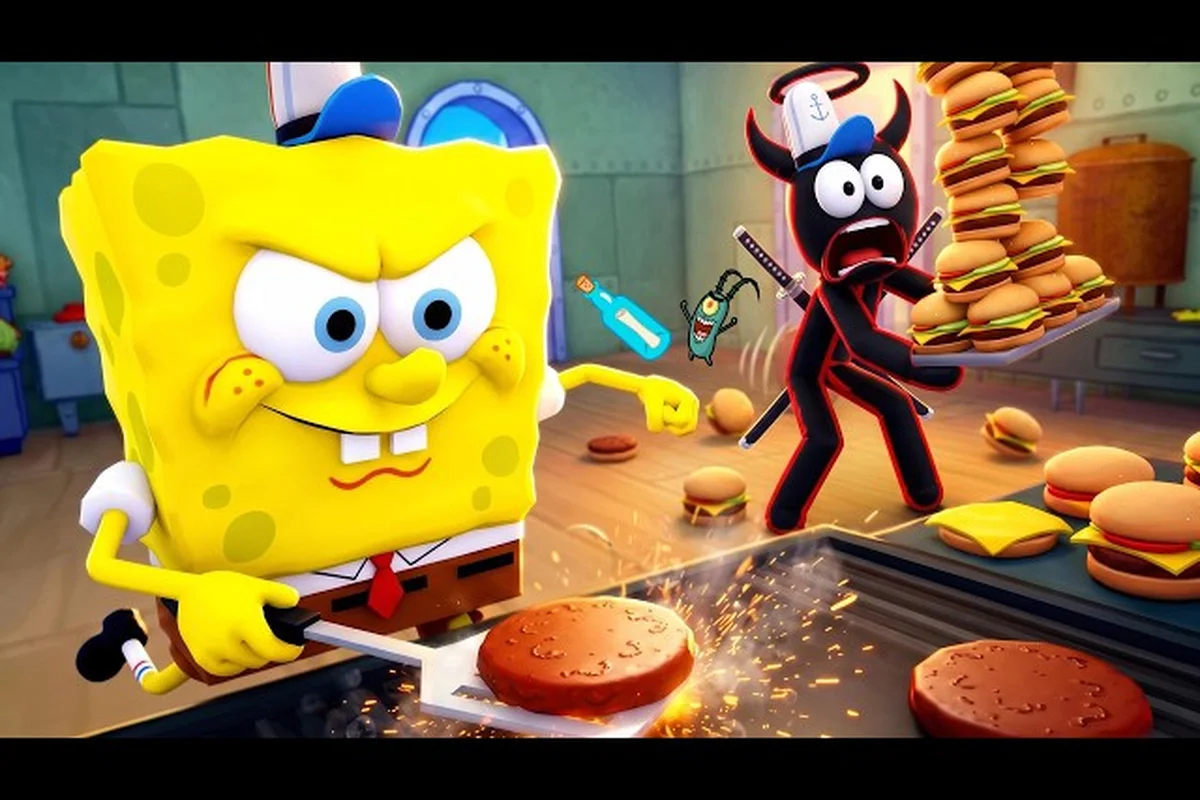
Save the Krusty Krab squad communication works best when every player owns a station and calls changes early, especially during overlapping orders, customer movement, and cleanup windows. Use clear callouts such as “taking table 3,” “heading to the grill,” or “needs plates” so partners know who is free and where to redirect tasks. Assigning a teammate to a dedicated station reduces duplicated effort, while early warnings about rush periods let the squad prioritize Patryke’s orders, bubble tea, and food preparation instead of leaving stations unattended.
Squad Communication Fundamentals
Save the Krusty Krab squad communication matters because restaurant service punishes duplicated work. If everyone monitors the same customer, the register, grill, and dining room can all fall behind at once. Clear calls let each teammate respond without guessing where help is needed.
The strongest four-player arrangement divides the restaurant into four functional zones: register service, grill cooking, assembly and drinks, and delivery plus cleaning. This structure comes from community field notes, which describe it as the most reliable way to prevent players from chasing the same ticket while dirty trays accumulate.
| Station | Main responsibility | Call for the squad | Common warning sign |
|---|---|---|---|
| Register | Take orders and handle payment | “New order,” “Order ready,” or “Register clear” | Customer waits at the register |
| Grill | Cook patties and manage timing | “Two patties,” “One patty,” or “Grill clear” | Orders wait while the grill is idle |
| Assembly | Combine food and drinks | “Assembly needs two,” or “Order complete” | Completed food sits unattended |
| Delivery and cleaning | Serve tables and remove trays | “Table clear,” or “Cleaning needed” | Dining room becomes crowded |
A successful Save the Krusty Krab teammate roles guide should describe jobs, not merely characters. Every player can still help during a rush, but one person remains responsible for keeping that area from becoming a bottleneck. Temporary support is useful when a customer approaches a station, while permanent ownership prevents important work from being forgotten.
Start With One Shared Priority
Before the shift intensifies, agree on one priority rule: serve the oldest waiting customer first. This prevents four capable players from dividing their attention across unrelated orders. A quick visual check of the queue is more reliable than reacting to whichever character makes the most noise.
Use short, location-based calls rather than long explanations. “Grill needs two patties” is clearer than “Can someone come help with the food?” because the phrase identifies the station, the quantity, and the action. “Table three clear” then tells the delivery player where to focus next.
Build a Simple Call Vocabulary
Consistent terms reduce misunderstandings when players juggle several orders during a rush, so the squad should agree on a compact vocabulary before the first customer arrives and avoid changing the meaning of a call mid-shift. For example, if “Grill two” always means two patties, the Grill player can respond with a count while the Register and Assembly players continue handling the current ticket. This reduces duplicate cooking and keeps each teammate focused on their assigned role.
| Call | Meaning | Best response |
|---|---|---|
| “Register new” | A new customer needs service | Register player responds |
| “Grill two” | Two patties are required | Grill player cooks and reports readiness |
| “Drinks up” | Drinks need attention | Assembly player completes drink orders |
| “Delivery needed” | A table needs food | Delivery player serves the table |
| “Clear tables” | Dirty trays need removal | Cleaner removes trays and resets tables |
| “Pause grill” | Stop starting new cooking temporarily | Grill player holds the current order |
These shared tips work because calls identify work rather than blame. A player who receives “clear tables” can confirm “I have cleaning” and then take ownership, while everyone else continues their current task. The squad can recover from mistakes because the next call automatically redirects attention.
Party Invite Tips and Team Setup
Save the Krusty Krab party invite tips should focus on readiness rather than simply sending a request. Ask teammates to join before the session starts, confirm that everyone can hear voice chat or use the available text callouts, and explain the four stations in plain language. A group that understands the plan enters the restaurant with less hesitation.
Before inviting players, check whether you want a fixed role or a flexible setup. Fixed roles are easier for a first cooperative session because nobody has to negotiate ownership during the rush. Flexible roles work better after the squad understands the stations and can cover one another without abandoning an entire work area.
| Setup | Best for | Strength | Main drawback |
|---|---|---|---|
| Fixed stations | A new four-player squad | Simple ownership and fast coordination | Can feel restrictive when every station is busy |
| Flexible coverage | Experienced players | Handles unpredictable customer clusters | Requires constant awareness of station status |
| Two-pair system | Two confident pairs | Each pair can solve a cluster | May divide communication into separate channels |
| Leader-led system | Groups with one strong organizer | Fast decisions during major rushes | Can make the leader a bottleneck |
The guide to playing with friends includes additional preparation ideas, including team composition and the practical steps for assembling a cooperative crew. Combine that setup advice with the station calls in this guide so each player understands both their job and the language used to request help.
Give Every Player a Radio-Style Status
A useful Save the Krusty Krab squad communication system includes quick status reports. The register player might announce “one waiting” when the line grows, while the grill player reports “one cooking” or “no orders.” These brief updates let other players judge whether help should move toward the register, kitchen, or dining room.
Try a two-part format containing status and action. “Grill two, need patties” is an action request, while “assembly clear, delivery open” is a status report. Combining them produces “assembly clear, bring two completed orders to delivery,” which identifies both the available worker and the next task.
Confirm the Four Player Badge Condition
The Save the Krusty Krab four player badge is a group objective, but the game does not provide a consistent public formula for every requirement in the available reference material. Community players associate it with completing activities while all four teammates participate. Because exact conditions can vary by version, confirm the current badge description in-game instead of relying on an old checklist.
| Pre-badge check | Why it matters | Best action |
|---|---|---|
| All four players are present | A disconnected teammate may not count as active | Wait for every player to load in |
| Everyone has accepted one job | Idle participation can look different from task completion | Assign all four stations |
| Team work is recorded | Badge progress may depend on shared objectives | Avoid solo farming patterns |
| Current wording matches the game | Older community instructions may be outdated | Read the badge panel before the shift |
Treat unofficial checklist details as community observations, not confirmed developer values. For example, a step may list a four-player requirement even though the current Save the Krusty Krab four player badge panel does not explicitly state that every teammate must complete the same job. Reliable progress comes from completing group activities together, assigning teammate roles in advance, and checking the in-game badge tracker after the run. If a task remains incomplete, compare the Save the Krusty Krab teammate roles guide and the squad’s shared activity history to identify which player was idle, disconnected, or still holding an unfinished order.
Cooperative Strategy for Busy Shifts
A workable Save the Krusty Krab cooperative strategy gives each station a trigger and a handoff. Cooking without a delivery request creates abandoned food, while delivering before the order is complete causes unnecessary movement. The squad performs best when every action has a visible next step.
The order sequence should flow in one direction: register to grill, grill to assembly, assembly to delivery, and delivery to cleaning. A player should call when an order changes station, especially if that handoff involves a different teammate. This creates a visible production line without requiring constant narration of every action.
A squad's callouts matter more than the exact words used, and sharkZach007's community gameplay shows how a normal session divides attention between stations. Watch how often players return to the same counter instead of finishing one station before moving on.
Manage the Dining Room as a Return Loop
Delivery and cleaning should be treated as one continuous loop. After food reaches a table, the delivery player confirms the order with “Table two served.” That player or the assigned cleaner can then watch for the finished meal and remove the tray. Leaving the table responsibility undefined often creates a dining room full of dirty dishes.
When tables are busy, announce counts rather than individual details. “Two clears” is fast, but “Tables four and six need cleaning” is clearer when only one player can leave the dining room. The most useful call includes the number of jobs, the station involved, and the player expected to handle them.
| Restaurant condition | Immediate team response | Result to avoid |
|---|---|---|
| Register queue growing | Pause nonessential support and clear one order | Multiple customers abandoning service |
| Grill has no active order | Ask assembly to request another order | Idle cooking staff and delayed meals |
| Assembly backlog | Deliver completed food before making more | Finished orders becoming cold or lost |
| Dining room crowded | Split delivery and cleaning tasks | Dirty trays blocking new customers |
| All stations overloaded | Complete one order from end to end | Four players competing over the same customer |
Communicate the Bottleneck, Not the Character
Effective calls describe the restaurant’s current condition. “The grill is backed up” tells the squad where work is accumulating, while “SpongeBob is slow” only creates confusion. A station-centered approach also works when teammate roles change because the call still identifies the right work area.
Use priority requests when several tasks arrive together: name the station, the needed action, and the reason for moving that request to the front. For example, “Fryer priority—help me clear the new ticket” gives SpongeBob a specific station task, while “Deliver this Krabby Patty to Table 3” identifies a completed order. Agreeing on short request formats keeps the four-player squad from duplicating work, blocking the grill, or sending every character toward the same bottleneck.
-
First priority: A customer is waiting to order.
-
Second priority: A completed order needs delivery.
-
Third priority: The grill has received a new order.
-
Fourth priority: A table is ready for cleaning.
This ranking is a squad convention rather than an official rule, so the four players can adjust it when a rush changes the workload. Its logic is that each new order creates future work, while a completed meal can satisfy a waiting table immediately: for example, during a crowded lunch, the squad might deliver an already-plated Krabby Patty before taking another grill ticket, preventing a bottleneck from growing. Agreeing on the ranking before a difficult shift also gives SpongeBob, Patrick, Squidward, and Sandy a shared basis for deciding which station receives help first, rather than letting every player converge on the same task.
Recover From Mistakes Without Blame
Even a coordinated squad will lose a tray, cook the wrong item, or miss a customer. The recovery phrase should be simple: state, assign, reset. For example, “Order two needs rebuilding; register will place it again.” The affected player repeats the correction, and the squad returns to normal work without pausing for a long explanation.
Save the Krusty Krab shared tips should also include an escalation path for genuine emergencies. If a teammate is unavailable, announce which station is now open and request a specific replacement. “Grill needs coverage for one order” is actionable, whereas “I cannot do this” leaves everyone to infer the problem.
Who Covers Which Station in a Four-Player Crew
The Save the Krusty Krab teammate roles guide should connect each character’s useful ability with a practical job. Community reports highlight three strong examples: SpongeBob can automatically flip patties at the crew grill, Mr. Krabs increases the whole crew’s end-of-day cash by 10 percent, and Gary can revive a downed teammate through his magic conch. These advantages become easier to use when the squad assigns ownership deliberately.
| Teammate | Reported team advantage | Practical assignment | Communication detail |
|---|---|---|---|
| SpongeBob | Automatic patty flipping at the crew grill | Grill owner | Announce when grill control returns |
| Mr. Krabs | Raises crew end-of-day cash by 10 percent | Flexible support or register | Track purchases and avoid unnecessary spending |
| Gary | Magic conch can revive a downed teammate | Recovery support | Keep him near high-risk work or assign a rescue route |
| Fourth player | Flexible coverage based on the current class | Delivery, assembly, or cleaning | State the station being taken over |
The crew-wide cash benefit means Mr. Krabs is more than a financial choice; his reported 10 percent bonus applies to the whole crew’s final result. Players should still coordinate purchases because a team bonus does not remove the need for sensible spending. The money management guide can help the squad decide which upgrades are worth making without turning every purchase into a last-second scramble.
Build Around Passive Benefits
Passive abilities are especially useful in cooperative play because they reduce the number of actions required from a busy teammate. SpongeBob’s reported automatic flipping supports the grill player, leaving that player free to watch order timing and communicate. If another player takes over the grill, clarify whether automatic flipping still applies before changing the assignment.
Gary’s revive ability changes how the squad evaluates risk. Instead of abandoning a downed teammate, the crew can call for Gary to use the magic conch. A direct phrase such as “Gary, rescue needed at the grill” identifies both the responder and the location without turning the recovery into a team-wide interruption.
| Class benefit | Best squad use | Risk if coordination is weak |
|---|---|---|
| Automatic grill work | Keep SpongeBob on grill coverage | Another player may duplicate flipping tasks |
| Crew cash increase | Combine with planned upgrades | Conflicting purchases waste shared funds |
| Teammate revival | Maintain Gary as emergency support | Response time becomes too long during congestion |
Keep One Flexible Role
A three-specialist-plus-one-flex arrangement usually balances specialization and coverage. SpongeBob, Mr. Krabs, and Gary can cover grill, financial, and recovery strengths, while the fourth player changes stations according to demand. The flexible player may begin on delivery, move to assembly during a meal rush, and handle cleaning whenever the dining room expands.
The flexible role requires the most active communication. Before leaving a station, the player should say “Assembly clear” or “Delivery covered for one cycle.” This prevents the remaining workers from assuming the station is still staffed. The four-player team guide is useful for comparing class options before committing to this arrangement.
Shared Tips for Better Service
Save the Krusty Krab shared tips work best when they reduce decisions during the busiest moments. A four-player crew should not wait until a long queue appears to decide who handles the register, grill, assembly, and delivery. Assign ownership early, use short calls, and review the arrangement whenever a teammate is absent.
These practical rules keep the squad coordinated because a four-player Krusty Krab shift depends on clear ownership at the register, grill, assembly, and delivery stations. For example, if the register player calls “delivery 12,” the delivery teammate should know immediately that order 12 is ready to leave the pass, while the grill player can focus on the next patty without checking every ticket. The result is fewer duplicate pickups, fewer unattended orders, and faster table turnover during a rush; after a difficult surge, the squad can rotate stations and announce each handoff so fatigue does not disrupt the four-player workflow.
-
Name the station first: Begin urgent calls with “register,” “grill,” “assembly,” “delivery,” or “cleaning.”
-
Give one task per request: Ask for one order, one table, or one tray instead of giving a teammate a vague pile of work.
-
Confirm once: The requester repeats the assignment, preventing duplicate responses.
-
Report completion: A player says “grill clear” or “tables clear” so others can redirect.
-
Protect the grill plan: The squad communicates when a new patty should be started because excess food can create a different bottleneck.
-
Use mark ownership: When the game’s visual tools are available, mark the ticket, grill, table, or tray that needs attention.
-
Rotate during recovery: After a difficult rush, switch jobs if fatigue is causing mistakes, but announce every handoff.
-
Keep chat task-focused: Share useful status and corrections, then let players concentrate on their stations.
Use a Short End-of-Shift Review
After the shift, ask three factual questions: Which station caused the most delay? Which call was misunderstood? Which assignment felt unbalanced? The answers are more useful than asking who deserves blame because they reveal process problems the squad can correct in the next session.
Review class progress as well as restaurant performance. The class level-up guide explains how experience and promotion progress fit into the broader crew plan. If one teammate remains at a lower level or lacks a useful passive, adjust the role plan instead of forcing the same permanent assignment every run.
Avoid Common Communication Mistakes
Most confusion comes from vague requests, silent station changes, and duplicated work. A player who leaves the register without announcing it may create a visible gap. A player who completes an order but says nothing may cause another teammate to prepare the same meal. A request addressed only to one person may be missed when that person is busy.
| Mistake | Better replacement | Why the replacement works |
|---|---|---|
| “Help at the kitchen” | “Grill needs one patty” | Identifies the exact task |
| “I moved” | “Delivery covered for one cycle” | Confirms which station changed hands |
| “Order done” | “Table four served, table six clear” | Distinguishes serving from cleaning |
| “Wait for me” | “Assembly needs support for ten seconds” | Creates an immediate, bounded request |
| “I have orders” | “Grill has two active” | Shares workload information |
Good communication does not mean talking continuously; it means keeping the restaurant state legible. During a calm moment, the four-player squad can review who handles the register, grill, assembly, and delivery, but during a rush, a bounded call such as “Grill needs one patty” or “Delivery covered for one cycle” should carry more weight than a long conversation. A clear handoff prevents duplicate cooking and lets each teammate prioritize the next order without guessing, while shared tips depend on everyone accurately understanding what was completed.
Four Player Badge and Communication Checklist
The Save the Krusty Krab four player badge should be approached through verified in-game information and active team participation. Community observations connect badge progress with group activity, but the available source material does not establish an official formula for star thresholds, energy limits, patience timers, burn thresholds, customer growth, or villain timing. Those exact values should remain unverified rather than being presented as confirmed facts.
Before starting the squad activity, verify the four-player party, select the badge challenge in-game, and assign Grill, assembly, delivery, and customer-service responsibilities. This preparation matters because unclear station ownership can leave a player idle or cause duplicate work at the grill and delivery handoff. Use short station-first calls, such as naming the Grill player and the next handoff, so the crew can react quickly without stopping service. Then track the in-game four-player badge requirement after the shift and review which delayed handoffs affected group progress, without treating unverified star, energy, patience, burn, or customer-growth thresholds as confirmed rules.
- All four players are connected and ready.
- Every player has a primary station.
- The squad agrees on the oldest-customer priority.
- Grill, assembly, and delivery handoffs have clear call phrases.
- The current four player badge requirement is checked in-game.
- The crew completes group objectives rather than dividing them into isolated tasks.
- The group checks badge progress after the activity.
| Team situation | Communication habit | Expected benefit |
|---|---|---|
| Before the shift | Assign all four stations | Fewer ownership questions |
| During a short rush | Use station-first requests | Faster response without long explanations |
| During a heavy rush | Complete one order end to end | Less duplication and waste |
| After a mistake | State, assign, and reset | Faster recovery without blame |
| After the shift | Review delays and badge progress | Clear improvements for the next run |
The central takeaway is straightforward: assign one owner per station, use consistent calls, and make every handoff audible. Strong Save the Krusty Krab squad communication turns four separate players into one coordinated restaurant crew, improves service during busy periods, and creates the best conditions for pursuing group badge progress together.
Frequently Asked Questions
What is the best way to communicate with four players?
Assign each player one station and use short station-first calls. For example, say “grill needs two patties” rather than “help with the food.” Each request should identify the location and task, while the assigned player confirms ownership before moving. Short calls also survive a noisy rush better than long explanations.
Which teammate should handle the register?
The register should normally belong to a player who can communicate clearly and track customer needs without abandoning another station. Mr. Krabs can be a strong choice based on his reported crew-wide cash benefit, although effective calls and task ownership matter more than a rigid class rule.
Does SpongeBob automatically flip patties for the crew?
Community reports indicate that SpongeBob’s automatic patty-flipping ability applies at the crew grill. Confirm the current behavior in-game, but assigning him to grill coverage can reduce repetitive work and let the squad communicate more effectively about completed orders. In practice that means one player can keep the grill clear while others handle drinks and delivery.
How do we earn the four player badge?
Complete group activities with all four teammates present and check the current badge panel for its exact requirement. Because community checklists can become outdated, treat the in-game description as authoritative and use this guide for communication rather than unverified numerical requirements.
What should we do when one teammate is absent?
Redistribute the open station before the next rush and name a temporary owner. Keep the flexible player at the most urgent area, announce each handoff, and avoid silently leaving a station unattended because quiet gaps often create the largest service delays.