
Guides
Learn the full Save the Krusty Krab shift loop, station order, cleaning checklist and the habits that keep a five-star rating through later days.
Introduction
Every Save the Krusty Krab shift follows the same loop: clock in, take orders, cook, assemble, deliver, clean, then reset for the next day. New players usually fail because they try to do everything at once instead of working the stations in order. Once the sequence becomes automatic, the extra customers each day stop feeling overwhelming and the kitchen keeps a steady rhythm. This section explains the order of operations, what each station expects from you, and the habits that protect a five-star rating when the day timer gets tight. The habits described here are the same ones that carry a crew through the day ten wall, so they are worth learning before the pressure arrives.
Shift Station Cheat Sheet
| Station | What Happens There | Common Mistake | Priority |
|---|---|---|---|
| Register | Take the full order, including sides and drinks | Leaving before the drink is confirmed | First |
| Grill | Cook and flip patties without burning them | Walking away while the cook meter runs | High |
| Assembly | Stack the tray in ticket order and add drinks | Starting before the side and drink are staged | High |
| Dining Room | Deliver trays, collect dishes, wipe tables, mop spills | Saving every chore for the closing bell | Steady |
Station Breakdown
Register
First contact with every customer and the fastest place to lose stars.
Grill
The station that decides whether the kitchen keeps up or burns the day.
Assembly
Where a correct ticket becomes a served tray, or a wasted plate.
Cleaning
The closing checklist that protects your star rating between days.
Core Mechanics
The loop is a chain of dependencies rather than a list of chores. An order cannot be cooked until it is taken, cannot be assembled until the patty and side exist, and cannot be delivered until the tray matches the ticket. Working out of order creates idle time at the grill and expired tickets at the counter. The efficient rhythm is to sweep the register for new tickets, start their patties immediately, then use the cooking window to stage drinks and sides. Cleaning fills the gaps between orders instead of becoming a separate phase, and the shift clock is only pressed once the dining room is actually clear.
Advantages
The loop is easy to teach, which makes it a strong foundation for a four-player crew. Each station has a clear owner, so a group can split responsibilities without much talking. Because every action feeds the next station, small improvements compound: a faster register, a better grill habit and a tidier dining room all shorten the same day. The structure also makes mistakes visible, so a crew can review a bad shift and identify exactly which step broke down. Because the loop is shared, a crew can split the stations and still follow the same sequence. That makes the guide useful for solo players and four-player groups without changing the underlying advice.
Challenges
The timer does not pause for mistakes, and a single burnt patty can ripple into a missed ticket and a complaint. New players often over-clean or over-cook instead of focusing on the next customer. The game does not publish exact cook thresholds or patience timers, so guides can only describe reliable habits rather than frame-perfect numbers. Solo shifts are especially punishing because one player must cover every station without a crew to absorb interruptions. Solo players also have to cover every station, which means the same mistake costs more because nobody is left to absorb the interruption. Practising the order of operations on early days is the only reliable way to reduce that risk.
Frequently Asked Questions
What should I do first on a new shift?+
How do I stop burning patties?+
Is cleaning really worth prioritizing?+
Quick Tips
Take every order before you start cooking during a rush. Two tickets on the board are easier to batch than one ticket plus a customer who is already losing patience. If the register queue is longer than the grill queue, stop cooking and take orders instead. The kitchen recovers from a short cooking pause far more easily than from a customer who has been waiting without being acknowledged.
Keep one hand free for drinks and sides while the grill works. The cooking window is the only natural pause in the loop, and using it for assembly prep removes a whole trip later. Keep a mental map of which table ordered what. Delivering to the wrong table costs a full round trip and often leaves the correct customer waiting even longer than the original delay did.
Walk with purpose: every trip between the kitchen and the dining room should carry something. A dirty tray on the way out and a clean tray on the way back turns dead travel into progress. Choose one station to improve each shift instead of trying to fix everything at once. A single reliable habit, such as carrying a dirty tray on every trip, compounds faster than a dozen half-finished optimizations.
Featured
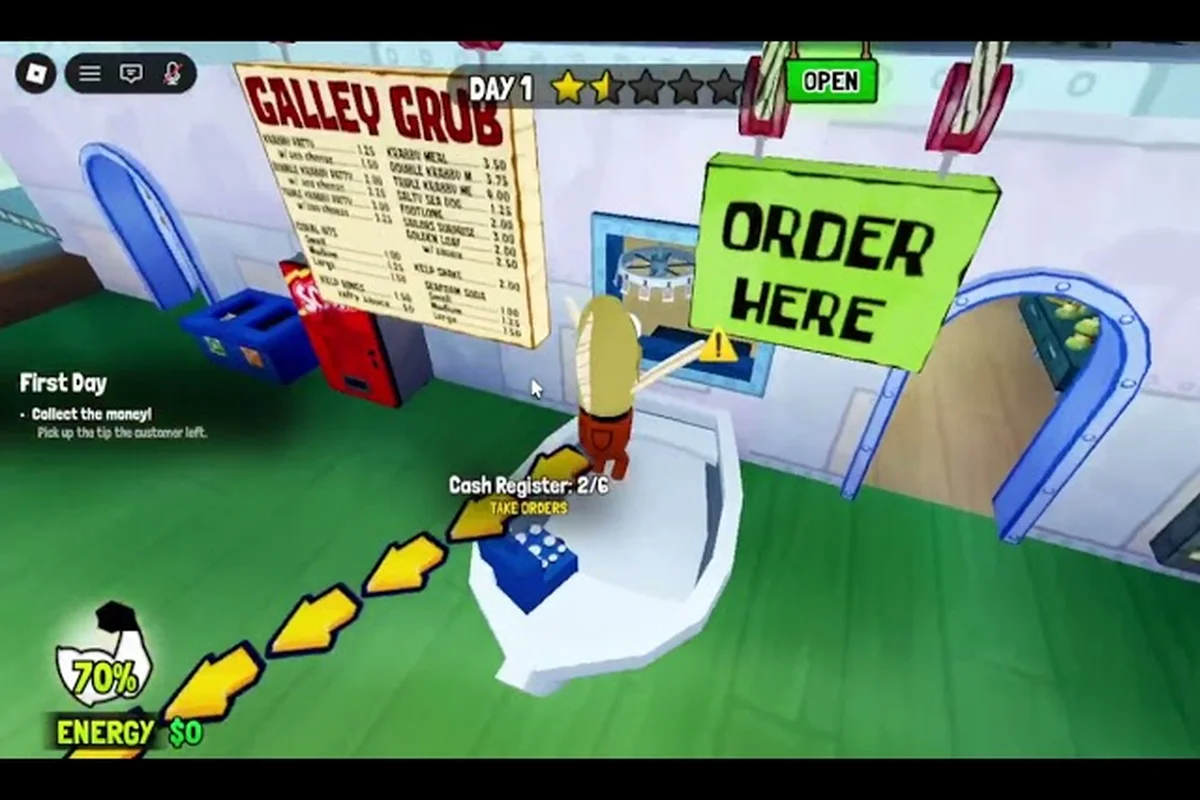
Save the Krusty Krab beginner guide for your first 10 days
Master Save the Krusty Krab beginner guide basics for Days 1–10, from clocking in and taking orders to grilling, serving, cleaning, and handling complaints.

Save the Krusty Krab beginner mistakes to avoid on day one
Avoid Save the Krusty Krab beginner mistakes such as burnt patties, wrong orders, neglected trash, and skipped prep that quickly triggers complaints.

Save the Krusty Krab getting started tips for your first shift
Master Save the Krusty Krab getting started tips, from basic controls and order taking to grilling, serving, and cleanup.
All Articles

Save the Krusty Krab nasty patty guide to survive busy days
Master Save the Krusty Krab nasty patty guide tactics for faster order handling, smart multitasking, health checks, and surviving intense shifts.

Save the Krusty Krab tutorial skip guide for a quick start
Learn Save the Krusty Krab tutorial skip guide steps for moving past early prompts, navigating menus, and reaching your first shift across Roblox platforms.

Save the Krusty Krab beginner tips and tricks for faster service
Boost service with Save the Krusty Krab beginner tips and tricks for order priority, multitasking, shift timing, and completing inspector tasks efficiently.

Save the Krusty Krab customer flow guide for every station
Learn Save the Krusty Krab customer flow guide steps for taking orders, grilling patties, assembling meals, pouring drinks, and serving customers smoothly.
Save the Krusty Krab delivery station guide for safe cleanup
Use the Save the Krusty Krab delivery station guide to manage trash, remove spills, prevent kitchen fires, and finish special delivery requests.

Save the Krusty Krab difficulty curve explained for busy shifts
Master Save the Krusty Krab difficulty curve explained with opening prep, patty buffers, complaint control, and the multi-step health inspector request.
Save the Krusty Krab first shift walkthrough for a full day
Follow Save the Krusty Krab first shift walkthrough from opening prep and order taking to cooking, serving, cleanup, and inspector requests.