
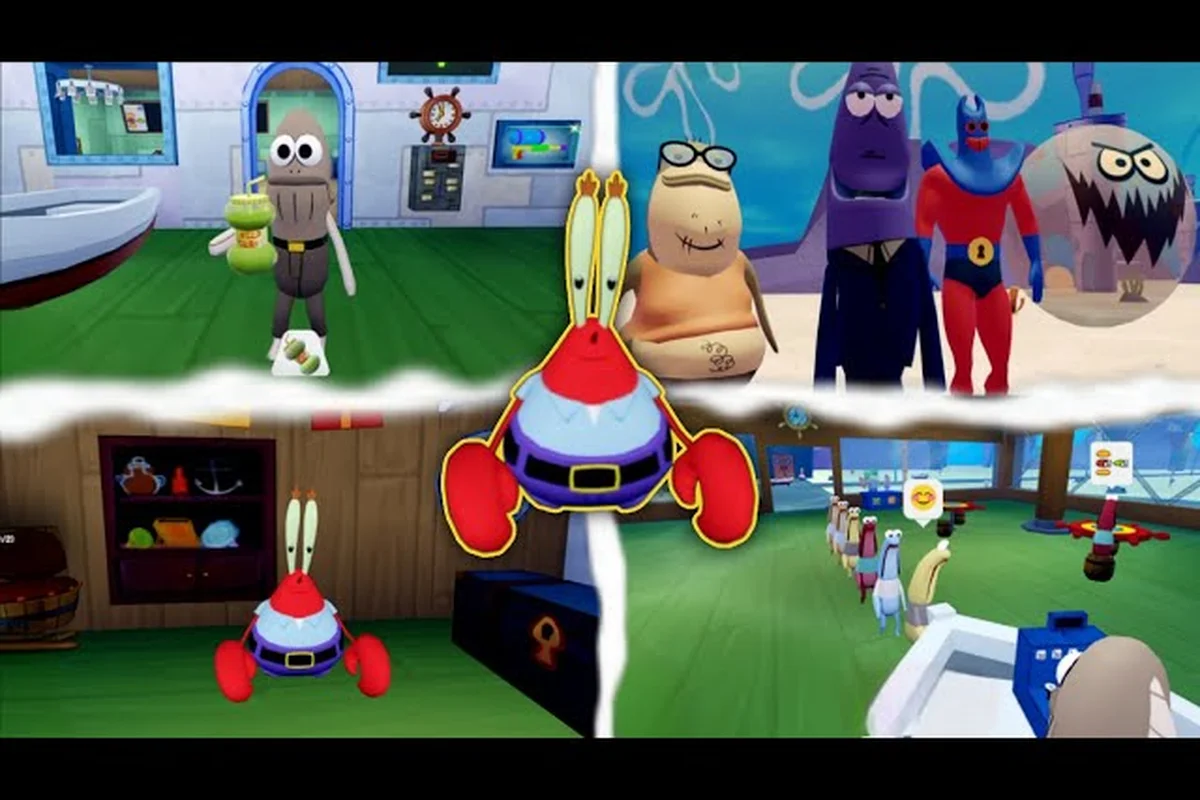
Save the Krusty Krab first shift walkthrough is important because a clean opening, accurate orders, and disciplined cleanup keep customers moving and prevent a simple service mistake from turning into a chaotic day. Follow the routine from clock-in to night shift, and you will know exactly what to prepare, cook, serve, and reset.
First Shift Walkthrough Overview
A successful first day depends on a simple rhythm: prepare before the crowd arrives, complete one order at a time, protect the grill, and clean as you go. The Save the Krusty Krab opening checklist is useful because it gives you a repeatable order of operations instead of reacting to every station after the rush begins.
The first shift also teaches the core game loop. You clock in, review the day’s expected customer count, stock supplies, serve food, handle occasional special requests, clean the restaurant, and clock in again to advance the schedule. Community gameplay reports describe a small patty buffer as the best opening move, although the exact buffer can change with the order mix.
What the first shift teaches you
| Shift phase | Main objective | Useful player habit |
|---|---|---|
| Opening | Prepare the restaurant before customers arrive | Confirm stations before accepting orders |
| Service | Take, cook, and deliver correct orders | Finish one order before starting another |
| Interruption | Handle inspector or special requests | Read the full request before moving |
| Closing | Reset the restaurant for the next period | Clean, empty, then clock in |
| Progression | Advance into the next business period | Review purchases and upcoming demand |
This Save the Krusty Krab gameplay explained overview focuses on actions confirmed by community walkthroughs, not invented formulas. Exact patience windows, energy caps, customer growth, and star-rating calculations remain unverified, so avoid relying on a rigid number that the developer has not published.
If you are still learning the basic controls and objectives, the Save the Krusty Krab beginner guide provides a useful foundation. For this shift, however, the priority is keeping a visible routine: prepare, serve, clean, and repeat.
Opening Checklist Before Customers Arrive
Your opening routine should end with every essential station ready. Community reports on the Save the Krusty Krab quick start guide describe clocking in, checking the customer count, pre-grilling a small buffer of patties, stocking drinks, and confirming that the trash bin and mop are available. That order is practical because it puts food, service supplies, and cleanup tools under control before the first order.
Follow this opening sequence
- Clock in and review the day’s customer count.
- Check the grill and start a small patty buffer.
- Confirm that buns, drinks, and other order ingredients are stocked.
- Inspect tables and remove any dirty dishes or trays.
- Empty the trash bin if it contains anything from the previous period.
- Locate the mop and make sure it is not being used elsewhere.
- Read the station prompts before accepting the first order.
The customer count is a useful planning cue, not a published timer. It tells you how busy the period may become, yet community observations do not establish a reliable minute-for-minute customer curve. Use the number to decide how much of the early rush you can handle comfortably, especially if you are still learning the control scheme.
Compare preparation priorities
| Preparation task | Why it matters | Best timing |
|---|---|---|
| Patty buffer | Gives you food ready during a short rush | Start before the first customer |
| Drink stock | Prevents delays while food waits | Confirm at the start |
| Trash check | Keeps cleanup from becoming a last-minute pileup | Inspect before service |
| Mop check | Allows spills to be handled immediately | Keep within reach |
| Order prompt | Prevents misreading ingredients or destinations | Review before accepting |
The safest approach is to start with a small buffer rather than filling the grill completely. Food quality can decline while an unused patty waits, and a modest reserve gives you room to react when several customers request the same item. This is a community-tested strategy, not an official burn threshold, so adjust it according to what you see in your own shift.
Order Taking and Cooking Routine
Once the restaurant opens, the central challenge is completing orders without confusing stations or items. This section of the Save the Krusty Krab first shift walkthrough focuses on the shortest reliable cycle: read the request, gather ingredients, cook the correct item, and deliver it before moving to the next task.
Use a four-stage service cycle
-
Read the complete order. Check the food, drink, table, and any special condition before beginning.
-
Collect the required items. Move directly between the relevant stations and avoid picking up unnecessary ingredients.
-
Cook with attention. Watch the grill while the patty cooks, and do not let another task distract you from it.
-
Serve and clear. Deliver the finished order to the correct destination, then remove the dirty tray or table if needed.
| Service error | Likely consequence | Prevention |
|---|---|---|
| Missing a drink | Order remains incomplete | Re-read the order before delivery |
| Wrong destination | Food reaches the wrong customer | Confirm the table or pickup point |
| Walked away from the grill | Quality may decline | Finish nearby tasks in short bursts |
| Starting several orders | Ingredients become scattered | Complete one order at a time |
| Leaving dirty tables | Mess accumulates | Clear the table during the next trip |
A reliable visual scan is more valuable than rushing. Before serving, compare the tray with the order one final time. After serving, check whether the customer’s area needs clearing. These two habits can prevent many avoidable problems, although the game does not publish a definitive penalty formula for mistakes.
The first shift is also the right time to learn where every station sits. Practice the route from order source to grill, from grill to drink station, and from there to the customer. This familiarity is more valuable than memorizing a fixed cooking duration, especially because exact timing values have not been officially documented.
Special Requests and Inspector Sequence
Not every task fits the normal customer order. The health inspector sequence is one notable interruption, and community field notes describe it as a multi-step request rather than a standard order. Understanding that flow prevents you from cooking a normal meal when the clipboard is asking for something else.
Complete the inspector request in order
According to community reports, the sequence begins when you read the clipboard request. Prepare the requested meal, take a patty to the dumpster to create the Nasty Patty, and then deliver it. The request functions as a timed interruption, so it should receive attention without causing the ordinary queue to collapse completely.
| Inspector step | Player action | What to verify |
|---|---|---|
| Request | Read the clipboard | Identify the requested item |
| Preparation | Cook the requested meal | Confirm the correct order |
| Transformation | Take a patty to the dumpster | Complete the unusual preparation step |
| Delivery | Bring the finished item to the inspector | Confirm the correct destination |
This sequence should be treated as a Scripted Request Chain. Do not skip directly to delivery because the standard order and inspector task look similar at a glance. If another task interrupts you, return to the inspector prompt and resume from the appropriate step rather than restarting blindly.
Community walkthroughs also show that the game is available on PC, mobile, tablet, and console through Roblox. Control layouts may differ, but the underlying request order remains the meaningful lesson. You can compare the visual walkthrough by AnyaRoblox’s Save the Krusty Krab Day 1 to 10 gameplay video, which includes the opening and closing routines described in community notes.
Closing Checklist After Service
The shift does not end when the last customer receives food. You still need to reset the restaurant before clocking in to advance. A disciplined Save the Krusty Krab closing checklist prevents dirty trays, spills, and grill residue from becoming tomorrow’s problem.
Use this cleanup order
Community field notes place table clearing first, followed by trash disposal, spill cleanup, grill cleaning, and the final clock-in. Working in that order creates a clean sweep across the restaurant: remove waste, handle floor mess, clean the cooking area, and then close the period.
- Collect dirty trays and clear occupied tables.
- Take trash to the dumpster and empty the bin.
- Mop visible spills before they spread.
- Clean the grill and remove cooking residue.
- Return tools and supplies to their usable positions.
- Confirm that no required station remains blocked.
- Clock in to advance the day and begin the next period.
Compare clean versus skipped stations
| Station | Clean result | Risk of postponing |
|---|---|---|
| Tables | Clear customer area | Dirty trays remain in the work area |
| Trash | Empty container | Cleanup becomes more demanding later |
| Floor | Dry, usable walking path | Spills can interrupt movement |
| Grill | Ready for the next order | Leftover residue complicates service |
| Supplies | Easy to find | Important items may be in the wrong place |
Do not rush the final cleanup simply because the service rush is over. The next period may include a night shop or a higher customer count, and entering it with a dirty workspace makes every task slower. The Save the Krusty Krab high day survival guide explains how cleaner preparation affects later periods.
The closing phase also offers a good moment to review what caused delays. If patties were the bottleneck, adjust the opening buffer. If drinks were missed, keep them nearer the service route. If the inspector request disrupted the queue, save the routine for a manageable moment and check the prompt before beginning the special sequence.
Quick Start Strategy for a Full Day
A good quick start strategy is to reduce decisions during the busy period. In other words, create a standard route, a standard opening routine, and a standard cleanup routine before the restaurant asks you to improvise. This Save the Krusty Krab first shift walkthrough gives you those routines, but the advice below helps you adapt them as demand rises.
Decide What Waits Until the Next Wave
| Situation | Immediate action | Secondary action |
|---|---|---|
| Customer order is ready | Deliver it | Return to the next order |
| Patty is cooking | Watch the grill | Prepare nearby ingredients |
| Inspector prompt appears | Read the request | Pause lower-priority preparation |
| Table becomes dirty | Clear it during the next route | Finish the active order first |
| Trash becomes full | Empty it after active service | Resume preparation |
| Shift has ended | Complete full cleanup | Clock in to advance |
The core principle is to finish nearby work in small batches. If the grill and trash are on the same route, clean the bin while the patty cooks only if the cooking state remains safe. If the station is far away, stay with the grill and complete the order instead. This prevents multitasking from turning a controlled routine into a chain of mistakes.
Learn from one shift at a time
After the first day, identify the single station that caused the most interruptions. Some players may need a larger patty reserve; others may benefit from a cleaner drink station. The Save the Krusty Krab upgrade checklist can help you assess which shop items address recurring problems, but a purchase should respond to an observed weakness rather than a guess.
| Observed problem | Practical response |
|---|---|
| Orders wait beside the grill | Make the opening buffer slightly larger |
| Drinks are repeatedly forgotten | Recheck the drink station before delivery |
| Tables slow down movement | Clear each table immediately after service |
| Inspector requests cause confusion | Re-read the full clipboard sequence |
| Closing takes too long | Clean in zones instead of revisiting stations |
The community video linked earlier is a useful reference for seeing a full progression, but your own observation log is more valuable for improvement. Track the task that repeatedly slows you down, then change only that part of the routine. Small, measured adjustments are easier to evaluate than a completely different system.
Gameplay Explained Through the Shift Loop
Save the Krusty Krab gameplay explained through its first shift centers on Station Readiness, Order Accuracy, and Reset Discipline. These three ideas cover nearly every action without relying on unverified percentages, timers, or reward formulas. They also remain useful as the restaurant becomes busier.
The three-part shift model
Station Readiness means that food, drinks, tools, and cleaning supplies are available before they become urgent. Order Accuracy means that you read every component of a request and verify the result before delivery. Reset Discipline means that waste, dirt, and cookware do not accumulate until they interfere with service.
| Shift model | Question to ask yourself | Corrective action |
|---|---|---|
| Station Readiness | What will I need during the next rush? | Prepare a small, practical buffer |
| Order Accuracy | Did I complete every part of the request? | Re-read and verify the order |
| Reset Discipline | Is this station ready for the next period? | Clean, empty, and return supplies |
This model turns a busy shift into several small loops rather than one long sequence. Opening answers the first question, service answers the second, and closing answers the third. When something goes wrong, you can place the problem into one category and apply the relevant correction instead of changing your entire approach.
For later schedules and day-specific progression, the Save the Krusty Krab day guide can provide broader context. Keep in mind that community data does not establish a dependable daily customer-growth curve, so treat the displayed customer count as a practical workload signal instead of a guaranteed difficulty rating.
The Shift Loop in Four Stages
-
Before service: clock in, check demand, prepare food, stock drinks, and confirm cleaning tools.
-
During service: read orders, cook carefully, verify items, deliver to the correct destination, and clear tables.
-
During interruptions: finish the active request safely, read the inspector clipboard, and complete each special step in sequence.
-
After service: remove dirty trays, empty trash, mop spills, clean the grill, return supplies, and clock in.
By the end of the first shift, you should understand the restaurant’s complete operating cycle. The goal is not a flawless performance based on invented metrics; it is a clean, repeatable routine that leaves the restaurant ready for the next period. That is the strongest foundation for a full day and the later difficulty curve.
Frequently Asked Questions
What should I prepare before the first customers arrive?
Clock in, check the day’s customer count, start a small patty buffer, stock drinks, and confirm that the trash bin and mop are available. Community walkthroughs consistently describe this as the opening routine, although no official patty quantity or customer-growth formula has been published.
How do I handle the health inspector request?
Read the clipboard first, prepare the requested meal, take a patty to the dumpster to create the Nasty Patty, and deliver the result. Community reports describe this as a scripted multi-step interruption, so check the current prompt instead of treating it as a normal customer order.
What is the best way to avoid mistakes during service?
Complete one order at a time and verify the food, drink, and destination before delivery. Stay near the grill while cooking, and clear tables during the next convenient trip. This reduces task switching and makes mistakes easier to catch before the customer receives an incomplete order.
How long should closing cleanup take?
Allow enough time to clear dirty trays, empty the trash, mop spills, clean the grill, and return supplies before clocking in. Exact timing is unverified and varies with the number of customers and the mess left behind, so use the condition of each station rather than a fixed minute count.
Is the first shift suitable for a new player?
Yes, because it introduces the complete gameplay loop in a manageable sequence. The essential skills are order reading, grill control, correct delivery, special-request handling, and cleanup. Once those feel familiar, the Save the Krusty Krab difficulty curve explained becomes more relevant as the workload grows.