
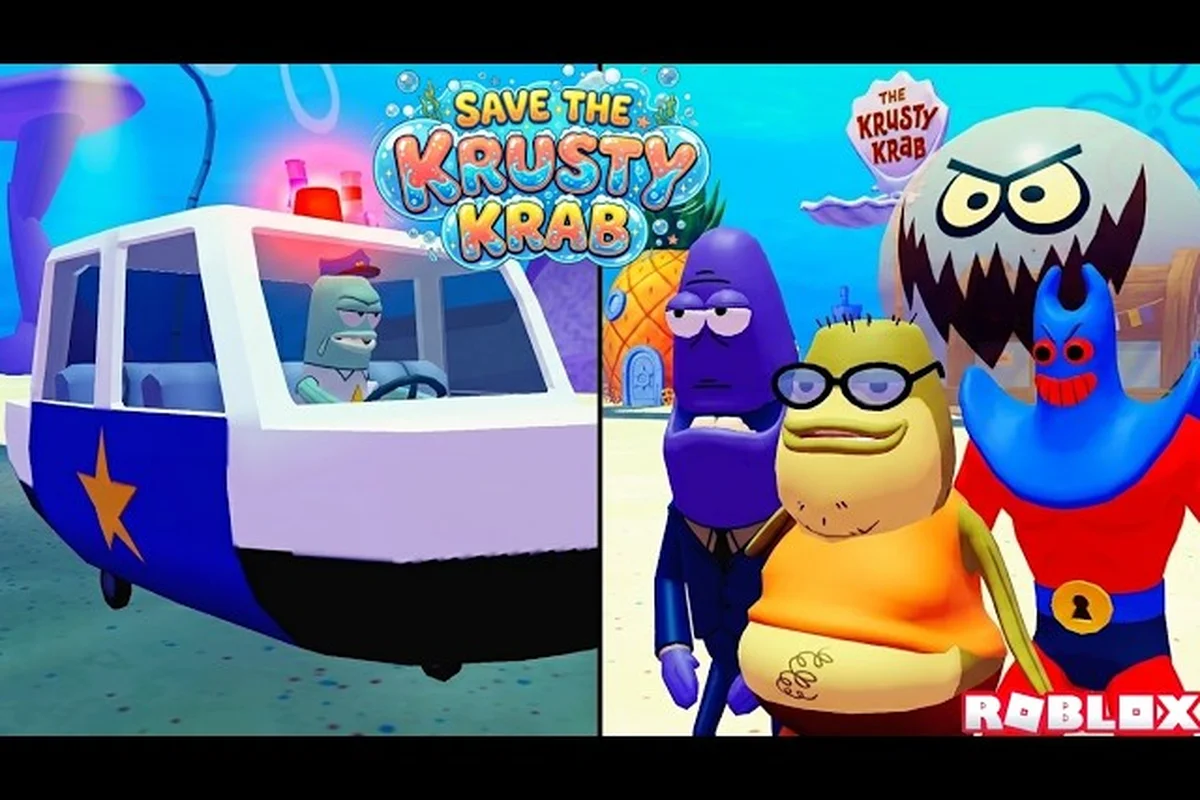
Save the Krusty Krab high day survival depends on managing customers, cooking, and sudden damage without losing your star rating. A reliable shift plan starts with opening the restaurant, checking available upgrades, and assigning the best worker to the most urgent station; for example, reserve the strongest cook for griddle orders while a teammate handles customers and structural repairs. During the night cycle, unresolved hazards can drain time and reduce service quality, so fixing damage before it escalates preserves both your perfect-day goal and the resources needed for later days.
Nizarisaqt's community gameplay shows a normal run in motion, where later days stack more orders and cleanup into the same shift.
Why High Days Demand a Different Shift Routine
Later shifts compress several service tasks into smaller windows. A customer may need an order, a cooked item, table service, or cleanup while another station needs attention, so reacting one task at a time can create a chain of mistakes. Good Save the Krusty Krab high day survival comes from deciding priorities before the rush makes every order look equally urgent.
Community field notes describe a clear escalation pattern: each day adds more customers and more simultaneous tasks. The scheduled customer count appears at clock-in, while the star rating changes as service quality improves or deteriorates. That makes the number of arrivals a planning signal rather than a surprise, although exact timings and formulas can vary by platform or version.
A strong player therefore does not try to complete every visible task in the order it appears. Instead, they identify bottlenecks, finish short objectives that restore the rating, and reserve attention for customers whose patience is disappearing. The same principle improves Save the Krusty Krab shift routine efficiency because every action should reduce a known source of lost stars.
The High-Day Pressure Model
| Pressure source | What it threatens | Best response | Common mistake |
|---|---|---|---|
| Customer buildup | Slower service and lower patience | Route orders before starting long tasks | Starting the longest order first |
| Cooking delays | Idle customers and missed tables | Cook only when the next item is needed | Preparing food nobody ordered |
| Table clutter | Blocked service paths | Clear tables during a brief lull | Leaving every cleanup until closing |
| Villain interference | Cooking damage and lost focus | Finish the nearest safe objective first | Chasing a distant enemy |
| Star-rating loss | Lower end-of-day cash | Resolve complaints and errors quickly | Ignoring one recoverable mistake |
The practical goal is not perfection. It is damage control: prevent one mistake from becoming two while preserving enough time to serve the next customer. Community observations indicate that complaints, burned food, missed tables, and villain damage can lower the rating, while fast and correct service helps it recover.
If you have not yet built a consistent opening procedure, the Save the Krusty Krab first shift walkthrough provides a useful baseline for learning each station before the customer volume becomes difficult. Practice the order-to-cooking handoff, table clearing, and nearest-safe-objective routine during a quiet opening, then use the same sequence once customers begin arriving. This reduces wasted trips between the grill and serving counter while preventing a customer complaint or burned order from triggering a second mistake that further lowers the star rating.
Four Rules for a Repeatable Routine
-
Read the day before opening. Note the scheduled arrivals and identify whether the first wave arrives immediately or after a short preparation window.
-
Choose one bottleneck. During a busy service, focus on the station causing the most cascading delays rather than wandering between nearby tasks.
-
Protect the star rating. Fix a recoverable complaint before taking on another long task when the restaurant is close to dropping a star.
-
Close tasks completely. A half-finished table or abandoned order can consume more time than the original action.
These rules are especially important for Save the Krusty Krab perfect day guide goals. A five-star result depends on sustained execution across the whole shift, not a frantic final minute. It also explains why Save the Krusty Krab high day survival becomes more about sequencing and attention than raw speed.
Opening the Restaurant Without Losing the First Minutes
Save the Krusty Krab opening the restaurant should be treated as a controlled setup phase, not wasted time before the real shift. The first few minutes determine which tasks are already active when customers begin arriving, and a clean start prevents you from entering the rush while completing preventable work.
Community data indicates that the five-star restaurant badge is held by 4.5 percent of players. That figure should not be treated as an official success rate because the source is community-reported and the sample methodology is unknown. It does show that reaching the highest visible rating is demanding, making a disciplined opening more valuable than an improvised start.
Opening Checklist
| Order | Action | Reason |
|---|---|---|
| 1 | Read the scheduled customer count | Anticipate the volume and pacing of the shift |
| 2 | Inspect cooking stations | Detect problems before real orders depend on them |
| 3 | Clear accessible tables | Reduce travel distance and prevent clutter |
| 4 | Confirm the active order path | Avoid preparing the wrong item or destination |
| 5 | Identify the immediate hazard | Know whether villains, heat, or customer flow is the first threat |
| 6 | Begin service with one priority station | Limit task switching during the opening wave |
The exact customer patience timers, burn threshold, energy cap, and villain spawn schedule are not published by the developer or documented in a consistent community dataset. Treat exact minutes as unverified observations, and avoid designing a routine around a supposed universal timer. Instead, use visible warning signs such as a customer becoming impatient, an order changing, or a station showing danger.
Decide the First Task by Bottleneck Type
If customers are already waiting, take orders immediately and route them before cooking. If the kitchen is the source of the delay, begin the next required food while another available task is completed. If tables are obstructing movement, clear the nearest useful table first, then return directly to service. This prevents the common mistake of completing a nearby task that does not reduce the longest queue.
Your opening decision should follow one chain: arrive, identify, finish, return. This is a compact form of the Save the Krusty Krab shift routine. It prevents the restaurant from becoming clogged by partially completed work and gives every trip away from the central service area a clear purpose.
The Save the Krusty Krab day guide is useful for tracking how customer pressure grows across the progression, while this routine focuses on what to do once the restaurant is already operating under load. In practice, this means using the Save the Krusty Krab shift routine to stabilize the busiest station first: if order-taking is clogged, create space for new customers before completing a non-urgent task; if the kitchen is behind, start the longest required food chain; and if the dining area is blocked, clear the route that affects table turnover. The Save the Krusty Krab night cycle and between day upgrades can alter demand, so reopening the restaurant with a planned order is safer than reacting to every customer individually.
Managing the Shift as a Sequence of Service Loops
High-day service becomes easier when viewed as repeated loops rather than one long list of individual orders. Each loop should connect customer intent, kitchen output, table delivery, and cleanup. Broken links are where most time disappears, because the worker must revisit a station and reconstruct what should have happened next.
A practical loop begins when an order becomes active. Confirm the requested item, start or finish the appropriate cooking step, route the order to its destination, and then check whether the table is clear. If the restaurant is crowded, skip optional polishing and focus on the minimum sequence needed to restore customer satisfaction. If the kitchen is under control, use the spare moment to clear the next table before another customer occupies it.
Customer Priority Matrix
| Situation | Immediate action | Secondary action | Why this order works |
|---|---|---|---|
| One customer is waiting and the path is clear | Take the order | Start cooking | Captures intent before patience declines |
| Several customers are waiting | Process the nearest group | Build one order chain | Prevents attention from scattering |
| A table is ready to clear | Deliver and clear | Resume cooking | Completes two needs in one route |
| Cooking is close to burning | Finish cooking | Clear a nearby issue | Protects the star rating from a costly error |
| A villain enters the work area | Move to safety or stop the hazard | Resume the nearest service task | Limits damage without abandoning the restaurant |
| Nothing is urgent | Clear the next table | Prepare ahead when allowed | Uses idle time to reduce future travel |
The matrix is a decision aid, not a fixed priority list. Conditions change quickly, so update the order after every completed action. A task that was second-best ten seconds ago may become the worst choice when a customer reaches the front of the queue.
Watch the Star Rating as a Live Gauge
The rating is more useful than a passive end-of-day score. If it falls while customers are queued, the restaurant probably has too many simultaneous problems to process in a random order. Look for a shared cause: food is not leaving the kitchen, tables are blocking access, or one customer has been ignored long enough to create a complaint.
Do not chase a recovery by performing extra cosmetic work while a service path remains broken. Direct attention toward the source of the complaint or missed table. This is a core lesson in Save the Krusty Krab high day survival: a quick fix that does not remove the bottleneck creates another detour later.
A player who understands how complaints, burns, missed tables, and damage affect performance can use the rating as an early-warning system. If the meter remains stable while the day grows busier, the routine is working. If it slides whenever new orders appear, the opening plan needs less task variety and more strict sequencing.
Night-Cycle Planning and Upgrade Timing
The Save the Krusty Krab night cycle is the recovery phase between shifts, and its best use depends on what failed during the day. Upgrading automatically is not necessarily progress. A purchase should solve a recurring problem, create room for a higher customer count, or prevent the next day's rating from collapsing.
Because each day adds customers and simultaneous tasks, the between-day decision should be based on the latest report rather than a predetermined shopping list. A missed-table problem calls for flow improvements, while a cooking problem may point to stronger equipment or better preparation timing. Upgrades that do not answer the observed weakness may postpone the bottleneck instead of removing it.
Diagnose the Day Before Shopping
| What went wrong | Likely operational cause | Upgrade direction to consider |
|---|---|---|
| Orders remained uncooked | Kitchen throughput was too low | Cooking speed, capacity, or reliability |
| Food arrived at the wrong place | Route or task-switching errors | Storage, handling, or organization |
| Tables filled faster than they cleared | Customer capacity outpaced service | Extra table space or faster turnover support |
| Villain damage interrupted service | Safety and focus became unreliable | Protection or avoidance improvements |
| Customers complained while tasks were correct | Attention was spread too thin | Small quality-of-life improvements that reduce interruptions |
The Save the Krusty Krab night shop breaks down upgrade categories and priorities in more detail. Use that reference after identifying the specific failure, because a general “best item” rule can be misleading when the same purchase solves different problems across different runs.
Between Day Upgrades by Bottleneck
A one-problem-at-a-time approach usually works better than buying several small improvements without a plan. First, identify the constraint that limited service. Second, choose the upgrade that directly increases capacity or removes repeated work. Third, reserve enough money to test that change on the next shift. Fourth, upgrade again only after confirming the problem improved.
This approach makes Save the Krusty Krab between day upgrades more intentional. It also prevents the common mistake of treating the shop as a checklist of permanent purchases. An item that is excellent after adding a new customer group may be less valuable than a modest upgrade that protects your current five-star performance.
Preserve Spending Options
Keep a reserve instead of spending every available coin immediately. Later days introduce additional customers and tasks, so a cheap item that improves flexibility may outperform an expensive specialization. The reserve also gives you room to respond to a failed shift without making another rushed purchase.
A good night includes three decisions: identify the failure, purchase the countermeasure, retain the reserve. That sequence supports Save the Krusty Krab high day survival because it prevents the shop phase from creating a new economic problem while the operational problem remains unsolved.
A Five-Star Shift Routine for Demanding Days
A perfect day is produced by repeatable decisions, not by knowing every future event. On demanding shifts, run the same sequence whenever you return to service: confirm the next customer, choose the shortest complete task, preserve the rating, and clean only what affects the next order. This saves mental energy for unexpected damage and sudden task combinations.
The following routine assumes that the restaurant is open, required stations function, and customer service remains the main objective. Adapt the order when a villain or a critical cooking hazard makes a task unsafe, but keep the core loop intact. Save the Krusty Krab perfect day guide goals depend on this consistency across several waves rather than one unusually efficient burst.
The Complete Service Cycle
| Phase | Player action | Keep in view | Failure signal |
|---|---|---|---|
| Intake | Read the nearest active request | Item, destination, customer need | Repeating or changing the order |
| Production | Cook or prepare the required item | Burn risk and kitchen queue | Food sitting too long near danger |
| Routing | Move the finished item to its target | Clear path and correct destination | Returning to a station repeatedly |
| Delivery | Serve the customer | Complaint state and table condition | Customer remains unhappy after delivery |
| Cleanup | Remove obstacles and finished orders | Traffic around active tables | Clutter or missing-table warnings |
| Recovery | Fix the highest-priority error | Star rating direction | Complaints or damage accumulating |
Handling Common High-Day Scenarios
A queue grows beside a busy kitchen. Process the nearest group, build one continuous kitchen chain, and avoid starting unrelated tasks. This prevents a Save the Krusty Krab high day survival failure mode in which food production, customer intake, and cleanup all stall because attention rotates too quickly.
A villain appears while food is cooking. Do not leave a vulnerable station unattended merely to keep the order moving. Secure the food, move the customer to safety if required, and then restore the interrupted action. The Save the Krusty Krab nasty patty guide offers further context on the enemies that threaten longer runs.
The rating drops by one star. Find the complaint or task failure that produced the loss, correct it, and return to the main service loop. Do not replace service with panic cleanup. A five-star recovery usually comes from restoring customer confidence, not from performing unnecessary actions around the restaurant.
Everything is nearly complete. Finish one customer at a time and clear the associated table immediately. For example, deliver a completed order, collect the dirty plates, and wipe that table before accepting the next group; leaving several partly cleared tables creates a larger cleanup backlog. This last-stage discipline is often the difference between four stars and five, because one missed table can undo several successful deliveries.
Final Minute Priorities
Near closing, the ideal order is to finish outstanding customers, deliver every completed order, clear service-blocking tables, and then close the restaurant. If time is limited, prioritize customers and active service paths over decorative cleanup. If a dangerous station is about to cause damage, secure it before beginning another long cleanup task.
The final minute should use the same routine as the rest of the shift. Sudden speed increases often create mistakes, while a controlled sequence protects the rating built throughout the day. This is the practical core of Save the Krusty Krab high day survival: preserve the same focus when the restaurant is almost under control.
Measuring Progress Without Chasing Unverified Numbers
Because no official star-rating formula, customer timer, energy cap, or daily growth curve is available, a reliable progression system should use observable results. Track the cause of each lost star, the recurring station that caused delays, and whether the previous night’s upgrade improved the next shift. These signals are more useful than unsupported claims about a universal timing window.
Community reports are still valuable when they are treated carefully. The reported 4.5 percent five-star badge figure can provide a rough benchmark, but it should not be presented as official data or a guaranteed personal target. Similarly, player observations about customer growth and settlement cash are useful for planning, while exact formulas remain unverified.
Progression Tracking Sheet
| Measure | Record after each shift | Question it answers |
|---|---|---|
| Final star rating | One to five | Is service quality improving? |
| Main complaint | Short description | Which action needs attention? |
| Missed tables | Count or yes/no | Is the restaurant losing flow? |
| Burned food | Count or yes/no | Is kitchen timing the bottleneck? |
| Villain interruptions | Count or yes/no | Is protection or positioning lacking? |
| Upgrade purchased | Item and purpose | Did the purchase address a real failure? |
| First recurring problem | Name one cause | Where should the next upgrade focus? |
Use the same format after every shift. A short log exposes patterns that are easy to miss during play, such as repeatedly clearing the same area late or losing the rating during a predictable customer wave. The broader Save the Krusty Krab beginner mistakes reference can help distinguish basic execution errors from normal high-day pressure.
When to Keep the Same Build
Do not change upgrades after every imperfect shift. If the restaurant maintains a strong rating, clears most tables, and handles the expected customer count, the current build is functioning. Save the money and use the next shift to test a suspected improvement. Frequent changes make it difficult to tell whether progress came from a purchase or simply from better execution.
A build is worth revising when the same problem appears in at least two consecutive shifts, when a new customer load repeatedly exceeds your capacity, or when one hazard repeatedly interrupts service. The evidence should point to a clear mechanism. This creates a dependable Save the Krusty Krab high day survival plan rather than a reaction to one unusually chaotic service.
Building a Habit That Scales Across Days
The strongest progression system combines a fixed opening procedure, a visible service loop, and a targeted night cycle. Fixed decisions lower mental load, while targeted upgrades ensure that each purchase supports the next operating plan. As customer volume rises, the same routine can absorb more pressure if its bottlenecks are removed in the correct order.
Start by reviewing the next shift before opening the restaurant. Identify the expected customer load, choose the main constraint, and mark the moment you will return to each station. During service, finish one complete customer cycle before switching unless a safety issue demands attention. At night, purchase against the day’s clearest failure and keep the routine unchanged long enough to measure the result.
Save the Krusty Krab high day survival is ultimately a test of consistency under pressure. A strong player does not react to every visible request separately; they build a controlled sequence that protects service quality, uses the star rating as feedback, and spends upgrades where they remove recurring obstacles.
Frequently Asked Questions
What is the best routine for a high day in Save the Krusty Krab?
The best routine combines a short opening check, one complete customer-service loop, and a targeted response to complaints or hazards. Read the customer count, clear early obstacles, process the nearest group, and finish delivery before cleanup. Do not switch stations merely because another request appears, because excessive task changes often create delays.
How should upgrades be chosen between difficult days?
Choose an upgrade that directly answers the day’s clearest recurring failure, such as slow cooking, blocked tables, or interruptions from villains. Keep some money in reserve for the next improvement, and give the new purchase one shift to be tested. Repeatedly changing the build without a diagnosis makes it harder to identify what is actually working.
Does the star rating change during the shift in Save the Krusty Krab?
Community observations indicate that the rating responds to service quality during the shift and changes again when the day settles. Fast, correct service can raise it, while complaints, burned food, missed tables, and villain damage can lower it. Treat it as live feedback and look for the shared cause instead of reacting randomly to every small fluctuation.
What should be prioritized when customers and cooking overlap?
Protect the cooking chain first if food is at risk of burning, then process the nearest waiting group and complete one delivery at a time. If tables obstruct the route, clear the table that blocks the most useful path. The priority depends on visible danger, but avoid beginning a third activity before finishing either the order or the cleanup.
Is a five-star day realistic on later shifts?
A five-star result is demanding, and community data reports that the five-star restaurant badge is held by 4.5 percent of players. That figure is not an official success rate, but it confirms that the rating is difficult to maintain. Clear bottlenecks, recover from mistakes quickly, and use the night shop to remove the constraint that caused your previous loss.