
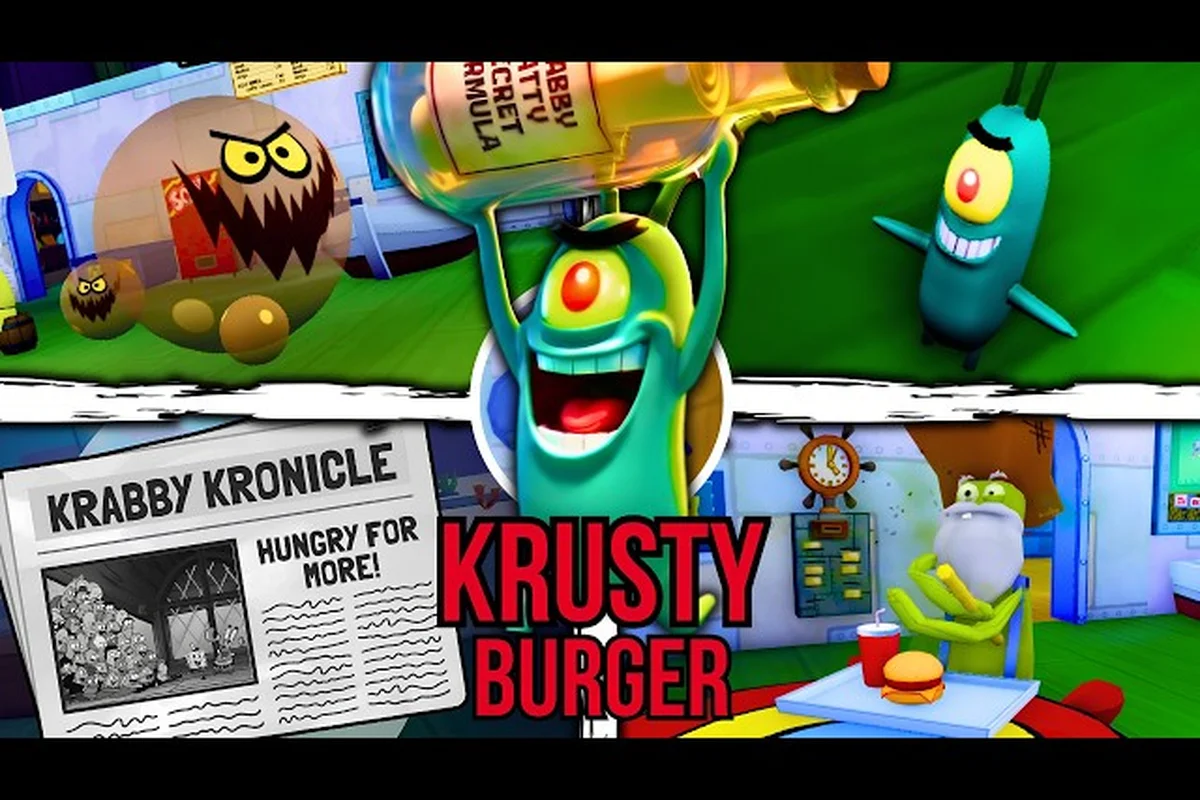
The Krusty Krab energy drain becomes dangerous when rushed orders and slow service drain your energy faster than you can restore it, putting the shift clock and end-of-day report at risk. Use kelp shakes at safe downtime, prioritize completing demanding orders, and track each order’s time and energy cost to avoid finishing with too little energy for daily rewards.
What Causes Save the Krusty Krab Energy Drain?
Save the Krusty Krab energy drain comes from spending effort on restaurant actions while the shift clock keeps moving, especially during crowded service periods. A player may feel fine at the opening, yet a combination of repeated cooking, order handling, cleanup, and customer delays can leave very little energy for the final orders. The important point is that energy is a working resource, not a score displayed only at the end.
The most common drain pattern begins when players prioritize speed over organization. They accept every order, move between stations constantly, and leave small problems unresolved until they become larger interruptions. Every interruption makes the next task harder, which encourages still more movement and creates a cycle often called the energy spiral. If your energy bar falls steadily despite finishing orders, the cause is usually inefficient routing rather than a broken mechanic.
Community field notes emphasize that strong ratings, better payouts, upgrades, and shorter shifts form a connected progression loop. When a run loses consistency, the player receives less money for equipment or staff improvements, making the next shift harder. This is why Save the Krusty Krab energy drain is a progression problem as well as a moment-to-moment inconvenience. Learning to preserve energy protects both the current service and the next run’s upgrade path.
| Energy drain trigger | What it looks like | Better response |
|---|---|---|
| Rushed station hopping | Constant movement between the same few stations | Finish a task before changing stations |
| Delayed cleanup | Completed orders leave the work area cluttered | Clear the obstruction during a natural break |
| Overloaded order queue | New orders continue while earlier ones wait | Prioritize by urgency and nearby ingredients |
| Panic multitasking | Several actions begin, but none finish | Use one objective at a time |
| Ignoring the shift clock | Player keeps working after time is effectively gone | Leave completed actions, then close the shift |
The Shift Clock Connection
The shift clock determines how much useful work remains, so it should be checked before accepting another commitment. A seemingly productive task near the end of a shift may consume more energy than it contributes to the report. The exact energy cap, customer patience timer, burn threshold, and rating formula are not officially documented, so exact percentages and minute values should not be treated as universal rules.
What matters is the practical relationship: the shift clock limits available work, while energy limits working capacity. If either is ignored, the other becomes harder to manage. A player with ample energy but little time can still finish a small number of clean actions. A player with plenty of time but depleted energy may have to close early or accept a weaker result.
The first shift walkthrough is useful for establishing a stable opening and closing routine. Use it to learn which tasks normally consume the most movement, then adapt that routine as later shifts add more customers and tighter demands.
Separating True Drain From Delayed Feedback
Some players interpret a late energy drop as sudden energy drain, but the bar may simply reveal the cost of actions completed earlier. Cooking an order, serving it, and cleaning the station can each represent separate resource costs. If a bar stayed high for a while, then dropped sharply after a sequence of actions, the game may only have been displaying the result at that moment.
Keep a simple record of three items: the station you used, the action you performed, and your energy immediately afterward. After several shifts, patterns usually become clear. The useful diagnosis is not “energy is broken,” but “cleaning after dessert orders costs more than I expected” or “crossing the dining room twice in a row drains me unnecessarily.”
| Observation | Likely explanation | Testing method |
|---|---|---|
| Energy falls after one repeated action | Localized task cost | Repeat that action in a controlled period |
| Energy falls every time you change stations | Movement-heavy routine | Group tasks by station |
| Bar changes only after a delay | Delayed display of accumulated cost | Check energy before and after the full sequence |
| Energy is fine early, weak late | Demand exceeded sustainable pace | Reduce later commitments and compare results |
| Energy changes after report review | Interface or timing confusion | Note the value before opening the report |
How to Recover Energy With Kelp Shakes
Save the Krusty Krab kelp shake energy is the practical answer when a shift leaves you with too little stamina to finish cleanly. Kelp shakes restore energy, but using one should be treated as a correction rather than a routine refill. The strongest recovery strategy is to stop the source of drain, check the shift clock, and use the shake before a short sequence of essential tasks.
Do not wait until the shift has become a scramble if a shake is available. A player who spends the final portion of a shift chasing every unfinished order may use more energy than the shake returns. Instead, identify the minimum viable close: deliver completed meals, clear dangerous obstructions, and preserve enough energy to close the restaurant and receive the report. Understanding the five-star restaurant progression guide can help you judge whether a risky recovery attempt is worth making.
When a Kelp Shake Is Worth Spending
A shake is most valuable when several reliable actions still fit inside the shift clock. If completed orders are waiting and the route between them is short, a small energy boost can prevent a cascade. It is also useful after one unusually costly mistake, because preventing a second expensive mistake is better than trying to repair every problem at once.
A shake is less valuable when there is no usable time left, when the remaining work requires long travel, or when the player has not identified why energy fell. In those cases, spending the resource may create a short burst of activity without improving the overall report. Think of the drink as tempo protection, not a universal repair button.
| Situation | Recovery decision | Reason |
|---|---|---|
| Several nearby orders are ready | Use a shake, then complete a short route | Converts restored energy into measurable progress |
| Energy fell after one bad sequence | Recover before repeating the sequence | Prevents the same mistake from compounding |
| Only distant tasks remain | Usually skip the shake | Travel may consume the restored amount |
| Shift clock is nearly finished | Prioritize closure tasks | The report matters more than unnecessary activity |
| No clear source identified | Pause and observe one cycle | More information prevents wasteful spending |
Build a Recovery Route
A recovery route is a short sequence of nearby, high-value actions. Start from the player's current station rather than crossing the restaurant at random. Complete the nearest ready order, service the closest customer, or remove the most obstructive clutter. The route should have a clear end; continuing after the useful work is finished turns a recovery into another energy spiral.
Save the Krusty Krab shift clock should be checked immediately after the drink. This prevents the mistake of restoring energy and then beginning a long job that extends beyond the reporting window. The shift clock does not indicate how much a task is worth, but it defines whether completed work can still count.
Use Drinks as Part of a Recovery Ladder
A three-stage approach keeps restoration deliberate. First, stop spending energy on optional work. Second, complete one bounded task that restores momentum. Third, reassess the clock and energy before continuing. This method uses Save the Krusty Krab kelp shake energy more efficiently because each decision follows current information.
| Recovery stage | Action | Energy decision |
|---|---|---|
| Stabilize | Stop opening nonessential tasks | Preserve remaining energy |
| Validate | Complete one nearby task | Confirm the shake produced useful stamina |
| Finish | Handle the shortest remaining path | Close efficiently if the clock is low |
| Close | Secure the report and stop | Protect end-of-day results |
Community reports support the value of kelp shakes, but do not establish a fixed number of shakes per shift. Treat any claim about exact restoration values as unverified unless it matches the current game behavior. The Save the Krusty Krab gameplay video by FoltynPlays can provide a visual reference for familiar gameplay systems, although it should not be treated as a source for exact energy formulas.
Shift Clock and Workload Planning
Save the Krusty Krab shift clock is best used as a planning constraint, not a countdown that only matters in the final seconds. A safe routine divides the shift into opening, steady service, and closing phases. During steady service, the goal is to maintain a pace that leaves enough energy for the report. During closing, only tasks that materially improve the result should receive priority.
Players often interpret a low-energy shift as a kelp shake problem, but the deeper issue can be workload planning. If a route repeatedly requires crossing the restaurant, the energy cost may come from movement rather than the core tasks. A route-based workload can be measured by counting how many times you cross between major work zones during one order. Reducing unnecessary crossings preserves energy without sacrificing service.
Plan by Energy Bands, Not Exact Numbers
Because the energy cap and burn rate are not reliably published, assigning precise numerical thresholds would create false confidence. Instead, use the visible energy bands—comfortable, pressured, critical, and nearly empty—to judge when continuing routine work risks draining the meter too far. For example, if a kelp shake task is nearly complete but the energy meter has entered the critical band, finishing that objective may be safer than starting another chore. These labels are not exact data points; they are practical checkpoints for deciding when to avoid side trips, use a kelp shake, or prioritize essential end-of-day report tasks.
| Energy band | Player response | Work rule |
|---|---|---|
| Comfortable | Continue normal service | Avoid unnecessary side trips |
| Pressured | Reduce task switching | Finish one objective before starting another |
| Critical | Use a shake if time and work justify it | Commit to a short recovery route |
| Empty or nearly empty | Avoid optional tasks | Finish essential closure and review the report |
This approach also works across platform versions because it tracks the visible energy bands instead of assuming a fixed meter value. If a future update changes the energy cap, kelp shake recovery, or drain rate, the same decision framework still applies: avoid side trips in the comfortable range, reduce task switching when pressured, and use a kelp shake when the meter reaches critical. A kelp shake near the end of a shift can restore enough energy to finish the end-of-day report, but committing to a long optional route from the nearly empty band risks leaving no recovery buffer.
Match Your Work to the Remaining Time
As the clock advances, shorten the length of each planned route. Early in a shift, a longer route may be efficient because multiple orders can be completed in sequence. Near the end, one completed order is often better than beginning a complex task you cannot finish. This is a practical scheduling rule, not a claim about an official time threshold.
The daily routine should also protect against closing fatigue. Fatigue often begins with decision errors, which create extra walking and wasted actions. Use a written checklist for items that are easy to forget, such as collecting payment, clearing the grill, or handling the final customer. The day guide can help organize the broader progression milestones without confusing a routine shift-planning issue with a new-game difficulty spike.
Stop New Work at the Right Moment
There is a meaningful difference between unfinished work and harmful work. An unfinished order may reduce the final result, but starting fresh work with almost no time or energy can create cleanup costs and extend the problem. A player should therefore have a clear stopping rule, even if the rule is based on a visible clock state rather than a precise number.
| Clock situation | Best decision |
|---|---|
| Plenty of time and comfortable energy | Continue the established route |
| Enough time but low energy | Take a short route and recover |
| Low time and comfortable energy | Start only nearby, finishable tasks |
| Low time and low energy | Secure essential closures and report |
| Clock expired | Stop optional actions immediately |
Reading the End-of-Day Report and Daily Rewards
The Save the Krusty Krab end of day report shows the result of decisions made throughout the shift, so it should be examined as a diagnosis rather than a verdict. Look for the category where performance broke down: missed orders, customer patience, station readiness, or another visible metric. Then compare that result with your route and energy pattern. The report cannot identify a specific energy trigger by itself, but it can show when a shift stopped producing clean results.
Save the Krusty Krab daily report explained begins with comparison. A single weak day may reflect a difficult customer order or an avoidable mistake. Several days with the same weak category suggest a routine problem. If performance is strongest early and falls apart late, energy and workload are likely connected. If performance is weak from the start, the opening routine may need attention.
Connect the Report to the Next Shift
Use the report to choose one adjustment for the next attempt. Do not overhaul every part of the routine at once. If the report suggests late-service failures, protect energy through the middle of the shift. If it shows early disorder, use the opening checklist. If the restaurant struggled with specific order types, prepare stations for those tasks in advance.
| Report pattern | Likely operational cause | Next-shift adjustment |
|---|---|---|
| Strong opening, weak finish | Energy or workload accumulation | Plan a shorter closing route |
| Missed opportunities throughout | Too many tasks accepted | Reduce task switching |
| Strong finish, weak middle | Energy used before peak demand | Save optional work for later |
| Repeated station issue | Preparation or cleanup priority | Assign a dedicated station check |
| Unstable results across days | Unclear routine | Record energy and route for several shifts |
Save the Krusty Krab day rewards are easier to protect when the final routine is predictable. Stop treating the last moments as an optional bonus period; a report cannot improve if the game is already resolving the shift. Complete essential tasks, review the report, and begin the next run with a small, testable change.
For the monetary side of the report, review Save the Krusty Krab doubloon rewards. A weak report can reduce available money, and fewer funds may limit the upgrades that shorten future shifts. This is the progression loop that makes energy management worth learning early: consistent service supports better rewards, better rewards support stronger equipment, and stronger equipment can reduce the workload that caused energy drain.
A Four-Shift Diagnostic Method
A structured review makes the Save the Krusty Krab daily report explained more useful than a single-score check. Mark the opening, middle, and closing portions of each shift, then note energy at the start of each portion. Add whether a kelp shake was used, where it was used, and what work followed it. After four shifts, compare patterns rather than isolated outcomes.
| Record point | What to write | Question answered |
|---|---|---|
| Opening | Starting energy and first task | Was the shift already strained? |
| Middle | Lowest energy period and activity | Where did the drain concentrate? |
| Closing | Energy remaining and unfinished work | Did recovery arrive too late? |
| Report | Main performance category | Which routine issue mattered most? |
| Next shift | One planned change | Was the previous test measurable? |
This method supports community experience without pretending that unpublished numbers are official. It also keeps strategy honest: no formula can replace observing the actual sequence in the current version. For example, if the opening energy was already low, the middle portion drained further, and the closing report still shows unfinished work, the next shift should test one specific change—such as using the kelp shake energy at a different point—rather than treating the day rewards or end of day report as proof of a fixed energy-drain rate. The shift clock remains the reference point, while the four-shift record reveals whether the same drain pattern repeats.
Advanced Energy Management for Later Shifts
Later shifts are harder because customer expectations, order complexity, and available time can rise together. The best advanced strategy is to preserve decision quality, not merely conserve a meter. When energy is low, route planning becomes less accurate, and mistakes become more likely. A stable order, clear station, and short route can therefore produce more value than a burst of frantic activity.
Community field notes describe a durable loop: a high rating improves payout, the payout funds upgrades, and those upgrades shorten the shift enough to support a high rating. Breaking that loop for even a short period can end a successful run. That observation gives Save the Krusty Krab energy drain a clear strategic meaning. The issue is not only how much energy remains in one bar; it is whether the player can maintain the performance loop that funds future improvements.
Build Redundancy Into Station Work
Redundancy means reducing the number of places where one mistake can create another mistake. Keep commonly used supplies prepared, clean obstacles before they interrupt service, and complete actions in batches when possible. This lowers movement and gives the player more time to notice a changing order queue.
A useful final routine has three levels: mandatory closure, high-value completion, and optional cleanup. Mandatory closure protects the report. High-value completion includes tasks that are already near completion. Optional cleanup improves appearance or readiness but should be dropped if the clock and energy are low. Ranking tasks this way is often more useful than a long checklist because it supports fast decisions.
Use Community Evidence Carefully
Player experience can identify reliable habits, but it should not be turned into invented formulas. According to community data, the exact star-rating formula, energy cap, customer patience timing, burn threshold, daily customer growth curve, and villain schedule are not consistently documented. These figures should remain labeled as observations until the developer publishes them or a consistent dataset confirms them.
A five-star streak can still teach useful lessons. If energy management improves while the rating holds, the routine is working. If the rating rises but energy collapses, the player may be buying performance through unsustainable speed. The no-complaint run strategy can provide additional context for maintaining service quality without confusing complaint avoidance with a complete energy plan.
| Advanced signal | Interpretation | Adjustment |
|---|---|---|
| High rating, consistently low energy | Sustainable only through extreme effort | Reduce route complexity and task switching |
| Low rating, comfortable energy | Time is being wasted rather than depleted | Tighten route order |
| High rating and comfortable energy | Efficient progression loop | Repeat the same route structure |
| Low rating and low energy | Overload or late collapse | Finish fewer essential tasks cleanly |
Know When to Close Early
Closing early can feel like failure, but a clean close can be more valuable than a cluttered one. Players should judge the decision by the remaining clock, the state of completed work, and the energy needed for report submission. If a shake cannot support a meaningful route, do not spend it. If several nearby tasks remain, a shake may provide enough room to complete them.
The final habit is simple: use the last energy deliberately and stop before it becomes waste. Strong shifts are built from thousands of small decisions, and preserving a usable amount at the end gives the report and next-day rewards the best chance to reflect the quality of the entire service.
Frequently Asked Questions
What causes Save the Krusty Krab energy drain?
The main causes are repeated station movement, overloaded queues, rushed multitasking, and completing several costly actions back-to-back. Energy loss becomes a spiral when low stamina produces mistakes and extra travel. No official formula identifies a single universal trigger, so players should record which actions precede the largest drops and reduce those patterns first.
When should I use a kelp shake during a shift?
Use a kelp shake when the shift clock still allows useful work and several nearby tasks can be completed after recovery. Check the clock first, then choose a short route. Avoid drinking one when only distant tasks remain or when the report is already closing, because travel and unfinished work may erase the recovery’s value.
How does the shift clock relate to energy?
The shift clock limits how much time remains, while energy limits your capacity to act efficiently. Low energy combined with little time creates the most dangerous state because mistakes and unfinished tasks accumulate. Start with the nearest ready objective, avoid optional work when time is short, and reserve enough stamina to complete essential closing actions.
How do I read the end-of-day report?
Compare the report’s weakest category with the point where your shift declined. Strong early results followed by poor closing performance suggest energy accumulation, while poor results from the start point to opening priorities or task acceptance. Review several days before changing the routine, and test only one adjustment at a time so you can identify its effect.
Can daily rewards compensate for energy drain?
Daily rewards cannot reliably repair a shift that became overloaded, crowded, or inefficient. The best protection is to preserve enough energy for the closing routine and a report that reflects clean work. Better report outcomes can still support future upgrades, which is why stable energy management helps both the current shift and long-term progression.
Save the Krusty Krab energy drain is manageable when you treat energy, the shift clock, and the end-of-day report as one system. Stop unnecessary movement, spend kelp shakes only on bounded recovery routes, and use each report to identify the next routine adjustment. This approach protects current performance while keeping rewards and upgrades on track.