
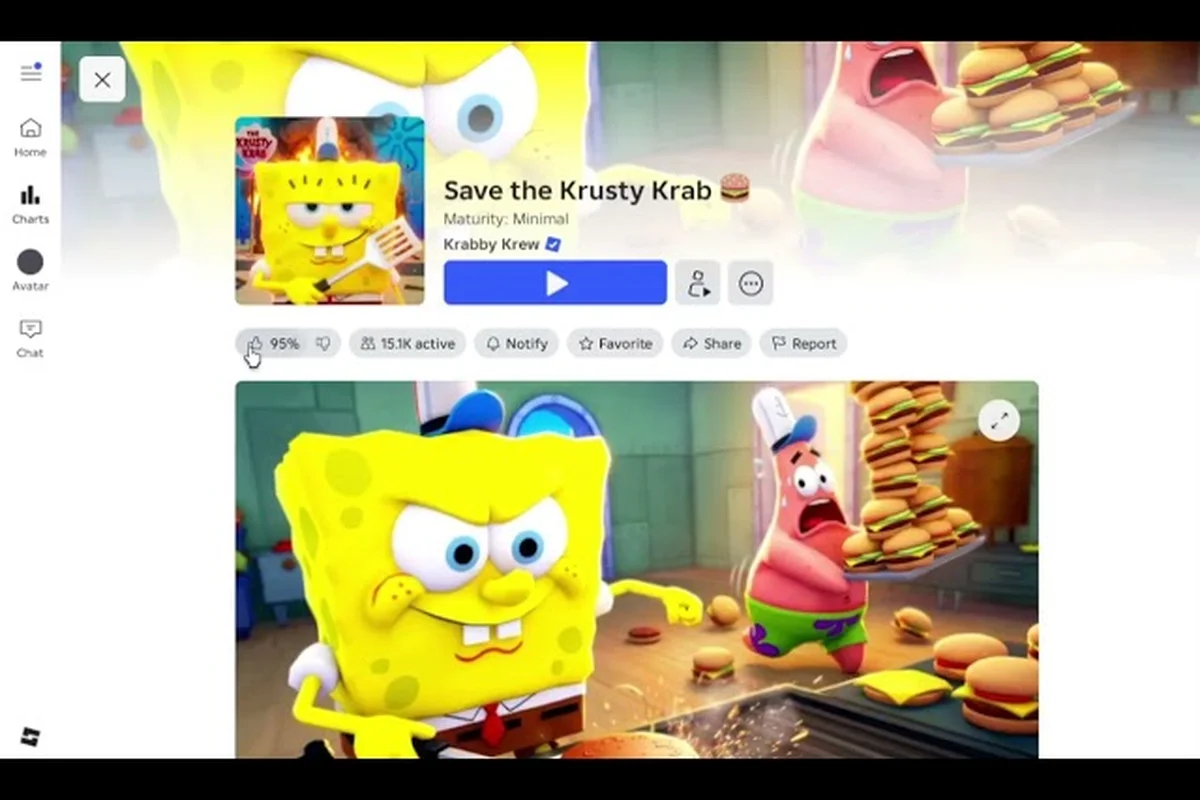
Save the Krusty Krab doubloon rewards are easiest to decode by separating order income, task payouts, work-streak multipliers, and crew-goal bonuses. For example, the basic order payment and daily task reward may both count toward the end-of-day total, while a longer work streak and a completed crew goal can raise the final doubloon amount. Comparing the listed base rewards with the final payout also makes it clearer which objective was actually worth more time on the shift.
How Save the Krusty Krab doubloon rewards work
The restaurant’s earnings come from several connected systems rather than one payout multiplier. Orders create the base result, while task rewards, work streaks, crew goals, star rating, and player abilities can improve or reduce the final cash total. Learning how these pieces interact makes it easier to identify where money is being lost during a shift.
Community field notes report that Mr. Krabs adds 10% to the entire crew’s cash result, while Squidward adds about 2 cash per completed order. These values are community observations rather than an official formula, so they may vary with balance changes. The broader Save the Krusty Krab money guide can help you connect individual income sources with a longer-term money strategy.
| Reward source | What contributes | Main way to improve it | Confidence |
|---|---|---|---|
| Completed orders | Base restaurant cash | Serve efficiently and complete more orders | Confirmed gameplay system |
| Daily tasks | Separate task rewards | Check requirements before ending the shift | Confirmed gameplay system |
| Work streaks | Consecutive-day progress bonuses | Return regularly and protect the streak | Confirmed gameplay system |
| Crew goals | Shared performance targets | Coordinate around the same objective | Confirmed gameplay system |
| End-of-day rating | Multiplier or performance effect | Prevent complaints, missed tables, and burned food | Community-reported effect |
| Class abilities | Character-specific additions | Match the class to the shift’s needs | Community-reported values |
The money loop from order to payout
A productive shift begins with table management. Taking an order, preparing the requested food, and delivering it correctly creates the foundation of your income. Money can fall later in the loop when customers leave because of excessive waiting, food burns, or a table is neglected. That makes completion speed just as important as the number of orders you begin.
The end-of-day payout then evaluates the restaurant’s overall performance. Star rating, complaints, burned food, missed tables, team bonuses, and character abilities all appear in community reports about the payout structure. Exact formulas for the star-rating multiplier, burn threshold, and patience timers are not consistently published, so avoid treating unofficial numbers as guaranteed values.
| End-of-day signal | Likely effect on earnings | Practical response |
|---|---|---|
| Higher star rating | Better final cash result | Keep tables attended and customers satisfied |
| Complaints | Lower performance result | Deliver promptly and correct mistakes |
| Burned food | Reduces shift quality and cash | Watch cooking progress continuously |
| Missed tables | Damages the customer rating | Rotate between empty and active tables |
| Crew bonus | Raises the crew total | Use complementary classes |
| Order count | Increases the base result | Favor completed orders over abandoned ones |
What the daily tasks list can include
A useful Save the Krusty Krab daily tasks list depends on the objectives shown in your current session. Instead of claiming that every day has the same tasks, check the task panel at the beginning of the shift and identify three recurring categories: service objectives, preparation or cleanliness objectives, and longer-term team targets.
Service tasks often reward completed orders, timely deliveries, or customer satisfaction. Preparation tasks can depend on correctly cooking foods and avoiding waste. Shared objectives may track team performance rather than an individual statistic. The wording can also change through updates, so use the in-game list as the authority and treat online shortcuts as a planning aid rather than a permanent reference.
Task rewards and crew goals that improve earnings
Task rewards are valuable because they reward specific behaviors instead of relying only on total order volume. A player can still serve plenty of customers and miss the objectives that would otherwise create extra income. Before the rush begins, reserve a few minutes to read the available tasks and identify the smallest station that can advance them.
Crew goals add another layer because they measure what the team accomplished together. A task that appears easy for one player may require another station to handle a different part of the service loop. This is especially noticeable in co-op shifts, where communication can prevent duplicated work. Players can also use the Save the Krusty Krab beginner tips and tricks to establish clear station priorities before attempting ambitious objectives.
Comparing individual and shared rewards
Individual task rewards are easier to control because you can watch the relevant counter directly. Crew goals depend on timing and communication, but they can deliver a stronger bonus when the whole restaurant performs well. The best approach is to complete the most controllable objectives first while keeping shared performance above the required threshold.
| Task type | Control | Common objective | Best time to focus |
|---|---|---|---|
| Order-based | Medium | Complete a set number of orders | During the main customer rush |
| Quality-based | Medium | Avoid burning or serving the wrong item | While cooking |
| Service-based | High | Serve customers quickly | When tables are filling |
| Crew goal | Low to medium | Complete a shared restaurant target | Across the full shift |
| Milestone | Low | Reach a longer progression point | Across multiple work days |
How to claim and prioritize task rewards
Check the task panel both before and after the main rush. Early tasks may reveal a goal that is easy to complete while the restaurant is quiet, while later tasks may depend on customer volume. If a reward expires at the end of the day, finish the requirement before the report screen; it is safer to assume that a task becomes unavailable once the shift closes.
When comparing the doubloon payout, separate fixed task rewards from the end-of-day payout based on the restaurant’s final rating. For example, completing a cooking objective may award a doubloon bonus immediately, while the tips and end-of-day payout can rise with a higher customer rating and fewer missed orders. This distinction makes the Save the Krusty Krab doubloon rewards easier to evaluate: record each task award first, then compare the final tips total with the crew goal, work-streak, and daily-task rewards. That breakdown prevents a small objective from being mistaken for the main payout and helps identify whether your doubloons came from active task progress or overall service performance.
-
Read every active objective and note its progress counter.
-
Remove the cheapest remaining requirement, such as one order when the counter is close to completion.
-
Protect the central service loop, because every missed customer can lower the end rating.
-
Reserve your strongest class ability for the highest-traffic moment.
-
Confirm completion before closing, especially for tasks tied to cooking, deliveries, or cleanup.
This sequence prevents a short task from distracting you from a much larger order problem. It also helps when reviewing Save the Krusty Krab task rewards because you can see whether the reward came from deliberate task progress or general restaurant performance.
Coordinating crew goals without slowing service
Crew goals work best when each worker owns one clear responsibility. Before the shift, decide who handles orders, who focuses on cooking, and who watches tables. When two people race to the same table, the duplicated effort often creates a bottleneck elsewhere. Assigning stations allows the team to complete shared targets while keeping customer wait times low.
The Save the Krusty Krab crew goals rewards are therefore partly earned through coordination. If one player can complete a task more efficiently, let that person focus on it while the others keep the restaurant moving. In solo play, focus on objectives that can be completed during normal duties, such as taking more orders or finishing foods, rather than chasing a shared target that requires another player.
Work streak rewards and long-term progression
Work streak rewards reward returning to the restaurant over consecutive days. The value comes from continuity: a regular schedule can unlock progress bonuses and make longer milestones easier to reach. Missing a day may interrupt that sequence, so the safest plan is to schedule short, efficient shifts rather than attempting an exhausting session that leads to a break.
Community badge data provides a useful measure of the progression curve. According to community data, Reach Day 2 was earned by 100% of players, Reach Day 5 by 66.4%, and Reach Day 10 by 22.8%. The numbers then fall sharply to 1.9% for Reach Day 30 and 0.3% for Reach Day 50. The five-star restaurant badge was earned by 4.5%, making it a rarer achievement than reaching day 30.
| Progression badge | Reported player rate | What it suggests |
|---|---|---|
| Reach Day 2 | 100% | The first return is broadly achievable |
| Reach Day 5 | 66.4% | A meaningful early consistency test |
| Reach Day 10 | 22.8% | The routine becomes substantially harder to maintain |
| Reach Day 30 | 1.9% | Long-term retention is difficult |
| Reach Day 50 | 0.3% | Very few players sustain this streak |
| Five-star restaurant | 4.5% | Excellent ratings remain relatively rare |
Building a sustainable work routine
The best streak is one you can maintain. Begin with a target that fits your schedule, then review the daily objectives, available recipes, and crew needs before starting. A short organized shift often produces more value than a long shift with neglected tables, because the final payout rewards restaurant quality as well as order count.
The Save the Krusty Krab day guide can help with broader progression planning, while this guide focuses on income. For streaks, treat the daily report as a checkpoint: note the star rating, customer complaints, burned food, missed tables, and task completion. Those numbers identify whether your routine needs more speed, better coordination, or cleaner station execution.
Protecting a streak without chasing every task
Trying to complete every optional objective can hurt the core service loop. A task requiring repeated cooking may be less valuable than finishing a customer’s order before patience runs out. Protect the restaurant rating first, then pursue a task when its progress is nearly complete or when traffic is low.
A balanced approach is to set three limits: prioritize tasks that can finish within one serving cycle, then compare each task’s doubloon value with the customer orders it could delay. For example, if a customer is waiting on a Krabby Patty while the nearest cook requires several trips, clear the order first and collect the task reward afterward. This keeps the restaurant rating stable, preserves work-streak progress, and prevents a low-value task from reducing the end-of-day payout.
-
Time limit: Spend only the amount of time needed for the next meaningful gain.
-
Space limit: Move only when a customer, appliance, or task requires attention.
-
Risk limit: Avoid leaving a table unattended for a low-value task.
These limits reduce wasted motion and help maintain a consistent end-of-day result, which matters because the payout is built from repeatable service performance rather than one isolated high-value task. For example, if a Cook’s Assistant task offers 20 doubloons but requires several trips away from the grill, completing one customer order first may be more valuable than chasing the task and risking a lower restaurant rating. Over many shifts, that consistency can protect work-streak progress, improve the end-of-day payout, and prevent a dramatic session from ending with poor performance or an early break.
End-of-day payout optimization and money tips
The Save the Krusty Krab end of day payout is the clearest measure of a shift’s financial performance. It reflects the restaurant’s result after orders, service mistakes, and bonuses are considered. To raise the final amount, focus on the variables you can control: completed orders, food quality, customer attention, objective completion, and class selection.
Community reports identify Mr. Krabs’ 10% crew-wide addition and Squidward’s approximate 2-cash bonus per completed order. These are useful planning observations, but the developer has not published a consistently verified formula for every payout component. The NoobBlox guide to earning doubloons and improving classes can provide a visual companion, while the numbers in this guide should still be checked against the current game version.
The most effective money priorities
Speed and accuracy work together. Completing orders quickly raises volume, but completing them correctly protects the rating. Before adding another active task, make sure every occupied table has a clear next action and no food is burning unattended. During the rush, the restaurant’s weak point is usually the station nobody is watching.
| Priority | Action | Why it affects the payout |
|---|---|---|
| 1 | Clear burning appliances | Prevents food loss and protects quality |
| 2 | Serve waiting customers | Reduces complaints and missed tables |
| 3 | Finish active orders | Raises the completed-order count |
| 4 | Claim near-complete tasks | Adds task value with little extra effort |
| 5 | Coordinate crew bonuses | Improves the shared total |
| 6 | Avoid low-value wandering | Preserves service speed and attention |
Choosing a class for the money objective
Mr. Krabs is especially valuable when the goal is a crew-wide increase, according to community field notes. Squidward rewards completed orders, so his apparent advantage grows with order volume, but that does not remove the need to keep customers satisfied. If you prefer another character, compare that character’s current ability with the shift type before assuming it produces less money.
Class choice should follow demand. During a busy period, prioritize the ability that reduces work at the busiest bottleneck. During a slower period, use the extra time to complete objectives. The useful question is not simply which class is best for money; it is which passive, ability, or crew combination solves the shift’s largest problem without creating a second one.
Tips and tricks money players can use
These Save the Krusty Krab tips and tricks money strategy focuses on preventable losses. Keep the cooking station visible, assign one person to monitor tables during the rush, and deliver completed dishes before taking additional orders when possible. The goal is not frantic speed; it is a smooth flow in which customers do not wait and food does not burn.
Review the end report with a simple three-column checklist. Mark the issue that cost the most money, the action that would have prevented it, and the next shift’s focus. Common findings include ignored cooking, duplicate table visits, abandoning a nearly complete task, or using a crew bonus that does not match the workload.
| Observed issue | Likely cost | Next-shift adjustment |
|---|---|---|
| Burned food | Wasted ingredients and lower quality | Assign a dedicated cooking monitor |
| Missed tables | Complaints and rating damage | Check empty tables between orders |
| Low completed-order count | Smaller base result | Improve order flow and delivery timing |
| Unfinished tasks | Lost task rewards | Finish objectives with only one step left |
| Weak crew result | Missing shared bonus | Review class combination and roles |
A practical doubloon reward plan for every shift
A reliable routine turns Save the Krusty Krab doubloon rewards into a repeatable system rather than a mystery. Open the task list, inspect the crew goal, choose a class that complements the available roles, and set one service-quality target. At the end, compare the report with the previous shift to see whether your gains came from more orders, better execution, or completed tasks.
The strongest approach is to preserve the restaurant first and optimize second. Completed orders, satisfied customers, and avoided mistakes form the base result; task rewards, streak progress, crew goals, and class bonuses then improve or multiply that performance. Exact percentages outside the community observations should not be treated as permanent because the game’s economy can change with updates.
| Shift phase | Main action | Reward-related purpose |
|---|---|---|
| Before opening | Read tasks and assign roles | Identify achievable bonuses |
| Early rush | Finish easy tasks and establish flow | Build order count and task progress |
| Mid-shift | Protect tables and cooking stations | Avoid quality penalties |
| Late rush | Use class abilities at peak demand | Increase the effective crew result |
| Closing review | Confirm tasks and inspect the report | Record corrections for the next shift |
Frequently Asked Questions
What gives the most Save the Krusty Krab doubloon rewards?
Completed orders form the base of your earnings, while task completion, class abilities, crew goals, and a strong star rating can improve the result. The best total comes from balancing speed with accuracy because complaints, burned food, and missed tables can reduce the final payout. No single multiplier should replace good service.
Do work streak rewards pay doubloons every day?
Work streak rewards are associated with consecutive workdays and longer progression milestones rather than a simple flat payment confirmed for every session. Community badge data shows that reaching later days becomes increasingly difficult, with 22.8% earning Day 10 and 1.9% earning Day 30. Check the current progression screen for the exact reward attached to your streak.
How can I improve the Save the Krusty Krab end of day payout?
Serve waiting customers, prevent food from burning, finish active orders, and avoid abandoned tables. Confirm that daily tasks are complete before the report begins, and use crew bonuses when their abilities address the current bottleneck. Since the precise star-rating formula is not consistently published, compare reports across several shifts instead of relying on a single unofficial multiplier.
Should every player use Mr. Krabs to earn more money?
Community field notes indicate that Mr. Krabs adds 10% to the crew’s cash result, but the right choice still depends on your crew and the shift. A class that solves a cooking, ordering, or delivery bottleneck may help the team earn more overall. Compare current abilities, then test combinations while watching the end-of-day report.
Where should I look for the daily tasks list?
Use the task interface inside the current shift because objectives and conditions can change through updates. Early in the shift, identify the requirements with the greatest remaining progress, then complete low-effort objectives without neglecting customers. Confirm every task before closing so that a near-finished reward is not lost at the payout screen.