
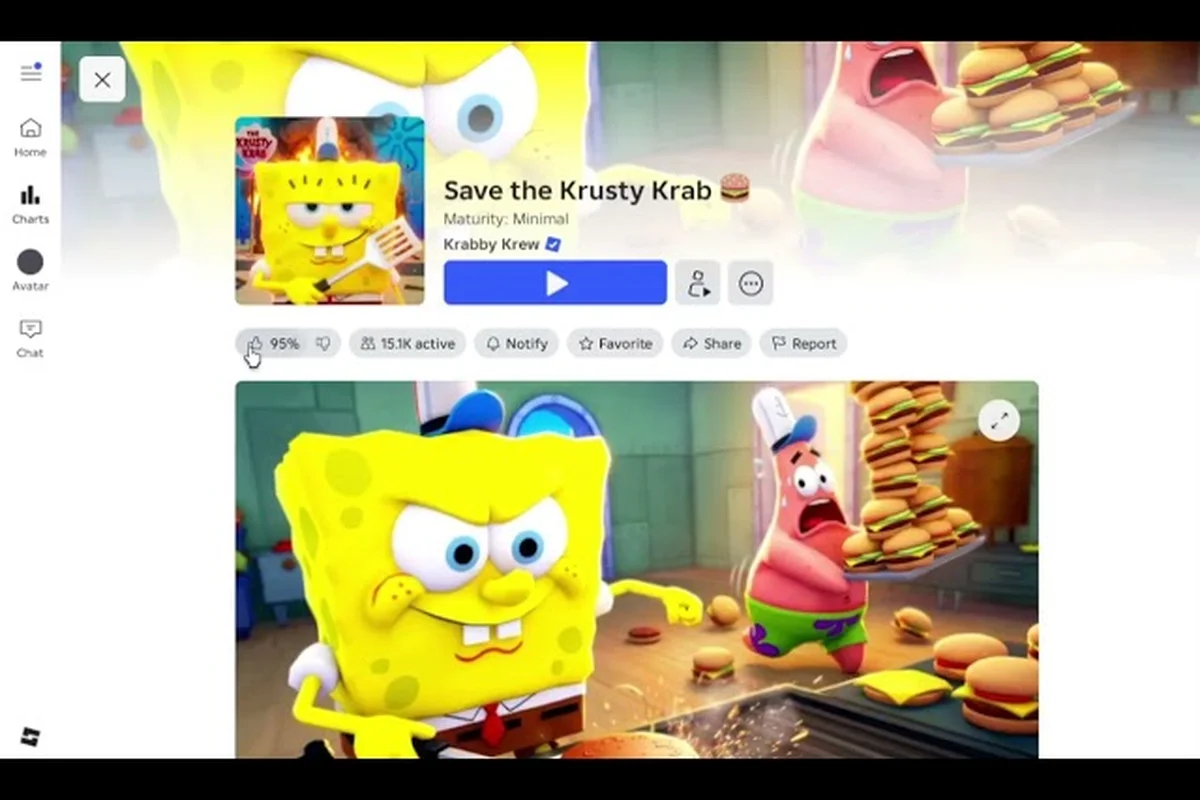
The Save the Krusty Krab no mistake bonus rewards completing every customer order without a mistake, so even one dropped order can reduce the shift’s payout. For example, serving four orders correctly but failing the fifth may still lose the bonus, whereas clearing all five can raise the money earned from that shift. Understanding cash vs doubloons also matters: cash comes from serving customers, while doubloons accumulate through the no-mistake and performance bonuses. Choosing the best class for money depends on whether its order speed, accuracy, or combo effects can sustain a clean run.
What the Save the Krusty Krab no mistake bonus rewards
The Save the Krusty Krab no mistake bonus is best understood as a clean-order incentive: avoiding errors lets you protect the money or doubloons earned from each completed job. Community field notes describe this as a practical money multiplier rather than a separate code or paid game pass, so the real advantage comes from reducing mistakes during service.
That distinction matters because no-mistake play can improve income preservation even when your handling speed stays the same. A customer who receives the correct order, the correct item, and the correct amount contributes a cleaner result than one who must be corrected. The important comparison is not simply how many customers you serve, but how much of the value you actually keep after corrections, wasted supplies, and avoidable delays.
| Income outcome | What likely happened | Long-term effect |
|---|---|---|
| Full-value order | Correct order prepared and delivered | Builds reliable earnings |
| Reduced-value order | Order was completed after a mistake | Preserves less income |
| Lost income | Wrong item, missing item, or abandoned order | Wastes service time and resources |
| Unverified bonus | Exact percentage not confirmed by the developer | Do not plan around a fixed rate |
The game’s official storefront listing is the appropriate place to verify whether purchases or features have changed, while this player tips video can provide a visual tour of practical class and ranking choices. Community reports are useful for strategy, but exact star formulas, patience timers, burn thresholds, and bonus percentages should not be treated as fixed official values unless the developer publishes them.
Clean service versus more customers
A larger customer queue can produce a misleading result. If mistakes increase as orders accumulate, extra traffic may add busy-looking work without raising your final balance. Clean service prioritizes fewer invalid handoffs, better order tracking, and controlled movement around the restaurant.
Treat each customer order as a linked five-stage chain, where a mistake at one stage can erase the Save the Krusty Krab no mistake bonus even if the remaining stations are handled correctly. For example, accurately taking a Krabby Patty order but failing to collect full payment breaks the clean-order chain and removes the bonus; paying first, then starting the next ticket, preserves the sequence. This makes Save the Krusty Krab money per order depend on controllable execution rather than queue size alone, while the permanent time-saving upgrade can reduce delays that cause order mix-ups.
-
Accept the correct customer order.
-
Gather every required item.
-
Prepare the item without an error.
-
Deliver it to the intended customer.
-
Collect the proper payment before starting the next order.
The Save the Krusty Krab money per order is therefore shaped by both ticket value and execution quality. A cheaper order handled cleanly may be more valuable than an expensive order that causes spoilage, customer loss, or a rework. Community field notes also recommend buying the first permanent time-saving upgrade before any cosmetic, because saved time gives you more chances to complete clean orders.
Money per order and mistake prevention
To improve Save the Krusty Krab money per order, reduce the number of actions that can invalidate a job. Station familiarity is the foundation: learn where ingredients, tools, cooking devices, payment points, and cleaning stations sit before increasing the pace of your shift. A faster route without that knowledge usually creates more corrections.
This checklist concentrates on the mistakes that most directly reduce Save the Krusty Krab income: wrong orders, missing ingredients, incorrect handoffs, burned food, abandoned customers, and uncollected payment. It does not claim a fixed no-mistake bonus percentage, because community evidence does not establish one consistent figure across every version. Instead, the table below links each failure to its financial consequence and a practical prevention method, allowing you to measure whether higher order throughput is actually improving doubloons or merely increasing corrections.
| Mistake area | Why it reduces income | Prevention method |
|---|---|---|
| Wrong order | Creates a replacement and may reduce the original ticket | Repeat the order silently before cooking |
| Missing ingredient | Delays handoff and wastes customer patience | Use a visual completion check |
| Incorrect handoff | Sends the wrong result to another customer | Confirm the customer marker |
| Burned food | Removes usable value and adds cleanup | Start preparation only when attention is free |
| Abandoned customer | Ends the order without full payment | Track waiting customers actively |
| Uncollected payment | Earns less than the completed work | Make collection part of the handoff |
Preparation verification is the simplest no-mistake technique. Before interacting with a cooking device, match every requested component with the order, including quantities and modifiers. This habit is more reliable than rushing through a familiar ticket because familiar orders often receive less conscious attention.
Attention switching is another major risk. A long fryer cycle can tempt you to begin another order, yet the original item may need removal at the correct moment. If the kitchen has a safe moment between tasks, use it to finish one station before moving elsewhere. When a station requires simultaneous management, compare available character abilities and station speeds before committing to a route.
For broader cash-farming methods, the Save the Krusty Krab money guide expands on upgrade priorities and doubloon farming. Its most useful overlap here is straightforward: permanent efficiency upgrades generally create more value than decorative purchases because they help you complete additional orders without increasing error rate.
A reliable order routine
A repeatable routine reduces decision time during busy service. Start with a quick scan of the active orders, choose the order you can complete cleanly, gather the required items, and then verify both preparation and destination. While no universal timing window is published, this sequence consistently limits the chain reaction caused by one misplaced or unfinished item.
A practical routine also requires resisting the “no mistake bonus” temptation to rush: delaying one order slightly can protect the streak, whereas sending a Krabby Patty with the wrong destination or missing a required item can break it immediately. For example, if a customer’s order is nearly ready but another ticket has several components still scattered across the kitchen, finishing the active order first is usually safer than switching. This keeps the Save the Krusty Krab no mistake bonus intact, avoids a costly restart, and supports the same cash-versus-doubloons goal by preventing an otherwise correct order from becoming worthless.
-
Scan: Identify every active customer and order.
-
Prioritize: Select a ticket with fewest error risks.
-
Gather: Collect all components before preparation.
-
Verify: Compare the prepared result with the original order.
-
Deliver: Confirm the customer target.
-
Collect: Secure payment before moving on.
This approach may appear slower than reacting only to the nearest customer, but it reduces interruptions and prevents one mistake from forcing you to abandon a second task. The result is a cleaner shift and a more useful comparison of actual earnings.
Choosing the Save the Krusty Krab best class for money
The Save the Krusty Krab best class for money depends on whether your priority is raw ticket value, handling speed, or reliable teamwork. No published evidence supports one universal ranking, because each class has different station strengths and every order demands a different mix of tasks. The best economic choice is the class that reduces your most common error without creating a second weakness.
| Class choice | Economic strength | Common strength | Best fit |
|---|---|---|---|
| Mr. Krabs | Command and value-focused play | Managing customer flow | Players who want higher-value orders |
| Squidward | Order preparation and precise work | Cooking and kitchen handling | Players who prefer clean execution |
| SpongeBob | Mobility and flexible stations | Moving between tasks | Players who want versatile earnings |
| Patrick | Speed and task handling | Fast service routines | Players confident with quick execution |
| Sandy | Support and technical utility | Supporting team systems | Coordinated crew play |
The Save the Krusty Krab Mr Krabs money bonus and the Save the Krusty Krab Squidward money bonus should be evaluated as class-specific advantages, not universal multipliers. If Mr. Krabs is associated with commanding or higher-value orders, that class can improve your average ticket, while Squidward may be more attractive when precise preparation prevents rework. Your actual order mix and the stations you repeatedly mishandle should decide which benefit is more valuable.
Community guidance suggests saving doubloons for a carry class such as SpongeBob rather than spreading them across several inexpensive options. That is a spending priority, not a claim that SpongeBob always earns the most. A strong class still performs badly if the player loses track of orders, because raw handling ability cannot recover a lost customer.
Compare income by class
Track ten clean orders for each class you test. Record the payment collected, the number of corrections, and the time spent on non-earning tasks. This small sample produces better personal data than a generic tier list because it measures your route knowledge, customer pattern, and current upgrade level.
| Measurement | What it reveals | Better result |
|---|---|---|
| Cash collected | Direct order income | Higher total |
| Doubloons collected | Premium or secondary earnings | Higher total |
| Corrections per 10 orders | Reliability | Fewer errors |
| Abandoned orders | Lost income | Zero |
| Active time per order | Route efficiency | Lower time |
When reviewing broader options, the Save the Krusty Krab all classes list is useful for checking station coverage, while the class upgrade guide can clarify how progression changes during a session. Avoid buying every early upgrade simply because it is available. Choose upgrades that fix a recurring bottleneck, then return to an order-clearance test.
Mr. Krabs and Squidward value profiles
Mr. Krabs is the natural choice to examine when your main concern is average order value. His value comes from keeping higher-paying work organized and preventing profitable tickets from being interrupted. The Save the Krusty Krab Mr Krabs money bonus should therefore be measured against the value of completed high-value orders, not against the number of customers served.
Squidward is more closely associated with preparation precision. If mistakes happen because you rush cooking, combine ingredients incorrectly, or lose track of a ticket, his strengths can improve consistency. The Save the Krusty Krab Squidward money bonus is most valuable when fewer mistakes allow more orders to finish without replacement work.
Neither class automatically wins, so evaluate the Save the Krusty Krab no mistake bonus against the orders you actually complete. Mr. Krabs is stronger when high-value orders dominate your service, since profitable tickets earn more money per order; Squidward is stronger when preparation quality is the bottleneck, because avoiding mistakes prevents costly remakes and lost tips. Test both classes on the same order type and compare cash vs doubloons before committing scarce currency.
Cash vs doubloons for sustainable earnings
Save the Krusty Krab cash vs doubloons is more than a comparison of two currency icons. Cash supports immediate service spending, while doubloons can represent longer-term progression choices. Their practical value depends on what the current build permits, how quickly you earn each currency, and whether an upgrade removes future inefficiency.
| Currency | Immediate value | Long-term value | Best spending rule |
|---|---|---|---|
| Cash | Supports routine purchases and tools | Depends on available permanent upgrades | Avoid replacing avoidable losses with disposable purchases |
| Doubloons | Usually treated more selectively | Better for important progression choices | Save before spreading across weak classes |
| Combined income | Supports flexible spending | Improves the number of clean shifts you can complete | Compare the result of each option, not the number |
Community field notes advise buying the first permanent time-saver before any cosmetic and avoiding spending cash on a tool that careful play can replace. This approach is based on player experience rather than a developer-published return formula, but it is economically sound: an upgrade that reduces repeated work compounds across every later order, while a cosmetic provides no direct operating benefit.
A related warning is equally important. The current game has no code system or game pass according to the supplied community field notes. Any page advertising free doubloons codes or a paid multiplier is not describing this game, and the official listing should be the authority for purchasable content. Ignore promised multipliers that are not shown in the normal game interface.
Which currency should you spend first?
Use cash for upgrades that immediately prevent your most common failure, especially if a poor order creates a larger loss than the purchase costs. Use doubloons for a class or permanent progression choice that you can keep and benefit from across many shifts. A practical order is:
-
Buy the first permanent time-saving upgrade.
-
Upgrade the station linked to your recurring mistake.
-
Improve a class that handles orders reliably.
-
Add cosmetics only after your core route performs consistently.
If you want to compare long-term progression routes, review the Save the Krusty Krab class level up guide before spreading resources across several new characters. Upgrading the class you already understand is often more profitable than starting with multiple weak copies, because learning time becomes another hidden cost.
Don't confuse gross income with kept income
Record what you collect, not the displayed value of every order. Gross income includes tickets you eventually lose, while kept income reflects what remains after mistakes, abandoned work, and unnecessary purchases. This distinction is especially useful when comparing cash with doubloons because a large early payment may not be better than a smaller, repeatable income stream.
A simple ledger can be kept after every ten orders by recording the order number, the cash collected, any doubloons earned, and the value of mistakes or wasted supplies. For example, if ten orders generate 1,200 cash but 300 is lost to customer mistakes and 200 goes toward purchases, the kept result is 700, not the full 1,200. Comparing that figure with the next ten orders shows whether your money per order is actually improving after a class change, upgrade, or route adjustment, rather than merely increasing because you completed more orders.
| Ledger field | Why it matters |
|---|---|
| Starting balance | Establishes the baseline |
| Cash earned | Measures ordinary income |
| Doubloons earned | Measures premium currency flow |
| Customer losses | Identifies avoidable waste |
| Purchase total | Shows how much progress spending consumed |
| Ending balance | Reveals real economic improvement |
This ledger does not require advanced tools. A note on your phone or a small paper tally is enough: for each ten-order block, mark the starting cash, cash collected, doubloons earned, customer losses, and purchase total, then subtract losses and spending from income. If the first block produces 1,200 cash, 300 in customer mistakes, and 200 in purchases, its kept result is 700, or 70 per order; use the same calculation for the next block to see whether a class change, upgrade, or route adjustment improves money per order rather than merely increasing the number of orders completed.
Advanced habits for maximizing no-mistake income
Maximizing the Save the Krusty Krab no mistake bonus requires reducing interruptions, not merely repeating one high-scoring route. The most valuable habits are environmental: remove visual clutter, establish a consistent station order, and design a recovery plan before service becomes crowded. These methods improve performance because they shorten decisions and make errors easier to notice.
Control the route before the pace
Your route should have a predictable beginning and end. A common sequence is to acknowledge a customer, collect ingredients, prepare the order, deliver it, collect payment, and then clear the station. Keeping the same sequence reduces the chance that you return to a partially completed order and misread its status.
| Habit | Immediate effect | Earnings effect |
|---|---|---|
| One active order at a time | Fewer simultaneous tasks | Fewer mix-ups |
| Station reset after each order | Clearer starting condition | Less waste and rework |
| Visual order markers | Faster destination check | Fewer incorrect handoffs |
| Two-minute equipment check | Fewer avoidable failures | More consistent tickets |
| Fixed purchase schedule | Less impulse spending | More resources for upgrades |
Order isolation is especially important. Avoid preparing two visually similar items unless the game clearly supports that workflow. If you must multitask, use color, position, or a written marker to distinguish active orders. The best speed is the speed that does not require an expensive correction afterward.
Build a mistake-recovery checklist
Recovering quickly does not earn the full value of a mistake-free order, but it prevents a single error from becoming a cascade. When something goes wrong, stop, identify the affected order, clear the relevant station, and restart the sequence. Do not continue with ambiguous ingredients because uncertainty can turn one incorrect order into two.
Community data does not provide a reliable burn threshold, customer growth curve, or patience formula, so avoid using exact timers that may be outdated. Instead, watch the in-game state and respond to visible warnings. This approach remains useful if the game changes its balance through an update.
Measure three consecutive shifts
One impressive shift may reflect an easy customer pattern, while three similar shifts reveal a repeatable result. Keep the same class, route, and purchase policy for the test, then record cash, doubloons, corrections, and abandoned orders. If earnings improve while corrections fall, the change is probably productive. If income rises only because you played more risky routes, examine the order of those sessions.
For crew play, compare handoff habits with the Save the Krusty Krab cleaning assignments guide. Shared cash and cleanup can be efficient, but one unclear handoff can reduce the value of the whole group. Assign responsibilities explicitly and confirm the final owner of every order.
Frequently Asked Questions
What is the Save the Krusty Krab no mistake bonus?
The Save the Krusty Krab no mistake bonus is a clean-service incentive that can improve order value by preventing income loss from mistakes. The available community evidence does not confirm a universal percentage, so the safest approach is to measure your own earnings before and after reducing corrections, abandoned orders, and rework.
Which class earns the most money in Save the Krusty Krab?
No single class is officially proven to earn the most in every situation. Mr. Krabs may suit higher-value order management, while Squidward may suit precise preparation. Test ten comparable orders with each class and compare kept income, corrections, and completion time rather than relying on a universal ranking.
Are cash and doubloons better for different upgrades?
Cash is generally more practical for immediate purchases, while doubloons are best reserved for important progression choices. Community field notes recommend the first permanent time-saver before cosmetics and saving doubloons for a useful carry class, because permanent efficiency benefits compound across more clean orders.
Does a paid multiplier or code increase no-mistake income?
The supplied community field notes state that the current build has no code system or game pass. Advertisements promising free doubloons codes or paid multipliers should therefore be treated as inaccurate. Verify any available purchase through the game’s official storefront listing rather than trusting a third-party page.
How can I improve my money per order without changing classes?
Improve your route, verify every order before preparation, confirm the handoff destination, and collect payment as part of the final step. A permanent time-saving upgrade can also create more earning opportunities. Track cash, doubloons, corrections, and abandoned orders over ten-order samples to identify the change that actually increases kept income.