
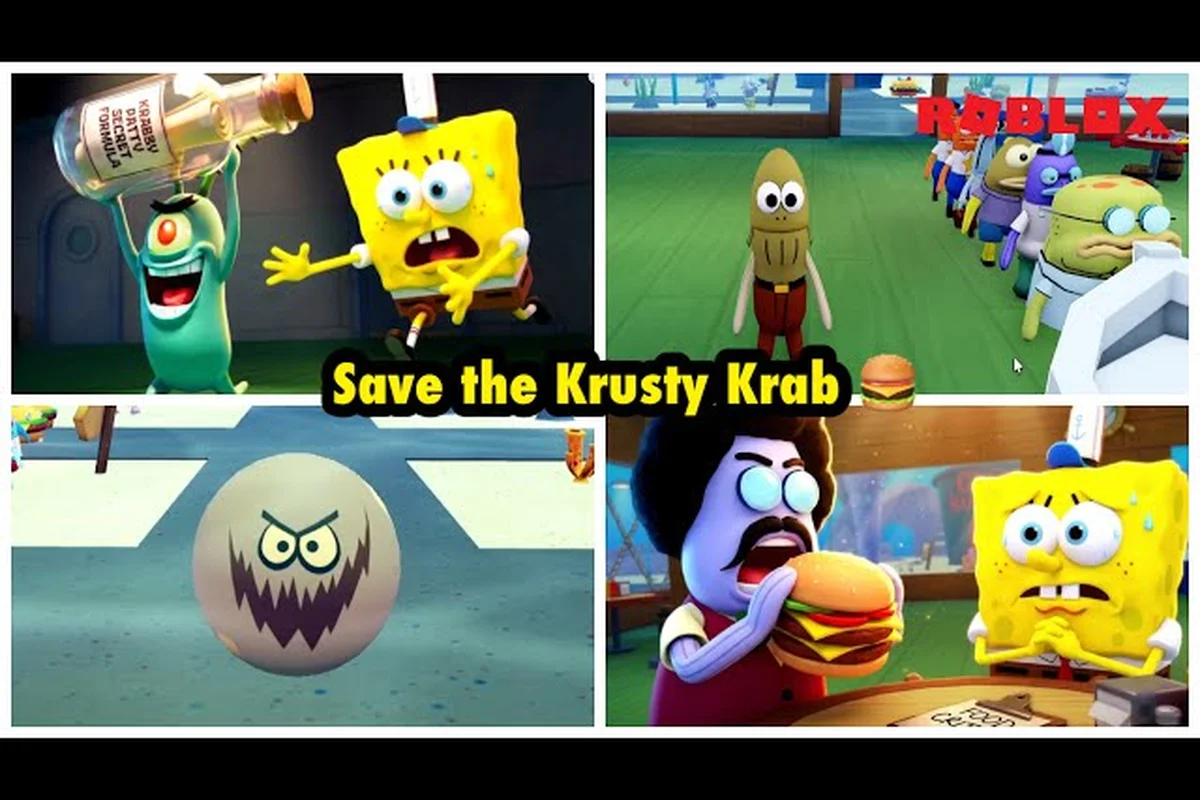
A Save the Krusty Krab no complaint run depends on fast service, clean orders, and controlled energy use. Learn how to reach Day 7 and Day 15, protect your star rating, and turn milestone badges into a steady progression advantage.
How a No Complaint Run Is Scored
A complaint-free shift is not simply about serving quickly. Your restaurant rating rises when customers receive correct food, tables are cleared, and orders leave the kitchen without mistakes. Complaints, burned food, missed tables, and villain attacks push that rating downward, which can reduce the cash result when the shift ends.
| Event during the shift | Effect on a no complaint run | Priority response |
|---|---|---|
| Correct order delivered | Supports a higher star rating | Keep serving without long gaps |
| Incorrect order | Risks a complaint | Verify the order before delivery |
| Burned food | Damages service quality | Watch cooking and replace it quickly |
| Missed table | Lowers rating | Clear the table as soon as possible |
| Villain effect | Adds pressure and drains energy | Finish the urgent interaction safely |
| Clean settlement | Protects the run’s record | Preserve momentum on the next day |
Community field notes describe the star scale as running from one to five, with the rating improving when service is fast and accurate. They also report that a five-star restaurant badge is held by about 4.5 percent of players, making it a demanding objective rather than a routine result. Because the exact formula is not published, the reliable approach is to avoid mistakes and treat every complaint as a separate warning sign.
That distinction matters for the Save the Krusty Krab no complaint run. Chasing the fastest possible order can backfire if the table is ignored or a food item burns while you focus elsewhere. Your goal is a smooth sequence of completed actions, not a single heroic rush.
Read the Day Counter as a Pressure Gauge
The Save the Krusty Krab day counter shows progression, but it also indicates that each shift is becoming less forgiving. A customer may not care whether yesterday ended perfectly if today starts with an unattended table, a vulnerable kitchen, or an active villain. Think of the counter as a difficulty signal: when it reaches Day 7, routine mistakes become more costly, and by Day 15, small delays can trigger a chain of failures.
The Save the Krusty Krab reach day 7 objective is therefore a genuine checkpoint rather than a cosmetic milestone. Surviving the first week with no complaints proves that you can close loops correctly under pressure. Continuing to Day 15 tests whether your route remains stable when patience, energy management, and table coverage all compete for attention.
| Day range | Main challenge | Best training goal |
|---|---|---|
| Days 1–3 | Learn the order and table loop | Finish without leaving a customer waiting |
| Days 4–6 | Manage overlapping tasks | Keep cooking under observation |
| Day 7 | First major consistency test | Reach the milestone with a clean settlement |
| Days 8–12 | Accumulate late-shift pressure | Protect energy before it becomes critical |
| Days 13–15 | Combine speed, accuracy, and survival | Reach Day 15 without a complaint |
This is why the Save the Krusty Krab difficulty scaling guide is useful once the basic routine stops feeling automatic. It helps frame later days as a changing workload rather than a simple repetition of Day 1.
Reach Day 7 Without Complaints
Day 7 is best treated as a systems test. Before that point, you should identify the order type, the cooking point, the delivery route, and the table that needs clearing. If those four steps are reliable, you can spend less attention searching the screen and more attention catching a mistake before it becomes a complaint.
Designing a No-Complaint Service Loop
A strong route follows the same logic every shift: take an order, start the correct preparation, clear or service the table that is closest to becoming a problem, and return before food burns. This method reduces unnecessary movement and makes it easier to see which actions are interrupting the cycle.
| Order on screen | First action | Verification point | Best next move |
|---|---|---|---|
| Krabby Patty | Begin the correct cooking process | Confirm the selected recipe | Prepare the next order if timing allows |
| Fryer item | Watch the fryer closely | Check doneness | Deliver or clear the table first |
| Kelp shake | Prepare and protect the drink | Confirm the customer order | Use kelp shake energy recovery when needed |
| Multi-item order | Prioritize preparation order | Recheck every item | Deliver only when complete |
Do not deliver an order merely because its timer is approaching the danger zone. A nearly finished customer can usually wait another moment, while a burning item or a neglected table may create a second problem. The most important rule in a Save the Krusty Krab no complaint run is to avoid creating a second emergency while handling the first.
If you want a broader view of early progression, the Save the Krusty Krab day guide can help you compare the learning demands of the opening days with the pressure that arrives later. Use the day counter and milestone milestones—such as reaching day 7 or day 15—to track when additional orders, tighter timers, and late-shift difficulty begin affecting the route. The same routine should still work, but you may need to protect kelp shake energy recovery and prioritize table clearance more aggressively as each shift raises the risk of a complaint.
Reserve Energy for Recovery
Community observations indicate that energy drains because of mistakes and villain effects, while kelp shakes restore it. Exact energy caps and drain values are not published, so do not plan around a precise meter threshold. Instead, preserve energy by making fewer avoidable errors and use a shake before a long, high-pressure sequence.
Your recovery decision should follow three tests, because energy recovery is a scarce operational resource rather than a routine refill. For a no complaint run, treat each kelp shake as an intervention: use it to create a safe window for a customer order, a villain encounter, or a short cleanup task, and avoid spending it while the restaurant is already stable. This matters even when the meter appears healthy, since missed orders and enemy attacks can drain the shift faster than planned.
-
Is a customer actively waiting? Finish the order that is closest to a complaint.
-
Is food cooking or a villain approaching? Restore enough energy to complete that interaction safely.
-
Is the restaurant temporarily stable? Use that calm window to clear a table or prepare the next order.
This decision order keeps restoration tied to a real operational need. Drinking kelp shakes whenever the meter looks low may waste a useful recovery window, while waiting until energy is nearly gone can leave you unable to respond to a sudden attack.
Reach Day 7 With a Clean Record
To complete the Save the Krusty Krab reach day 7 target, review the previous day before starting the next shift. Look for recurring causes rather than blaming one unlucky moment. Repeated table delays point to a routing problem, while repeated cooking failures suggest that you are taking too many orders at once.
| Warning sign | Likely cause | Correction |
|---|---|---|
| Several tables wait together | Route spreads you too thin | Clear the nearest table before starting distant work |
| Food burns repeatedly | Cooking is not being watched | Reduce parallel preparation |
| Energy falls despite steady service | Villain effects or small mistakes | Save shakes for genuine pressure points |
| Rating drops after one late order | One unfinished table causes a chain | Check every table before taking another order |
| Final cash is lower than expected | Strong work may still earn a lower rating | Prioritize clean completion over speed alone |
By Day 7, the seven-day consistency marker should represent a repeatable process, not merely seven surviving shifts. Use the previous day’s warning signs to identify the cause of each failure: if several tables wait together, change the spread of your work; if the kitchen burns food, reduce parallel preparation; if the rating falls after one unfinished table, finish that table before accepting another order. Keeping the day counter advancing while avoiding complaints requires the same corrections to hold under greater demand, and it creates a reliable foundation for the Save the Krusty Krab reach Day 7 milestone.
Reach Day 15 With Late Shift Control
Reaching Day 15 requires more than extending a Day 7 routine. The Save the Krusty Krab late shift difficulty appears in shorter windows between mistakes: one delayed order can burn food, occupy a table, and drain energy before you recover. Your route must therefore have a reliable priority order and a clear escape plan when a villain appears.
Use a Three-Layer Priority System
When several tasks overlap, choose the task with the most immediate consequences. Start with active food that can burn, then address customers whose patience is running low, and clear abandoned tables before they create a wider service problem. Villain actions sit inside this order because they can interrupt both service and energy.
| Priority | Action | Reason |
|---|---|---|
| 1 | Finish or rescue active cooking | Burned food can create complaints and waste supplies |
| 2 | Serve a customer near the patience limit | A complaint can lower the rating immediately |
| 3 | Address an active villain effect | It can damage the restaurant and drain energy |
| 4 | Clear a missed table | It prevents tables from returning to service |
| 5 | Prepare low-urgency orders | Use calm windows to maintain throughput |
This hierarchy is particularly useful for the Save the Krusty Krab reach day 15 goal. It tells you what to abandon temporarily when the kitchen becomes crowded. Ignore a distant table long enough to rescue cooking, deliver a completed order, and restore your ability to respond to the next event.
Keep a Separate Emergency Plan
A no complaint run fails when a normal route has no defined response to a villain. Before the shift, choose one emergency action for three common situations: a customer waits during an attack, food burns while you are defending the restaurant, and your energy drops while tables remain active.
-
If a customer waits during an attack, secure the immediate safety issue and then return directly to the longest-waiting customer.
-
If food burns while you are away, replace it immediately, but do not abandon an active villain or customer to an unlimited delay.
-
If energy becomes low, use a kelp shake only when the recovery will let you finish a necessary action; then return to the highest-priority task.
On the Save the Krusty Krab late shift difficulty, hesitation can cost service time, but rushing can spread damage across several systems. Use a short decision tree: resolve the active villain, clear a burning food station, and protect an unhappy customer in that order, then resume normal service. For example, if a villain is attacking while one order is waiting, defeat the villain before serving the customer; otherwise, the attack may trigger a complaint and extend the no complaint run. Save a kelp shake for an energy dip that could stop you from completing the next required action.
Use Milestone Badges as Route Checkpoints
Save the Krusty Krab milestone badges provide visible progression markers across a long attempt. Their exact award requirements are not consistently documented, so treat them as checkpoints for your preparation rather than guaranteed proof that every previous day was flawless. For a no complaint run, each badge should prompt a quick review of the route that produced it.
| Milestone moment | Route review | Adjustment for the next segment |
|---|---|---|
| First major badge | Is the service cycle consistent? | Remove unnecessary movement |
| Day 7 badge | Which mistakes created the most pressure? | Change the recovery priority |
| Mid-run badge | Is energy being spent reactively? | Schedule restoration around villains |
| Day 15 badge | Did late shifts preserve rating? | Lock in the final route |
The Save the Krusty Krab no complaint run video by MoreNizarisaqt can provide a visual reference for the restaurant layout and routine. Use it to identify movement patterns, but judge the current version by what you observe during your own shifts because menus, spawns, and balance may change.
Star Recovery, Energy, and Badge Tactics
Star recovery is the best way to preserve a clean record without pretending that every mistake can be erased instantly. A complaint-free objective is partly about avoiding a complaint and partly about preventing one mistake from becoming several. When a customer becomes upset or a table is missed, stabilize the restaurant before returning to the normal route.
Recover Without Starting Another Failure
First identify the source of the rating loss. If a customer is waiting, deliver the correct order as soon as possible. If the problem is cooking, remove the burned item and begin a replacement. If a table has been neglected, clear it before accepting another order that would delay the table again. These actions address the complaint’s cause instead of merely attempting to outrun it.
| Error state | Immediate recovery | Follow-up action |
|---|---|---|
| Customer is upset | Complete the correct order | Wait for the service state to recover before adding pressure |
| Food burned | Replace it promptly | Watch the next cooking item continuously |
| Table was missed | Clear it and serve waiting customers | Reduce the number of simultaneous tasks |
| Villain interrupted service | Resolve the immediate effect | Check energy and return to active customers |
| Wrong item was prepared | Correct the order | Confirm the recipe before delivering |
The complaint cascade is the main danger in the Save the Krusty Krab no complaint run. A single mistake consumes attention, which creates another mistake, which drains energy, and the cycle becomes harder to stop. Breaking that cascade means stopping the next task briefly and closing the active problem before continuing.
Make Energy a Route Resource
Kelp shake energy is valuable because mistakes and villain effects can leave you with little room to recover. Since the exact cap and drain rates are unavailable, treat energy as a condition that changes the route rather than a number to optimize. When energy is healthy, you can cover more distance and supervise cooking. When it is low, fewer parallel tasks are safer.
A practical method is to divide a shift into three energy states, reassessing them after each order rather than watching a single bar. Because kelp shake energy can fall after mistakes or villain effects, use the day counter and current workload to decide when to slow down. For example, after a rush leaves energy strained, finish one order, recover with a kelp shake, and avoid taking on a complex ticket until the next table is clear. This keeps the no complaint run focused on preventing a cascading failure instead of trying to maintain maximum speed.
-
Stable: complete the current order, clear the next table, and keep cooking monitored.
-
Strained: finish the most urgent task, then use a kelp shake before accepting another complex order.
-
Critical: remove avoidable tasks, restore energy, and return only when you can complete the essential action.
The Save the Krusty Krab energy drain guide expands on shift-clock decisions and end-of-day reporting, which are especially relevant once the day counter climbs into double digits. Tracking the day counter alongside the late shift difficulty helps explain why an otherwise manageable order can become a complaint risk: earlier mistakes and villain effects leave less margin for recovery, so a drained energy state should trigger task reduction rather than another ticket. This matters for runs targeting the Save the Krusty Krab milestone badges, including reaching day 7 or day 15, because maintaining a complaint-free shift matters more than maximizing completed orders before the clock ends.
Turn Badges Into Better Routes
Milestone badges matter because they expose where consistency breaks. A badge reached through careful routing gives you a route worth repeating, while one reached after repeated near-misses tells you the system needs adjustment. Review the shift immediately after each milestone and record one thing to change.
Useful notes are specific: after each milestone badge, mark the day-counter total, customer sentiment, order value, and the exact point where the no-complaint run nearly broke. For example, if a table order was missed just before the Day 7 badge, write whether the delay came from wrong seating, slow preparation, or the wrong order; that distinction shows whether the next shift needs better table prioritization, faster order routing, or an earlier energy check.
-
Name the point where a table was missed.
-
Identify the order that burned.
-
Record whether energy was low before or after a villain event.
-
Note whether the rating dropped before settlement.
The route audit turns progression into deliberate practice by testing whether your table prioritization, order routing, and energy checks work as one repeatable system. For example, if a complaint starts near the Day 7 milestone because a high-value order is delayed during a customer rush, the audit should identify the exact routing delay and show how it could threaten the no-complaint run before Day 15. Comparing this checkpoint with Day 15 reveals whether the same weak point persists or has been corrected, so you spend later shifts refining a proven route instead of reacting to isolated events after the day counter and customer rating have already taken damage.
A Day 7 to Day 15 Practice Routine
Reaching the second milestone is easier when the first one becomes a rehearsal. Before a serious attempt, run shorter sessions with the same priorities you want on Day 15. The purpose is not to set a speed record; it is to make the order-cooking-delivery-clear sequence automatic and to recognize when energy is becoming scarce.
Practice in Controlled Blocks
Divide practice into three blocks. The first block focuses on perfect order accuracy, the second adds table clearing, and the third introduces deliberate interruptions. This progression helps you identify which decision is failing instead of trying to solve everything at once.
| Practice block | Constraint | Success test |
|---|---|---|
| Order accuracy | Serve one customer at a time | Correct order every time |
| Route control | Clear the oldest table between orders | No unattended table remains |
| Interruption handling | Save one kelp shake for a villain event | Service resumes without a cascade |
| Endurance test | Play through a full shift | Rating remains stable at settlement |
Avoid treating one failed drill as a reason to abandon the no complaint run. For example, if a kelp shake is left unattended, classify the error as route control rather than order accuracy: pause after the current customer, clear the oldest table, then resume cooking. If a customer receives the wrong order, review the order ticket and ingredient sequence before changing the recipe. Logging each miss against the table’s category—order accuracy, route control, interruption handling, or endurance—shows whether repeated failures are creating a cascade. Repeating the same mistake without diagnosing it adds pressure but not skill, and can break the “no complaint run” even when the base recipes are correct.
Simulate a Late-Shift Emergency
The Save the Krusty Krab late shift difficulty can be rehearsed by creating artificial constraints. During practice, choose not to start a new cooking task until the current table is clear. Alternatively, save one recovery for a random interruption so you practice spending energy under pressure. The goal is to make your first action predictable, which reduces the chance of an unplanned route change.
When you are ready for a longer attempt, the Save the Krusty Krab day 20 guide provides a natural next reference for extending beyond the Day 15 milestone without treating the run as an endless speed test.
Final Route Checklist for a Clean Record
A successful Save the Krusty Krab no complaint run is built from small decisions that leave the restaurant stable. Start the day with a visible plan, serve accurate orders, watch cooking, clear tables, and use kelp shake energy at moments that matter. Most importantly, treat any complaint as a signal to stabilize the restaurant rather than an inconvenience to ignore.
Use this checklist before each shift: note the current Save the Krusty Krab day counter, then define the shift’s next bottleneck—whether that is order accuracy, cooking timing, table turnover, or energy management. For example, if a late shift leaves too little time to clear tables, finish promising orders in sequence and avoid starting parallel work that could trigger a complaint. This keeps the Save the Krusty Krab no complaint run stable without conflicting with the recovery, cooking, and rating tasks in the full checklist.
- Confirm how the Save the Krusty Krab day counter is progressing and which milestone comes next.
- Review the previous shift for one recurring error.
- Identify the likely cooking points and table-clearing order.
- Keep a kelp shake ready for a genuine recovery point.
- Avoid accepting unnecessary parallel work.
- Check for unattended tables after a villain event.
- Protect rating until settlement instead of gambling on one final rush.
The final objective is not to remove every challenge, but to create a route that survives challenge. Reaching Day 7 proves that the system works. Reaching Day 15 shows that you can keep the system stable when demand, energy drain, and interruptions converge. That is the strongest foundation for longer progression runs.
Frequently Asked Questions
Can you reach Day 15 without a complaint in Save the Krusty Krab?
Yes, if you protect rating instead of chasing reckless speed. Prioritize cooking that can burn, customers near their patience limit, and tables that have been missed. Use kelp shake energy for meaningful recovery points, and stop creating new tasks until the current problem is closed. Day 15 is demanding, but a repeatable route makes a clean run more realistic.
What should I do if my star rating drops during a shift?
Identify the source immediately rather than waiting for the end-of-day report. Deliver an overdue order, replace burned food, clear a missed table, or resolve an active villain effect depending on the event. Prevent the mistake from spreading, then return to the established route. Exact recovery values are not published, so clean execution is more reliable than calculating a hypothetical refund.
Are Save the Krusty Krab milestone badges guaranteed by reaching certain days?
Milestone badges mark progress, but their exact requirements are not consistently documented across sources. Treat them as checkpoints and review the route that earned each badge. Reaching Day 7 or Day 15 while maintaining a high rating is the stronger practical objective, while the badge confirms the milestone without guaranteeing that every preceding shift was flawless.
How should I manage energy during the Save the Krusty Krab reach day 7 goal?
Avoid relying on an exact energy cap, because the available community data does not provide a consistent value. Save kelp shakes for villain events and mistake recovery, and reduce parallel tasks when energy becomes strained. Stable energy gives you more chances to watch cooking, serve accurately, and clear tables before complaints develop.
Is the Save the Krusty Krab day counter enough to estimate late shift difficulty?
The day counter shows progression, but it does not explain every pressure source. Customer volume, cooking timing, table congestion, villain effects, and energy management all contribute to difficulty. Use the counter as a signal to tighten your route, especially after Day 7, rather than treating the same early-day routine as sufficient through Day 15.