
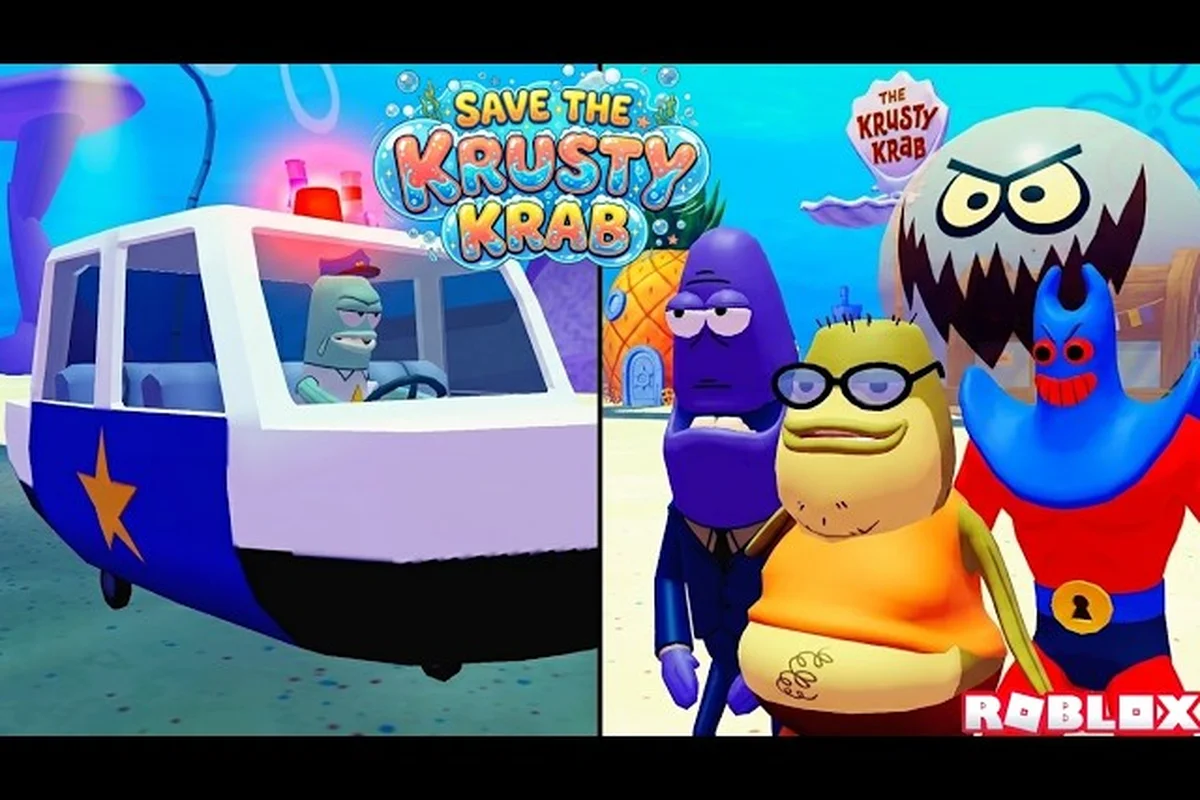
Save the Krusty Krab difficulty curve explained through better shift preparation, clearer crew roles, and smarter interruption handling. Learn which risks grow, how to protect service flow, and why a small setup routine can prevent a crowded rush.
How the Save the Krusty Krab Difficulty Curve Actually Works
The difficulty in Save the Krusty Krab rises through overlapping demands rather than a single visible timer. More customers create additional orders, drinks, tables, and cleanup tasks, while special requests and scripted interruptions can pull a worker away from the normal service line. A team that handled a quiet opening may still lose control when several orders mature at once.
This matters because solving the game is less about reacting quickly and more about preventing simultaneous problems. When the Save the Krusty Krab difficulty curve explained through its practical effects, you will notice that early preparation, role ownership, and buffer management become more valuable as customer volume increases. The goal is to reach a stable rhythm before the rush becomes visible.
Community field notes describe a useful opening routine: clock in, check the expected customer count, prepare a small buffer of patties, stock drinks, and make sure the trash bin and mop are available before the first wave. These observations are not official formulas, but they provide a dependable starting point for the Opening Readiness Buffer.
| Difficulty signal | What usually increases | Best response |
|---|---|---|
| Early customer flow | Routine burger and drink orders | Keep one worker focused on service |
| Mid-shift customer flow | Table cleanup and mixed requests | Assign clearer station ownership |
| Late customer flow | Overlapping orders and interruptions | Use small buffers and priority rules |
| Health inspector visit | A multi-step diversion from normal work | Finish the request in sequence |
| Closing period | Trash, spills, trays, and grill cleanup | Clean in parallel where possible |
The key distinction is between customer count and management pressure. Two customers may be easy if their orders are simple, while one customer can create a long chain of actions if the request involves preparation, delivery, and cleanup. As a result, player experience should be measured by the number of simultaneous tasks, not by a single headline number.
Preparing the Opening Shift for Rising Demand
Preparation is the cheapest way to absorb a sudden increase in work. A busy shift rarely fails because one player becomes slower; it fails because nobody owns the preparation step that prevents the next customer from arriving with an empty station. The opening routine should therefore be treated as part of the service loop, not as a separate task performed before play begins.
The Save the Krusty Krab first shift walkthrough provides a useful baseline for beginners, while experienced crews can use the following order to reduce early hesitation. The sequence is based on community field notes and is intended to establish a small buffer without wasting resources.
The opening readiness routine
-
Clock in and check the customer count. This gives the crew an early warning of the intended shift volume.
-
Prepare a small patty buffer. A few ready patties shorten the first order cycle, but the buffer should remain modest so that food does not become an unattended problem.
-
Stock drinks before the first wave. Drink preparation is easy to delay and difficult to recover when several customers request the same item.
-
Clear the trash bin and mop. Keeping both available prevents a later cleanup request from becoming a blocking task.
-
Assign one service worker and one support worker. The service worker handles current orders, while the support worker watches buffers, spills, and incoming interruptions.
| Preparation step | Time cost | Risk prevented | Best owner |
|---|---|---|---|
| Check customer count | Very low | Surprise rush | Manager or shift lead |
| Prepare patties | Low | Empty-grill stalls | Grill worker |
| Stock drinks | Low | Repeated drink delays | Support worker |
| Free the mop and bin | Low | Blocked cleanup | Utility worker |
| Confirm station ownership | Very low | Duplicate or skipped work | Shift lead |
The important point is to prepare enough to stay one step ahead, not enough to create a second cleaning problem. A large patty pile can age, and excessive preparation can occupy the worker who should be responding to the first order. The best buffer is the smallest one that lets the grill worker maintain flow during a short burst.
When to expand the buffer
Increase preparation only when the shift shows a reliable pattern. If customers arrive steadily, keep the current level. If several orders arrive almost together, move one drink or patty forward. If the grill is already crowded, prioritize the drink station instead. This is especially useful when planning later days, since the Save the Krusty Krab day guide can help you compare progression without relying on unsupported difficulty percentages.
A common mistake is treating customer count as a timer that must be reached before preparation begins. In practice, the count is a planning signal. The crew should already know which station is most likely to become the bottleneck and which task can be safely deferred for ten or fifteen seconds.
Role Assignments for a Stable Save the Krusty Krab Crew
A good crew strategy does not divide work by character labels alone. It divides it by ownership: one person knows when to cook, another protects the drink supply, and a third watches for interruptions. The Save the Krusty Krab role assignments guide should be built around visible responsibilities, because assigning “someone to help” often creates uncertainty during a rush.
For multiplayer groups, the Save the Krusty Krab support classes overview can help identify complementary support roles. The core principle remains simple: every active station needs one primary owner, while one flexible worker can respond to changing priorities. This arrangement keeps routine work moving without making every player responsible for every task.
| Role | Primary responsibility | Secondary responsibility | Avoid during a rush |
|---|---|---|---|
| Grill worker | Cook and stage patties | Restock small buffer | Leaving the grill unattended |
| Drink worker | Prepare and deliver drinks | Clear drink-related waste | Chasing unrelated tasks |
| Register worker | Take orders and direct flow | Confirm order status | Duplicating order entry |
| Table worker | Clear tables and trays | Sweep spills | Mopping before the order wave |
| Shift lead | Assign priorities and track interruptions | Decide when to pause prep | Doing every task personally |
| Flexible worker | Cover shortages | Handle the health inspector request | Wandering without a task |
Primary ownership versus shared ownership
Use primary ownership for tasks that must happen continuously. The grill worker owns the patty buffer, the register worker owns order flow, and the table worker owns table readiness. Use shared ownership for tasks that are occasional, such as cleaning a spill or carrying a tray. Everyone can share a spill, but nobody should assume that somebody else will handle the grill.
The flexible worker should not be the only person allowed to help at the register or grill. That arrangement creates a bottleneck whenever the flexible worker is handling the health inspector request. Instead, the shift lead should assign a temporary replacement before the flexible worker leaves the main service line. A small amount of redundancy is what keeps a busy shift from stopping completely.
Priority rules for interruptions
When several tasks appear together, use a fixed order. First, protect customer-facing service. Second, remove any immediate safety or hygiene blocker. Third, handle scripted requests that unlock progression. Fourth, complete cleanup tasks that do not affect service. This rule is easy to remember and prevents panic from turning into random movement.
| Priority | Task type | Reason to move first |
|---|---|---|
| 1 | Active customer order | Prevents patience and complaint escalation |
| 2 | Blocked station or major spill | Removes an obstacle affecting several customers |
| 3 | Health inspector request | Advances the scripted objective |
| 4 | Minor table cleanup | Improves appearance without stopping service |
| 5 | Optional tidying | Lowest impact during peak demand |
Do not treat every interruption as equally urgent. A health inspector request is more complicated than a normal customer order because it may require reading a clipboard, preparing a specific meal, taking a patty to the dumpster to create the nasty patty, and then delivering it. Community reports describe this as a timed interruption, so a crew should plan who takes over service before the sequence begins.
Managing the Health Inspector Request
The health inspector request is one of the clearest examples of why difficulty rises through task chains. It does not merely add another customer to the line. It redirects attention, requires specific actions, and may pull a worker away from a station that is already under pressure. Understanding that sequence is essential when learning how difficulty changes in a crowded shift.
According to community field notes, the request is scripted in multiple steps. The player first reads the clipboard request, then prepares the requested meal, takes a patty to the dumpster to create the nasty patty, and finally delivers it. These details are player-reported observations rather than published developer values, so the safest approach is to follow the on-screen request in the current version.
Handling the request without losing the service line
The shift lead should announce the request before the flexible worker departs. This is not a dramatic callout; it is a quick handoff such as, “I’m taking the inspector request. Register, keep taking orders, and grill, stage the next patty.” The handoff prevents the mistake of everyone following the new objective while the register and grill sit unattended.
| Request stage | Flexible worker action | Crew action in parallel |
|---|---|---|
| Clipboard | Read the full order | Register continues accepting orders |
| Meal preparation | Cook the requested item | Grill worker protects the normal patty buffer |
| Nasty patty | Move a patty to the dumpster | Support worker monitors tables and spills |
| Delivery | Deliver the completed request | Service worker finishes the active customer cycle |
| Return | Resume flexible-worker duties | Shift lead confirms the handoff is complete |
The Ricoko Tutorial and Showcase beginner video is a useful visual reference for the early routine. Because the request depends on the current quest state, players should treat the video as a demonstration of the general sequence, not as a substitute for reading the current clipboard instructions.
The most important decision happens before the request starts. If the flexible worker is the only person who can cook, make drinks, work the register, or clear tables, the request creates a single-point failure. If at least one other worker can maintain the main service loop, the interruption becomes a manageable detour. This is where the Save the Krusty Krab crew strategy guide becomes more than a role list: it is a way to make the game’s interruptions less punishing.
Control Complaints, Spills, and Workflow Breakdowns
Complaints are not just a score penalty; they are evidence that the crew’s queue is longer than its service capacity. A complaint often appears when a customer waits through several neglected tasks, so the best prevention is to shorten the longest wait rather than obsess over every small delay. When the Save the Krusty Krab difficulty curve explained through customer flow, the critical metric is the number of unresolved orders at once.
A useful practice is to keep a mental queue of active, nearly ready, and blocked work. Active orders are being prepared. Nearly ready orders need only a delivery or a final check. Blocked orders lack a patty, drink, table, or instruction. A worker who identifies the blocked order first can prevent a cascade of complaints, while a worker who continues polishing an almost-finished order may be solving the wrong problem.
Diagnose the actual bottleneck
| Symptom | Likely bottleneck | Corrective action |
|---|---|---|
| Orders wait for food | Grill or patty supply | Protect the grill and reassign buffer preparation |
| Food waits for a drink | Drink preparation | Pre-stock drinks during a short lull |
| Customers wait to be seated | Table readiness | Clear one table before taking another order |
| Staff move without finishing | Unclear ownership | Name one owner for each active order |
| Complaints cluster after interruptions | No temporary handoff | Assign coverage before leaving the main line |
| Cleanup blocks a doorway | Utility task delayed | Clear the path before mopping the wider area |
Work backward from the complaint. If several customers are waiting for burgers, the issue may not be slow cooking; it may be that the grill worker left the station to clean a tray. If a single order is stuck while others move, the problem is probably missing information or a missing item. This diagnosis habit prevents players from treating every slowdown as a general lack of speed.
Complaint control checklist
-
Acknowledge the first sign of delay. A customer approaching frustration is easier to help than one already leaving.
-
Finish one order at a time. Switching halfway through creates inconsistent handoffs and duplicate work.
-
Protect the next bottleneck. If drinks are the current constraint, prepare a drink before tidying an unimportant corner.
-
Do not stack identical orders blindly. Two drinks may be efficient, but three unfinished drinks can disappear when a new request arrives.
-
Clear the path. A mop or trash bin placed in a busy walkway creates movement problems that feel like a general slowdown.
-
Reset after the inspector request. Confirm the register, grill, drink station, and tables before returning to normal rhythm.
No verified community dataset currently provides a fixed customer-patience timer, energy cap, burn threshold, or daily customer growth formula. Exact minutes and percentages should therefore be treated as unverified, and player observations should remain labeled as community reports rather than official values.
Keybind and Performance Settings for Busy Shifts
Control settings affect how much attention a busy shift demands. Poorly arranged keybinds can make repeated actions feel slower and increase the chance that a player abandons a station mid-task. Performance settings matter for the same reason: a stuttering or visually crowded scene reduces the amount of information a crew can process during overlapping orders.
The Save the Krusty Krab keybind settings guide should be organized around frequently repeated actions, not obscure shortcuts. The Save the Krusty Krab tutorial skip guide can help with menu navigation, but the practical work is to assign controls that remain consistent across every workstation.
Build a compact control scheme
| Control type | Best use | Reason |
|---|---|---|
| Movement keys | Moving between stations | Predictable movement reduces hesitation |
| Interact key | Pick up, deliver, and operate | One familiar action reduces misclicks |
| Cancel key | Stop or reset a mistaken action | Supports quick recovery |
| Inventory or order key | Check current objectives | Prevents confusion during interruptions |
| Quick-use keys | Common tools | Speeds up repeated service actions |
| Communication shortcuts | Coordinate a handoff | Helps multiplayer crews avoid crossed tasks |
Test the layout in an empty restaurant before a busy service. Make sure the player can move, interact, cancel, and check the current request without leaving the keyboard. If a keybind requires the same action as a movement key, the player may accidentally move away from a customer while trying to serve them.
The Save the Krusty Krab performance settings guide should focus on stable readability, not extreme visual fidelity. A cleaner scene is more useful than a prettier one if players can see orders, tables, spills, and task markers immediately. Test the settings under the conditions that cause trouble: several customers, active spills, and an inspector request. This reveals whether the issue is visual clutter, frame instability, or simple task overload.
| Performance priority | Practical setting direction | Benefit |
|---|---|---|
| Readability | Keep task indicators clear | Faster order recognition |
| Responsiveness | Reduce distracting effects if needed | Less input delay during movement |
| Visibility | Adjust camera distance for clear stations | Fewer missed tables or spills |
| Stability | Favor consistent frame delivery | Easier coordination in multiplayer |
| Audio cues | Keep useful alerts audible | Faster response to customer or quest events |
Performance options should be changed one at a time. Adjusting resolution, camera distance, and visual effects together makes it impossible to identify which change helped. A crew lead can record a short test using the same task sequence, then compare movement, order recognition, and communication reliability.
Applying the Difficulty Curve Across Busy Shifts
The pattern remains consistent from moderate shifts to crowded ones: preparation reduces the size of each task, role ownership reduces ambiguity, and a clear handoff prevents interruptions from stopping service. The difficulty curve is not defeated by one perfect player or one universal class. It is made manageable when the crew can keep small problems from becoming simultaneous large ones.
Use the following plan to turn observation into action. It compares the pressure caused by each stage with the response that preserves service flow. The table is based on community experience rather than an official difficulty formula, so it should guide practice without pretending to expose unpublished numbers.
| Shift condition | Primary risk | Crew response | Success signal |
|---|---|---|---|
| First customers arrive | Slow station setup | Prepare one small buffer | First order clears quickly |
| Orders overlap | Ownership confusion | Keep one owner per station | No abandoned stations |
| Inspector request appears | Service interruption | Assign temporary coverage | Normal orders continue |
| Complaint risk rises | Queue too long | Finish the oldest active order | Fewer simultaneous waits |
| Closing cleanup begins | Cross-team collisions | Separate cleanup zones | Shift advances without rework |
A repeatable shift routine
-
Inspect the board. Check the customer count and current special request.
-
Assign the core stations. Name the grill, drinks, register, and table owners.
-
Prepare a modest buffer. Grill a small number of patties and stock drinks without overcommitting labor.
-
Start the first order cycle. Avoid unnecessary tidying while the initial flow is still forming.
-
Watch for blocked work. Resolve a missing item or blocked path before starting another low-priority cleanup.
-
Pre-plan the interruption. Decide who will handle the inspector request and who will cover service.
-
Protect the oldest order. When the queue expands, finish the customer already waiting longest.
-
Reset after each wave. Confirm that every station has a clear next task.
-
Close in parallel. Clear tables, empty trash, mop spills, and clean the grill without creating new traffic jams.
This routine works because each step addresses a different source of difficulty. Checking the count provides warning, role assignment removes uncertainty, buffers shorten service time, and the interruption plan keeps the rest of the restaurant functional. The routine also remains understandable: a new player can learn it without memorizing complex formulas, while an experienced crew can refine who handles each action.
The final takeaway is practical rather than numerical. Treat the Save the Krusty Krab difficulty curve explained through workload, interruptions, and recovery speed. When a shift becomes harder, preserve the service loop before attempting to make every task perfect; that is how a crew turns rising demand into a manageable shift.
Frequently Asked Questions
What causes difficulty to rise in Save the Krusty Krab?
Difficulty rises mainly when customer orders, cleanup tasks, and special interruptions overlap. The challenge is not always more customers; it is more unresolved tasks competing for the same workers. Clear station ownership, small preparation buffers, and a planned handoff for the health inspector request keep the workload manageable.
Should every player prepare patties during the opening?
No. Preparing a few patties can shorten the first order cycle, but every player doing the same task leaves other stations exposed. Assign patty preparation to the grill worker and drinks to the drink worker, then use a flexible worker to confirm that both stations have a small buffer before the first wave.
Who should handle the health inspector request?
The flexible worker should usually handle it because the request has several sequential steps. Before leaving the main line, that worker should name a temporary owner for the register, grill, or drink station. The shift lead should confirm the handoff, especially when the restaurant is busy.
Are exact difficulty percentages or customer timers available?
No dependable official percentages for customer patience, energy limits, burn thresholds, or the daily growth curve were available in the supplied source data. Community observations can help identify patterns, but exact numbers should not be treated as verified facts. Adjust your preparation according to the current customer flow instead.
How can a busy crew avoid repeated complaints?
Identify the oldest active order, identify what is blocking it, and finish that order before polishing less important work. Complaints often cluster when several customers wait on the same missing item or when an interruption leaves a station unattended. Completing one order and resetting station ownership is usually more effective than rushing several tasks at once.