
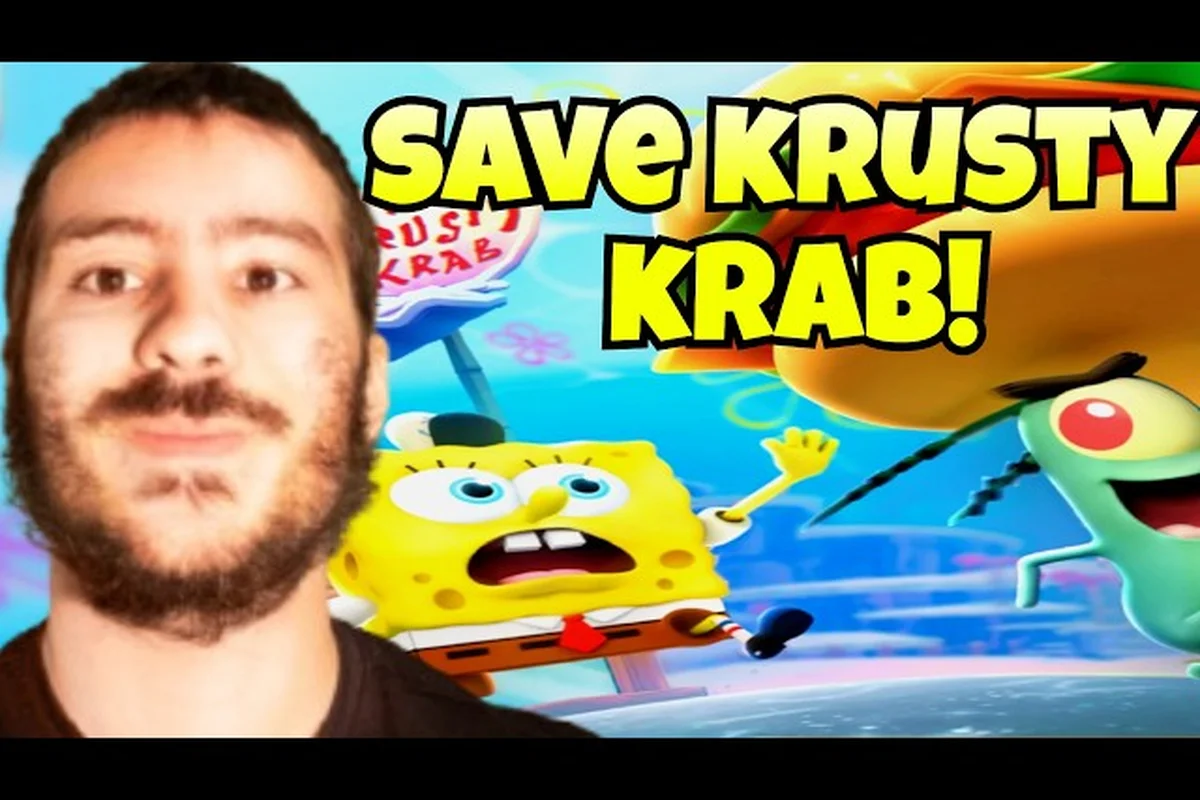
Table cleaning in Save the Krusty Krab becomes difficult when several customers need attention at once, especially when unusual orders and villain interruptions overlap. This Save the Krusty Krab table cleaning customers guide explains how to organize the queue, serve demanding guests, and recover when a shift gets crowded.
RDMVigilance's community gameplay shows how quickly tables and floors fill up during a normal shift, which is why the cleaning advice below prioritizes the highest-traffic surfaces first.
Table Cleaning Customer Basics
Save the Krusty Krab table cleaning customers can fill tables, request specific items, and create delays when several orders appear in quick succession. The important part is not memorizing every customer, but recognizing the pattern each one creates and deciding which table needs attention before satisfaction drops.
Community field notes suggest that the real bottleneck is often station switching, not cooking speed. Pre-cooking patties and preparing drinks before a busy wave can save more time than reacting after every table begins demanding attention. That approach turns the table-cleaning customers problem from a frantic scramble into a manageable service queue.
Recognizing the Main Service Patterns
Most customers create one of three broad demands: a straightforward food order, a multi-item order, or a special request that requires a different item or prolonged table attention. The visual distinction can be subtle, so watch the order indicator and listen for any alert before starting a trip.
| Customer pattern | Main challenge | Practical response |
|---|---|---|
| Standard order | Several ordinary requests overlap | Combine trips and keep one order in progress |
| Multi-item request | Missing any component delays completion | Confirm the full list before leaving the station |
| Special request | Requires uncommon handling or a specific item | Give the request priority when patience is low |
| Squatter or disruptive guest | Occupies attention or interferes with service | Address the obstruction before returning to the queue |
| Villain interruption | Delays normal customer service | Finish a safe action, then remove the threat quickly |
This table is based on community observations rather than an official published formula. Exact patience values, star-rating calculations, and customer timers have not been confirmed by the developer or by a consistent public dataset, so treat precise numbers as unverified.
A reliable Save the Krusty Krab customer queue guide should therefore focus on decision-making rather than invented statistics. Watch the entire dining room before selecting a table, estimate which order has the least remaining patience, and make sure the next trip does not create another long station change. For broader movement advice, the customer flow guide explains how grill, register, assembly, and table work can fit into a smoother sequence.
The Core Queue Rule
Use a simple three-step decision each time the floor changes: check for urgent obstructions, find the most time-sensitive order, and group tasks by destination. For example, if Dr. Gill’s table is blocking the main aisle while a nearby customer waits on a simple order, clear the obstruction first, then finish the quicker order before tackling a more demanding table. This keeps the customer queue moving, reduces backtracking between stations, and prevents one disruptive or impatient guest from causing delays across multiple tables.
-
Check for urgent obstructions. A disruptive customer or active villain can override the normal queue because every delay affects several tables at once.
-
Find the most time-sensitive order. Do not always help the closest table. A nearby table with a full patience bar can wait while a distant table with a simple order is about to leave.
-
Group tasks by destination. Collect or prepare the components for several nearby orders before completing one table, especially when those tables use the same stations.
This approach works because restaurant service is a routing problem. The goal is to reduce wasted movement and avoid repeatedly abandoning a half-finished task. It also prevents you from over-focusing on one special customer while ordinary guests are quietly losing patience.
Customers and Notable Arrivals
Save the Krusty Krab customers include recurring figures whose behavior adds variety to the restaurant. Community footage and player reports have identified Bubble Bass, Old Man Jenkins, Tattletale Strangler, Dr. Gill, Smelly, the Bubble Popping Boys, and an in-restaurant Mr. Krabs NPC among visible customers. Their individual order patterns are not officially documented, so the safest approach is to treat specific observations as community reports.
Bubble Bass and Standard Service Pressure
Bubble Bass is one of the most recognizable Save the Krusty Krab famous customer cameos, and his arrival is associated with a more demanding service moment than an ordinary quick customer. The practical lesson is to make sure the order is completely correct before bringing it to the table; a correction costs more time than one careful check.
| Bubble Bass service rule | Why it helps |
|---|---|
| Read the complete order | Missed components create a return trip |
| Verify unusual items | Special requests deserve an extra visual check |
| Keep nearby tasks visible | Other tables may need service during the same wave |
| Avoid leaving food unattended | A partially completed stop can delay the next action |
The important term here is complete-order verification. Check the tray, the table request, and the customer’s indicator before moving on. This is especially useful when Bubble Bass appears alongside a regular group, because the regular guests provide no obvious warning that they are also approaching their limit.
Dr. Gill and the Special-Order Check
Dr. Gill creates a useful test of whether you are serving orders or merely reacting to visible requests. In this Save the Krusty Krab Dr Gill scenario, the safest community-reported approach is to slow down at the point of taking or confirming the order, verify the special item, and avoid making assumptions based on a previous visit.
Dr. Gill should not be treated as an excuse to stop serving the whole restaurant. Confirm the order, identify any special handling, and then continue with nearby tasks. If you want more background on recognizable arrivals, the customer types overview places special guests alongside the broader customer categories.
| Customer | Community-observed role | Service recommendation |
|---|---|---|
| Dr. Gill | Special-request scenario | Confirm the order before preparation |
| Bubble Bass | High-demand arrival | Check every item before delivery |
| Smelly | Table obstruction or lingering presence | Handle the table condition promptly |
| Tattletale Strangler | Unusual or disruptive customer | Prioritize the obstacle, not personality |
| Bubble Popping Boys | Group order | Combine nearby items into one route |
| Old Man Jenkins | Recurring cameo | Follow the current request rather than assumptions |
Because these behaviors are not backed by an official customer manual, avoid declaring that a specific customer always has a fixed timer or fixed order. The better lesson is transferable: special arrivals create uncertainty, so confirm details and preserve your route.
Smelly and the Obstructed Table
Smelly is a problem because a difficult table is not merely a customer waiting for food. The table itself may demand cleaning or attention, so the task expands beyond normal service. A dedicated look at the Smelly customer guide explains the broader issue of squatters, table stealing, and satisfaction pressure.
When Smelly occupies a table, resolve that condition before adding another task to the same route. Cleaning a blocked table is a prerequisite: the customer may not be able to receive food or leave normally until the obstruction is handled. This is the obstruction-first rule, and it prevents wasted deliveries to a table that cannot progress.
Customer Queue Guide for Busy Waves
A busy wave is easiest to manage when it is split into preparation, routing, and completion. Community field notes specifically recommend pre-cooking patties and pre-pouring drinks before a rush because the kitchen loses more time switching stations than it loses by holding a small buffer. That observation is not an official balance rule, but it describes a practical way to reduce station changes.
Build a Small Buffer Before the Rush
A buffer should contain only a few likely items, not an unlimited stockpile. Begin with the regular components that appear repeatedly, then add one or two special components if a demanding customer is already waiting. The buffer exists to cover short gaps between waves, not to replace active table service.
| Buffer item | Best time to prepare | Why |
|---|---|---|
| Standard patties | Just before several tables become active | Covers the most common orders |
| Drinks | While another order is cooking | Combines two preparation tasks |
| Table-cleaning supplies | Before returning to the dining room | Prevents a late interruption |
| Special-order component | When a specific request is confirmed | Reduces uncertainty for that customer |
Avoid preparing too many items of one kind while leaving another order impossible to complete. A large buffer can look productive yet still create waste if customers request changing items. The practical target is a small, flexible buffer that covers common demand while preserving room for a special order.
Route Tables by Station Cluster
Begin at the station where the next order is missing its component, prepare everything needed for that group, and then move through the closest tables. Do not finish a single table at any cost if doing so causes two extra crossings. The station rotation guide provides a broader framework for combining tasks during a wave.
A practical wave sequence follows a station-first route: identify the next cluster with a missing component, prep that station’s supplies, and clean the closest tables before crossing back through the room. For example, if several customers need standard patties and drinks, batch those items at the grill and kitchen stations, then complete the table with the least remaining patience once its order is ready. This reduces extra crossings, which can delay both cleaning and delivery.
-
Scan the room for urgent orders, obstructions, and villains.
-
Start the standard items most customers are likely to need.
-
Complete the table with the least remaining patience if its order is ready.
-
Deliver nearby orders in a single pass.
-
Clean the next table while returning to the kitchen.
-
Reassess rather than continuing a fixed order blindly.
| Queue state | Best decision | Common mistake |
|---|---|---|
| One table, everything ready | Finish and deliver it | Walking around unnecessarily |
| Several standard orders | Batch patties and drinks | Completing one table at a time |
| One special request plus regular orders | Confirm special, finish standard work first | Ignoring the special order completely |
| Villain active | Remove the threat when possible | Continuing normal service unchanged |
| Obstructed table | Clean or resolve the obstruction | Delivering another order there |
This queue structure is deliberately flexible. Customer arrival order can change, and a route that worked during one wave may fail during the next. Recalculate after every villain interruption, major table change, or sudden group arrival rather than treating the initial queue as permanent.
Villains and Service Recovery
Save the Krusty Krab villains can turn a manageable customer wave into a cascading problem because customers keep aging while you deal with the interruption. The most reliable response is to stop optimizing the ordinary route, deal with the immediate hazard, and then rebuild the queue from the current table states. More details on appearances appear in the Dirty Bubble and villain guide.
Recovering After an Interruption
When a villain appears, do not continue an elaborate preparation sequence that leaves you far from both the threat and the tables. A villain can prevent normal service, damage the working area, or create a cleanup task, depending on the encounter. Treat the interruption as a new starting condition rather than a short break.
| Recovery stage | Action | Reason |
|---|---|---|
| Assess | Identify the villain and nearby hazard | Avoid wasting time on the wrong target |
| Stabilize | Remove the threat or use the required tool | Protect customers and the service area |
| Re-scan | Check which tables lost the most patience | Rebuild priority from current conditions |
| Resume | Restart preparation with a short buffer | Avoid carrying over a broken route |
| Clean | Clear any remaining obstacle | Return the floor to a workable state |
The key concept is route reset. A customer queue is a snapshot, and the snapshot becomes invalid after a major disruption. Checking the floor again is faster than completing tasks in the old order and discovering afterward that several guests have already left.
Protecting Priority Customers Without Ignoring Everyone
The broader priority customers guide covers complaints, angry guests, and water-gun villains, but those situations also affect ordinary table cleaning. A special customer should receive attention when ignoring them would cause a larger loss, yet the surrounding queue should not be abandoned completely.
Use the two-threat check before committing to an order. First ask whether a customer is blocked from leaving or receiving food. Second ask whether a villain is actively creating danger. If neither condition is true, compare the remaining patience of the waiting tables and choose the simplest urgent order first. This keeps the queue stable without turning every difficult arrival into a full emergency.
Famous Customer Cameos and Route Planning
Save the Krusty Krab famous customer cameos are most useful as route-planning tests. Bubble Bass tests order accuracy, Dr. Gill tests special-order confirmation, Smelly tests table-condition awareness, and the Bubble Popping Boys test your ability to group nearby work. Recognizing the cameo does not replace reading the current order, because player reports do not establish fixed behavior for every customer.
Treat Cameos as Uncertain Inputs
A cameo should alter your planning, not your assumptions. If a familiar customer appears, use the likely demand as one factor while still checking the actual request. This avoids turning community observations into hard facts that may not hold after a game update.
| Cameo | Likely planning test | Confirm before acting |
|---|---|---|
| Bubble Bass | Complex order accuracy | Every listed item |
| Dr. Gill | Special-request handling | The specific request |
| Smelly | Obstructed-table cleanup | Table condition |
| Bubble Popping Boys | Grouped delivery | Every member’s order |
| Old Man Jenkins | Familiar recurring arrival | The current request |
| Tattletale Strangler | Disruptive behavior | The immediate table issue |
The named appearances above come from community field notes rather than an official published roster. They may vary by platform, version, or mode. For that reason, the most reliable Save the Krusty Krab customers strategy is to combine recognition with direct observation every time.
A Complete Table-Clearing Routine
A consistent routine prevents small tasks from turning into a floor-wide backlog. After the first order is ready, work in short cycles that pair a table check with one concrete cleanup action, then reassess customer patience, delivery paths, and nearby threats. For example, if a customer is waiting for a Krusty Krab order while another table still has trays and spilled soda, clear the accessible obstruction first, complete the handoff, and use the return trip to reset that table. This keeps the customer queue moving without treating table cleaning as a separate chore, because a ready table and a satisfied customer must be completed in the same service cycle.
-
Scan all tables for blocked service, special requests, and low-patience guests.
-
Prepare the standard components for the next cluster of tables.
-
Route nearby deliveries together rather than circling the room.
-
Clean the next accessible table during the return trip.
-
Verify completed orders before leaving a table.
-
Rebuild priority whenever a new customer, obstruction, or villain changes the situation.
| Stage | Best action | Result |
|---|---|---|
| Scan | Compare every active request | Correct priority |
| Prepare | Use a small common-item buffer | Fewer station changes |
| Route | Group nearby tables | Less wasted movement |
| Clean | Handle one obstruction at a time | Clear service conditions |
| Verify | Check order completeness | Fewer corrections |
| Rebuild | Re-rank after disruption | Updated queue |
This routine keeps the focus on table readiness, not just food delivery. A table is not finished when the food arrives if it still needs cleaning, if the customer cannot be served normally, or if a nearby threat interrupts the handoff. Completing the environment and the order together produces cleaner, more predictable shifts.
FAQ About Save the Krusty Krab Table Cleaning Customers
Who is the hardest table-cleaning customer in Save the Krusty Krab?
There is no official difficulty ranking, so “hardest” depends on the situation. Bubble Bass can create order complexity, Dr. Gill can add a special request, and Smelly can block the table itself. The hardest challenge is usually the one that combines an unusual order with a crowded queue and limited attention.
Should I serve the closest table first in Save the Krusty Krab?
Not always. Choose the table with the least remaining patience if you can read that state, provided the order is ready to complete. A closer table with plenty of patience may be a better second stop than a distant table that is about to leave.
How do I handle multiple customers in Save the Krusty Krab?
Use a small buffer, prepare shared items, and combine deliveries for nearby tables. After a major disruption, scan the floor again because the original priority order is no longer reliable. The customer flow guide adds station-specific rotation advice for those waves.
Are famous customer orders fixed in Save the Krusty Krab?
Official fixed order lists are not available in the supplied information. Community reports identify several recognizable customers, but their requests can vary by version or encounter. Always read the current order instead of assuming Bubble Bass, Dr. Gill, or another cameo will always request the same items.
What is the best response to a villain during table cleaning?
Stop following the ordinary queue, remove the immediate threat, clean any resulting obstruction, and rescan the room. You cannot preserve the old route after a major interruption, so rebuild priorities from current table conditions. Exact spawn schedules and damage values should be treated as unverified unless the developer publishes them.
The most effective approach to Save the Krusty Krab table cleaning customers is a clear, constantly updated queue. Confirm special orders, batch compatible tasks, resolve table obstructions promptly, and rebuild your priorities after every villain encounter. By treating each customer as a changing service problem rather than a fixed checklist item, you can clear tables faster and keep the restaurant moving when the floor gets crowded.