
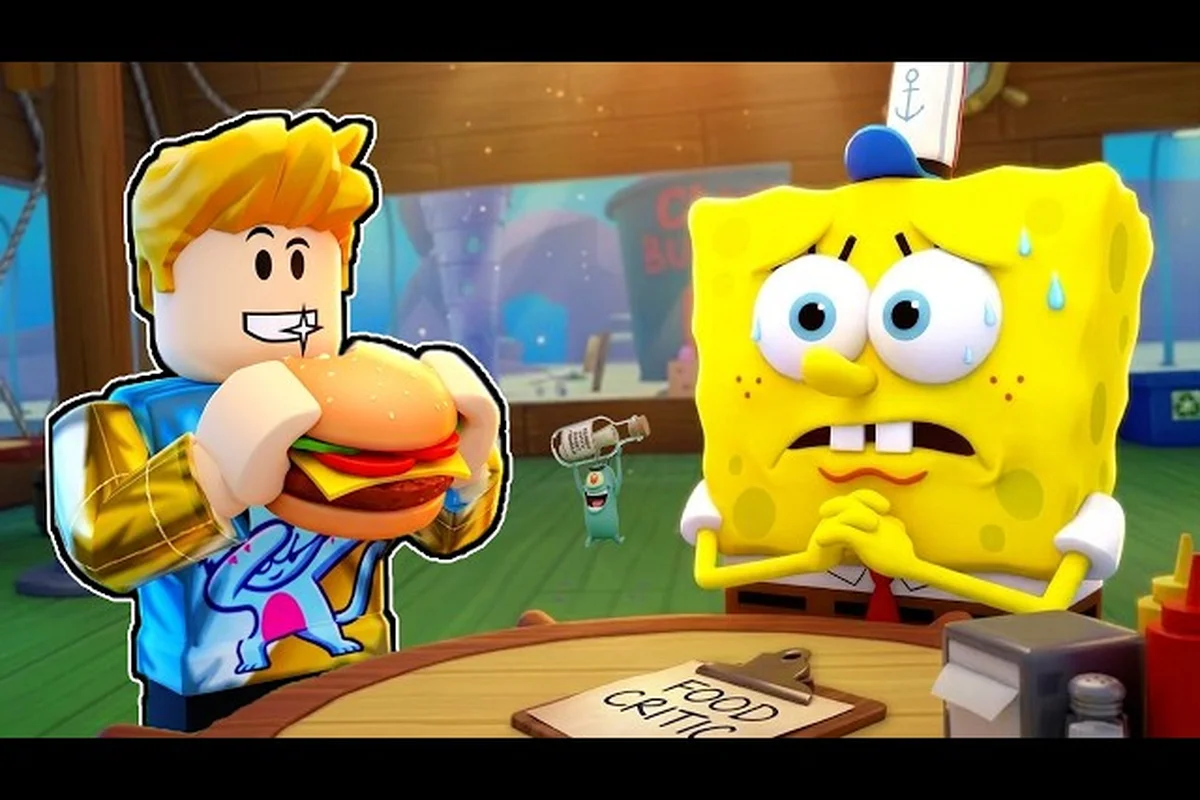
Stop Save the Krusty Krab mop dirty bubble spills before they drain your service energy, and learn the cleanup priorities that keep rare customers moving. The fastest response depends on which station is crowded, which villain is causing damage, and whether a valuable customer is waiting nearby.
Dirty Bubble Mechanics and Mop Priority
Dirty Bubble is a disruptive customer whose spill creates a cleanup problem that can reduce energy and interrupt service if it remains unattended. The important point is that Dirty Bubble cleanup is a containment task, not merely a cosmetic chore: the mess competes for your attention while normal customers continue to demand orders.
The game does not publish a complete villain schedule, fixed spawn time, or confirmed numerical energy penalty. Community reports consistently describe Dirty Bubble as a mid-shift interruption whose urgency increases as the day becomes busier. Treat exact timings and percentages as unverified rather than planning around invented numbers.
| Threat | Immediate effect | Best response | Priority |
|---|---|---|---|
| Dirty Bubble spill | Energy drains while the mess remains | Move directly to the affected station and mop | Very high |
| Plankton intrusion | Attempts to steal the secret formula | Intercept before reaching the formula station | Very high |
| Man Ray disruption | Flips tables and can clear customers | Respond before the table-flip action completes | High |
| Ordinary customer order | Patience decreases while waiting | Serve when a nearby emergency is under control | Medium |
| Rare customer request | Can produce a meaningful service opportunity | Protect the visit from avoidable interruptions | High |
This priority order follows reported player behavior: Plankton requires a quick interception, Dirty Bubble leaves a mess that continues draining energy, and Man Ray can escalate by flipping tables. The timing of each response matters, because postponing cleanup does not make the spill less costly while the rest of the restaurant continues operating.
Recognize the First Signs
A responsible player should identify the spill location, nearby hazards, and customer pressure before moving. Look for the floor mess, check whether it blocks access to a station, and notice whether a special customer is already waiting nearby. These checks take less attention than a delayed cleanup and help prevent a simple spill from becoming a chain of problems.
The spill response window is best treated as the period between noticing the mess and beginning the mop. If a table is about to flip, an order is nearly ready, or Plankton is approaching the formula, however, emergency prevention may deserve one brief interruption. The goal is not to follow a rigid priority list; it is to prevent the highest-cost failure before addressing the visible mess.
Use the Mop Efficiently
Approach the mess directly, keep the mop path clear, and complete the cleaning action without wandering between stations. If you are already near a station that also needs servicing, finishing that short action may make sense, but repeated detours allow energy loss to continue. The one-problem-at-a-time rule is useful: finish the active cleanup, scan for a second spill, and only then resume normal service.
Players seeking broader context can also consult the Save the Krusty Krab customer types breakdown, which separates ordinary visitors, special customers, and recurring troublemakers. That distinction helps explain why Dirty Bubble deserves faster attention than a normal order, while rare visitors may justify a different balance between serving and cleanup.
Villain Spawn Guide: What Community Reports Confirm
There is no verified public timetable for villains, so players searching for a Save the Krusty Krab villain spawn guide should focus on repeatable warning signs rather than exact clock times. Community videos show villains arriving as interruptions during an active shift, and the pressure tends to grow on later or busier days. They do not establish a dependable spawn probability or a fixed priority order.
Separate Confirmed Behavior From Guesswork
Several mechanics are repeatedly reported across player accounts, while precise timing and scaling values remain unverified. Knowing the difference prevents players from treating a community pattern as an official rule and wasting effort around a supposed exact minute that may not exist.
| Detail | Confidence | Practical use |
|---|---|---|
| Dirty Bubble creates a floor mess | Confirmed by multiple community reports | Mop as soon as safely possible |
| The mess drains energy until cleaned | Confirmed by multiple community reports | Do not leave it for a later shift phase |
| Plankton sneaks toward the formula | Confirmed by multiple community reports | Intercept early |
| Man Ray flips tables if ignored | Confirmed by multiple community reports | Respond before escalation |
| Villains arrive as mid-shift interruptions | Supported by community videos | Prepare before the restaurant gets crowded |
| Exact spawn minute | Unverified | Do not build a schedule around it |
| Spawn percentage by day | Unverified | Avoid claiming a fixed rate |
| Official priority order | Unverified | Use the threat-based order above |
This villain showcase video by Zaku provides a useful visual reference for the roster, but it should not be treated as a numerical schedule. Likewise, community field notes support the behavior model without supplying official timer values. A reliable Save the Krusty Krab villain schedule is therefore situational: a crowded restaurant, an active shift, and worsening service pressure are meaningful signals, not a fixed countdown.
Read the Restaurant’s Pressure
Use customer density to estimate your available response time. When several customers wait near the same station, completing their orders may be faster than moving constantly between distant tasks. When a rare customer appears, however, that person may justify protecting the visit from avoidable messes. The relationship between customer value and station placement is especially important because a valuable visitor can be stranded by a problem that started elsewhere.
A practical pressure check includes three quick observations: How many customers are waiting? Is the route to the most valuable order clear? Can the active spill be cleaned without leaving another station unattended? If the answer to the final question is no, the service plan needs adjustment before the mess becomes more expensive.
Rare Customers, Customer Lists, and Service Triage
A complete Save the Krusty Krab customer list would be valuable, but the available community material does not provide a verified, complete roster with confirmed rewards and spawn rates. The better approach is to classify customers by operational risk: ordinary orders create steady pressure, rare customers create valuable windows, and villains actively damage the service flow.
Compare the Main Customer Groups
| Customer group | Main service need | Risk if ignored | Practical response |
|---|---|---|---|
| Standard customers | Routine order handling | Patience loss and a slower queue | Batch nearby orders |
| Rare customers | Special request or event behavior | Lost opportunity | Protect their visit from interruptions |
| MVP customers | High-value service moment | Missed bonus or rating opportunity | Give them a protected service window |
| Messy customers | Cleanup or table maintenance | Spill energy drain | Mop promptly and clear the path |
| Event customers | Variable service sequence | Disrupted route or table state | Confirm the current action before moving |
| Villain-type customers | Interruption or sabotage | Formula theft, spill drain, or table flip | Apply threat-based priorities |
Community material names specific customers such as Plankton, Dirty Bubble, and Man Ray, but it does not establish a complete Save the Krusty Krab rare customers list with verified reward values. Players should therefore avoid repeating unsupported rarity rankings. What can be used reliably is the operational rule: a customer who creates an active mess should be cleaned promptly, while a customer who merely waits can sometimes tolerate a short sequencing decision.
Protect MVP Customer Windows
The term MVP customer window describes the short period in which a high-value visit can still be handled successfully. Keep that window clear by checking nearby hazards, avoiding a late cleanup decision, and preparing the required station before the customer reaches it. If a Dirty Bubble spill appears beside the route, clearing it first may preserve the opportunity rather than threatening it.
The Save the Krusty Krab hardest customers comparison is useful when several special visitors overlap, because it highlights how different failure modes compete for your attention. A rare customer can have high value but limited patience, while a messy customer can impose an ongoing cost if left alone. Neither deserves automatic priority; the deciding factor is the cost of delay.
Sequence by Consequence, Not Location
A convenient decision rule is to compare the consequence of a short delay. If a delay lets Dirty Bubble continue draining energy, clean it. If it lets Plankton reach the formula, intercept it. If it lets Man Ray flip a table, intervene. If it merely adds a little wait to a patient customer, finish the active action and serve the customer next.
| Situation | Immediate choice | Why |
|---|---|---|
| Dirty Bubble is beside a high-value customer | Mop the spill | Protect both energy and the visit |
| Plankton approaches during a routine order | Intercept Plankton | Formula theft is harder to reverse |
| Two ordinary customers are waiting nearby | Serve in the shortest efficient sequence | Avoid unnecessary travel |
| Man Ray is near a table | Respond before the flip | A flip can remove customers and damage layout |
| Rare customer just arrived with a clean route | Serve immediately | Capitalize on an available window |
This approach also explains why “rare” is not automatically “first.” A rare customer may be worth protecting, but a villain can impose a larger immediate loss if allowed to escalate. Consequence-based sequencing keeps the restaurant stable without ignoring valuable service opportunities.
Cleanup Tactics for Busy Shifts
The Save the Krusty Krab mop dirty bubble challenge becomes harder when a spill appears during a busy customer wave. The most reliable response is to prevent the mess from spreading your attention across the restaurant. Clean the affected area, restore access, and then reassess the queue rather than repeating the same route several times.
Use a Three-Part Cleanup Check
First, identify the source and location of the mess. Second, clear the path around it so customers and station access are not obstructed. Third, verify that no second spill has appeared while you were working. This sequence is simple enough to remember during a rush, and it helps prevent the common mistake of moving away before the area is genuinely usable.
| Cleanup phase | Action | Mistake to avoid |
|---|---|---|
| Locate | Confirm the exact mess and station affected | Mopping the wrong tile while another spill grows |
| Contain | Remove the active drain and restore the path | Delaying because a nearby order appears more urgent |
| Verify | Check the floor and nearby stations | Returning to service without confirming a second spill |
| Resume | Serve the most time-sensitive nearby customer | Wandering across the restaurant without a clear target |
The verification step deserves special attention. Spill recurrence can make a seemingly completed cleanup feel like a failure because the player repeatedly cleans the same area. A quick visual scan helps distinguish a newly created mess from one that was never fully removed, while keeping the response from becoming an endless loop.
Manage Travel Without Spreading Service Thin
Travel is not merely wasted animation; it extends the time that energy drains, customers wait, or a villain advances. Group nearby tasks where possible, but do not combine tasks that require opposite priorities. A route that serves three customers across the restaurant may be slower than serving two nearby customers and returning directly to the emergency site.
When service becomes chaotic, use three queues: active danger, waiting customer, and maintenance. Active danger contains Plankton, Man Ray, and Dirty Bubble spills. Waiting customer contains visible orders and special visits. Maintenance contains ordinary table cleaning that can wait. This structure makes the Save the Krusty Krab mop dirty bubble decision faster because every visible issue has a defined category.
Keep Rare Visits From Being Wrecked
A rare customer can be lost through indirect causes rather than a direct failed order. A spill may block the route, a villain may clear the room, or another customer may occupy the needed station. To preserve the visit, keep the path open and avoid starting an unrelated long task near the special customer. If the route is compromised, resolve that obstacle before serving anyone else through the area.
A broader overview of Save the Krusty Krab table cleaning customers can help identify which mess-related visitors deserve a station reset. The article also provides useful context for customers whose normal service becomes complicated when the restaurant layout is not functioning normally.
A Practical Dirty Bubble Response Plan
The best cleanup plan is a repeatable decision process rather than a panic response. Start with a constant floor check, interrupt service only when the consequences justify it, and return to the customer queue as soon as the danger is neutralized. This approach works even without an official timer because it responds to conditions that players can directly see.
First 30 Seconds After a Spill
Look at the mess, locate the nearest access point, and identify whether any villain or special customer is nearby. If Dirty Bubble is the only active problem, begin mopping immediately. If Plankton is also moving toward the formula or Man Ray is approaching a table, handle that threat only when it prevents a larger, harder-to-reverse loss.
| Check | Immediate result |
|---|---|
| Is the spill blocking a station? | Clean it before the bottleneck expands |
| Is Plankton advancing? | Intercept if the theft threat is imminent |
| Is Man Ray close to a flip? | Intervene before customers or tables are cleared |
| Is a rare customer waiting nearby? | Protect the route and continue the cleanup |
| Are all customers waiting safely? | Finish the current service sequence, then mop |
After the Floor Is Clear
Rescan the restaurant before selecting the next target. A clear floor confirms that the energy drain has stopped, but it does not mean the shift is back under control. Check for a new spill, a customer nearing the end of their patience, and a station that needs to be reopened. Only then resume normal service.
For long shifts, periodically review your station rotation against the Save the Krusty Krab customer flow guide. Good cleanup is not simply more mopping; it is choosing the order that reduces bottlenecks across the register, grill, assembly, and table areas. A route that works during a quiet period can fail completely after a villain interruption changes where the customers gather.
Build a Personal Priority Rule
Use this order as a starting point, then adjust for what you can see in your current shift:
-
Stop an imminent formula theft or table flip when the action can be prevented now.
-
Clean a Dirty Bubble spill that is draining energy or blocking a valuable customer’s route.
-
Serve an MVP or rare customer whose request is ready and whose path is open.
-
Complete routine orders for nearby customers.
-
Handle nonurgent table cleaning and less time-sensitive maintenance.
The order can change when a rare customer is nearly ready, but it should not change based on which event seems most visually dramatic. A large table flip is serious, but an overlooked spill can quietly drain energy throughout the shift. Visible danger versus ongoing cost is the key comparison when the schedule is unknown.
Testing and Updating Your Cleanup Routine
No exact spawn schedule or published energy formula means your routine should be tested rather than memorized as a fixed rotation. Record what happened during short practice shifts, note how quickly the restaurant became crowded, and compare the result of immediate cleanup with delayed cleanup. Even without precise percentages, repeated observation can reveal which station combinations create the worst bottlenecks.
What to Track
Track the order of events rather than a vague impression. Note when the spill appeared, which customer was waiting, whether a table flipped, and how much travel the cleanup required. These observations support better decisions without pretending that a community timing estimate is official.
| Observation | Useful conclusion |
|---|---|
| The spill always begins near the tables | Scan the table area first after the initial customer wave |
| Rare customers appear through the busiest path | Protect that route before starting distant maintenance |
| Cleanup interrupts grill progress | Prioritize nearby messes and preserve station flow |
| Plankton appears while the queue is full | Assign formula interception as a dedicated priority |
| The floor remains clear after one pass | Resume normal service without unnecessary extra trips |
Community reports can be useful when they agree across different sources, but conflicting observations should be treated cautiously. Exact day-scaling curves, energy caps, patience timers, and villain rates are not published or supported by a consistent public dataset. The best current guidance is to describe these as community observations and adjust based on the version you are playing.
Watch for Future Changes
Updates may adjust customer behavior, spawn pressure, rewards, or stage pacing. The Save the Krusty Krab developer updates page is the right place to check for patch notes before assuming a strategy still applies. After a major update, revisit your priority table and practice one short shift rather than carrying every old habit forward.
The essential strategy will not change unless the mechanics do: remove active energy loss, prevent theft and table flips, protect high-value customer windows, and then resume the queue. What may change is how much time you can safely devote to each task, so the routine should remain flexible.
Frequently Asked Questions
How should I clean Dirty Bubble spills in Save the Krusty Krab?
Clean the spill as soon as it becomes the largest active threat, especially when it blocks a station or sits near a valuable customer. Interrupt cleanup only when Plankton is about to steal the formula or Man Ray is about to flip a table. Afterward, scan the floor for another mess before returning to the customer queue.
Is there an official Save the Krusty Krab villain schedule?
No verified official schedule is available. Community videos and player reports describe villains as mid-shift interruptions that become more disruptive during busier service, but exact spawn minutes, percentages, and day-based scaling remain unverified. Use customer density and visible danger to set your priorities rather than relying on an imagined countdown.
Should a rare customer always be served before Dirty Bubble?
Not always. If the spill is actively draining energy, blocking the rare customer’s route, or creating a larger bottleneck, cleaning it first can protect the opportunity. Serve a rare or MVP customer immediately when their request is ready and no immediate hazard is interfering. Consequence matters more than the customer’s category alone.
Which villains are most dangerous during a busy shift?
Plankton is dangerous because a completed theft is difficult to reverse, while Man Ray can flip tables and clear customers. Dirty Bubble creates a continuing energy drain until the mess is removed. Their threat profiles differ, so the safest response depends on which action is closest to completion rather than on a universal rank that the game has not published.