
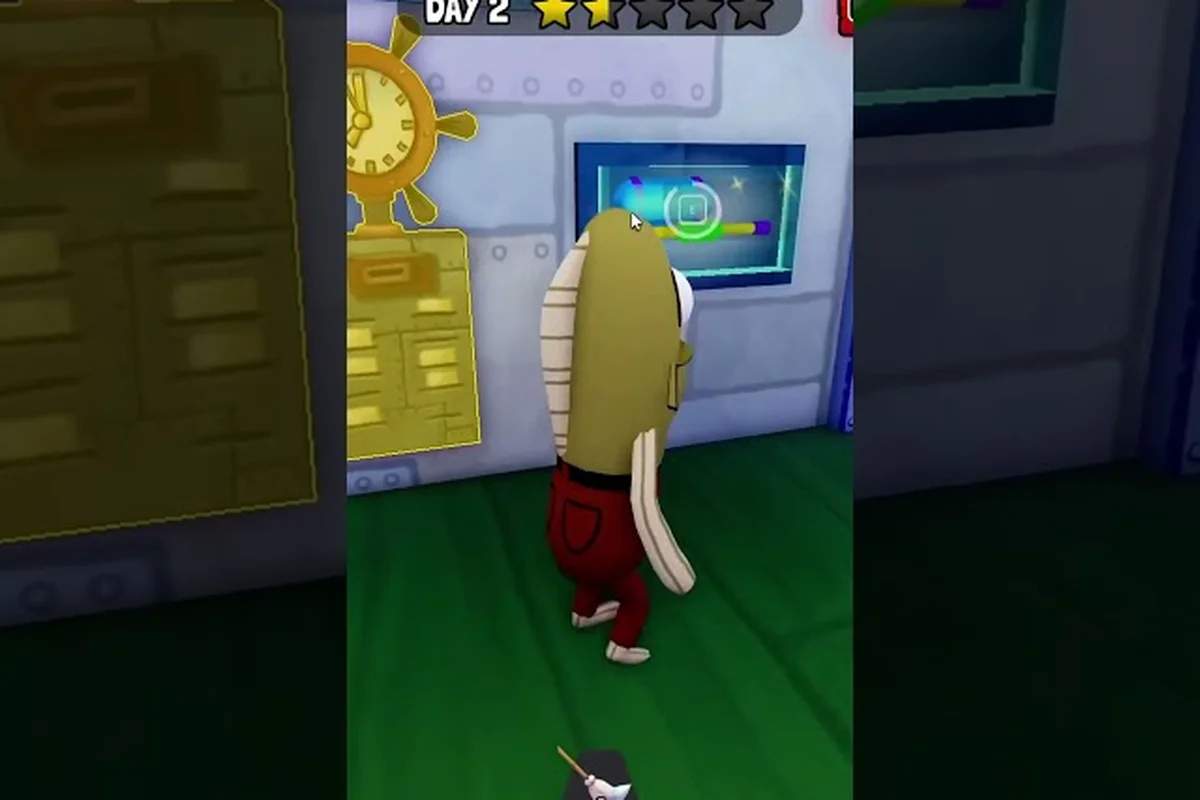
Plankton is the hardest test because his impatience turns routine customer flow into a timer failure: serve the demanded order before he escalates, while checking the cooking stations and clearing tables. During an Anchovy rush, prioritize the patience and speed bonuses rather than chasing every table at once, since missed customers can trigger complaints and reduce patience. Inspectors and messy visitors also punish inefficient routing; clean spills and complete the required tasks before the pressure peak. For each shift, track the highest-value customer, assign nearby stations first, and use the krabby patty cooker, soda machine, and table-clear actions in parallel to keep service moving without sacrificing order accuracy.
Hardest Customers: What Makes Them Difficult?
The toughest customers in Save the Krusty Krab are not simply the ones with the longest patience bars. They create the greatest interruption because they demand a different action at the worst possible moment, multiply the number of active orders, or turn ordinary service into a cleanup emergency. Understanding those pressure points lets you prepare the right response before the customer reaches the counter.
Community field notes highlight two repeatable patterns. An Anchovy rush stacks many orders into a narrow service window, while the health inspector starts a scripted sequence that can damage an otherwise clean run. Exact customer spawn rates and official timing values are not published, so claims about percentages, patience lengths, or a fixed schedule should be treated as Community Observation, not confirmed rules.
| Customer pressure | Main problem | Early warning | Best preparation |
|---|---|---|---|
| Anchovy rush | Several orders arrive at once | Multiple tickets appear quickly | Stage patties and drinks |
| Health inspector | A special request interrupts normal flow | Clipboard sequence begins | Keep one flexible order ready |
| Plankton | A villain occupies attention and disrupts service | Familiar warning signs appear | Keep cleanup and service tools ready |
| Messy customer | The table becomes a cleanup task | Spills or clutter develop | Mop nearby before moving on |
| Dirty Bubble | Cleanup competes with active orders | Muck spreads across the work area | Assign a clear cleanup priority |
The three pressures behind difficult customers
Order pressure means more customers or more requested items must be handled at once. Task pressure happens when a customer requires a nonstandard procedure, such as taking an order to the dumpster during the health inspector sequence. Space pressure occurs when spills, trash, or villain effects obstruct the restaurant. A customer becomes unusually hard when two or more of these pressures overlap.
This distinction matters because the right counter changes. More cooking capacity helps with an order-heavy wave, but it does not solve a health inspector request. A better mop solves clutter, but not a customer who arrives while the kitchen is already overloaded. Effective play depends on identifying the active pressure instead of reacting to every interruption with the same emergency routine.
A practical difficulty ranking
There is no verified official tier list, but player experience supports a useful working ranking. The tiers below reflect coordination pressure rather than guaranteed loss conditions: Plankton and the Health inspector create multi-step disruptions, Anchovy rushes and Messy customers strain order throughput, and Dirty Bubble adds persistent cleanup. This approach also distinguishes event customers from recurring customers, since occasional spawns can be handled with a brief service pause rather than a full defensive setup.
| Working tier | Customers | Why the tier is challenging | Suitable response |
|---|---|---|---|
| A | Health inspector | Multi-step request and Nasty Patty sequence | Pause the normal queue carefully |
| A | Plankton | Can threaten service flow and cleanliness | Counter at the first safe opening |
| B | Anchovy rush | Sharp increase in order volume | Pre-stage food and drinks |
| B | Messy customer | Adds cleanup while the restaurant is busy | Clean immediately when the path is clear |
| B | Dirty Bubble | Persistent cleanup may spread or obstruct | Mop before serving the next order |
| C | Squatter-style visitors | Occupy or complicate table service | Use the available table-handling option |
What to track during the first hour
Do not begin by memorizing every customer. Instead, record three practical signals: how long the kitchen remains congested, which station causes the first visible delay, and whether mess spreads before it can be contained. A short shift log can reveal patterns that are more useful than invented spawn percentages.
| Observation | Likely interpretation | Adjustment |
|---|---|---|
| Drinks repeatedly cause delays | Drink prep is the bottleneck | Pour earlier or expand drink capacity |
| Patties cool before assembly | Cooking-to-assembly gap is too long | Assemble immediately after cooking |
| Mop trips interrupt service | Cleanup begins too late | Clean the route before switching stations |
| Inspector request causes confusion | The special sequence is unfamiliar | Learn each click and carry step |
| Villain receives too much attention | A nonurgent action was prioritized | Finish safe service actions first |
The Save the Krusty Krab customer spawn rates remain poorly documented, with community reports explicitly separating observations from confirmed values. That uncertainty should shape your approach: build flexible routines, watch for visible cues, and avoid making the plan depend on a customer appearing at an exact minute.
Villain Counters for Plankton and Dirty Bubble
Villains are dangerous because they attack the service system rather than simply adding another order. Plankton can create chaos around the restaurant, while Dirty Bubble turns cleanup into a recurring obstacle. The best Save the Krusty Krab villain counters depend on keeping one clear rule: contain the effect first, then resume service only when the route is safe.
A broader explanation of the Dirty Bubble response routine can help with the cleanup sequence, while the priorities here focus on how villains fit into an active shift. Because no dependable public dataset establishes exact spawn percentages or timing windows, use visible warnings and the current queue to decide when to engage.
Plankton response sequence
Plankton should be treated as a high-priority disruption, but chasing him at the expense of every active customer can be worse than the threat itself. First, identify whether he is blocking a station, contaminating the service area, or interrupting a customer. If customers can still receive completed meals, finish the safest order before turning toward him.
| Step | Action | Reason |
|---|---|---|
| 1 | Read the visible warning | Confirms that the villain sequence has started |
| 2 | Check nearby customers and stations | Prevents an avoidable cascade of missed service |
| 3 | Move toward Plankton when the path is open | Avoids wasting time on a blocked approach |
| 4 | Use the available counter action | Removes the immediate threat |
| 5 | Clear any resulting mess | Prevents the encounter from becoming a cleanup crisis |
| 6 | Resume the oldest safe order | Restores a predictable service rhythm |
Threat Containment is the important part, not the pursuit. If Plankton has not created a direct obstruction, a player chasing him can leave a paying customer waiting. A better priority rule is to stop normal movement when a villain blocks a critical station, and otherwise preserve service momentum until a safe intervention window appears.
Dirty Bubble response sequence
Dirty Bubble is best handled with a dedicated Clean Route Rule. The player should remove the visible muck before it spreads into the main service lane, especially when that lane connects the grill, drinks, and tables. Mopping is not a passive chore: dirty surfaces and obstacles can turn a quick order into a multi-step recovery.
Begin by choosing the nearest safe section of the route. Work along connected dirty patches instead of crossing clean aisles repeatedly. This reduces backtracking and keeps the mop near the stations that need frequent access. If customers are waiting while the route remains open, serve them between cleanup passes rather than abandoning the restaurant for one isolated spot.
| Villain condition | Immediate priority | Avoid |
|---|---|---|
| Dirty Bubble affects the main route | Mop the blockage | Walking around it repeatedly |
| Plankton blocks a station | Counter Plankton | Leaving the station inaccessible |
| Both occur during a rush | Secure a safe path, then target the larger blocker | Chasing a target across a dirty lane |
| An order is ready | Deliver it if the route is clear | Holding a finished meal unnecessarily |
| No customer is threatened | Clean and stabilize | Chasing a harmless visual event |
Comparing the two villain threats
Plankton and Dirty Bubble create different forms of pressure. Plankton usually demands a direct response to an active disruptive presence, whereas Dirty Bubble demands control of the environment. A mixed encounter can force a choice between immediate danger and accumulated clutter.
| Factor | Plankton | Dirty Bubble |
|---|---|---|
| Core threat | Active villain interference | Expanding cleanup burden |
| Main counter | Engage when the approach is safe | Mop along the service route |
| Best time to act | During a safe service window | Before clutter obstructs a station |
| Cost of delay | Missed service or damage | Blocked movement and repeated cleaning |
| Common mistake | Ignoring nearby customers | Abandoning service for distant mess |
For a solo player, the simplest rule is to finish any completed order that can be delivered without crossing danger, clear the nearest service path, and then confront the active villain. In co-op, one worker can protect the kitchen lane while another handles ready orders. That division is more reliable than having everyone converge on the same threat.
Event Customers and Scripted Interruptions
Event customers are difficult because their behavior is tied to a specific sequence. The health inspector is the clearest example: community reports describe a clipboard interaction followed by a request that can lead into the Nasty Patty routine, including taking a patty to the dumpster before serving the result. The sequence is predictable once recognized, but costly when normal customers continue to arrive.
The Save the Krusty Krab event customers therefore need a Scripted Sequence Plan rather than a standard order plan. Learn the required steps, keep the required ingredient ready, and decide when to pause the normal queue. Exact event frequency and timing remain unverified, so preparation should not depend on predicting an exact spawn moment.
Health inspector preparation
Prepare by keeping one patty and the current drink selection accessible. Do not start a complicated multi-item order during the inspector sequence if it would leave the station empty. The objective is to finish the scripted request cleanly, not to demonstrate how many unrelated tasks can be completed at once.
| Inspector phase | Player action | Service implication |
|---|---|---|
| Clipboard appears | Read the requested item | A normal ticket may wait briefly |
| Ingredient requested | Take the correct patty to the dumpster | Do not substitute a different order |
| Nasty Patty prepared | Retrieve and assemble the result | Expect a special delivery step |
| Inspection completed | Resume normal queue | Check for remaining mess or damage |
| Shift continues | Reassess priorities | Do not assume every later interruption is part of the event |
One Flexible Order is a useful prep strategy. When possible, keep a simple order ready that can be completed or stored without conflicting with the inspector’s request. This reduces the chance that the special sequence arrives while the kitchen is completely empty and every active order requires attention.
Handling a rush during the inspector
The health inspector is more difficult when normal customers arrive in the middle of the event. Do not try to serve both systems at maximum speed. Complete the event step that is already active, because interrupting a scripted request may create additional work, and then return to the oldest waiting customer.
If a teammate is available, assign one player to the scripted event and the other to routine orders. The routine worker should avoid beginning a new complicated order while the event worker is moving through the dumpster sequence. This is a Controlled Handoff approach: one person owns the special task, while the other keeps ordinary service moving safely.
Avoid treating every unusual customer as an event
A special appearance does not necessarily mean a multi-step objective. Some difficult customers are simply unusual, loud, hungry, or messy. The customer-types overview is useful for separating ordinary special visitors from scripted sequences. Confirm that the current customer has a request panel, task prompt, or unmistakable event cue before committing the whole restaurant to a lengthy procedure.
A reliable checklist is to compare the customer’s behavior with the customer-types overview before treating the encounter as a special event. For example, a loud customer who simply keeps ordering while a mess-prone customer scatters ingredients can be handled as normal service; only a request panel, task prompt, or clear destination cue signals a scripted event. This prevents confusing high spawn rates with event priority, because frequent customers can arrive without triggering a villain sequence or ingredient requirement.
-
Read the visible customer panel.
-
Check whether a task instruction appears.
-
Identify any required destination, such as the dumpster.
-
Preserve one ingredient for the event.
-
Pause or delegate ordinary orders during the active sequence.
-
Confirm that the event is complete before changing priority.
What the video guide demonstrates
The Saving the Krusty Krab One Krabby Patty at a Time video by RDMVigilance provides a visual reference for the restaurant’s service flow. It is particularly useful for seeing how cooking, assembly, and delivery fit together. Players should still expect their own shift to feel different as queues become more complex, because the key lesson is the repeatable routine rather than copying one run exactly.
Messy Customers: Clean-Without-Delay Tactics
Messy customers create Space Pressure, the type of difficulty that makes an ordinary shift feel slower than it should. Spills, trash, and dirty tables affect movement and can compete for your attention while customers are still waiting. The best response is not to chase every mark instantly; it is to contain the mess, preserve the route, and prevent cleanup from consuming the entire shift.
Save the Krusty Krab messy customers also expose a common planning mistake: treating service and sanitation as separate tasks. In practice, they compete for the same seconds. A mop action placed just before a delivery can save several seconds because the worker avoids detouring around dirt after picking up the order.
Choose the cleanup boundary
Start each cleanup decision by asking whether the mess affects a route you need soon. High Priority means the dirty area blocks the grill, drink station, delivery path, or another active customer. Medium Priority means it is close enough that leaving it will spread or force a detour. Low Priority refers to isolated mess away from service traffic, which can wait until the current order is safely underway.
| Cleanup target | Priority | Best timing | Why |
|---|---|---|---|
| Blocked station path | High | Immediately after the nearest safe delivery | Restores access |
| Dirty table near queue | High | When the next customer will use it | Protects service flow |
| Spill near the main lane | Medium | Between comparable orders | Prevents spreading |
| Isolated corner mark | Low | During a natural lull | Avoids wasted movement |
| Villain-created clutter | Medium to high | After the villain is countered | Stops the source first |
The 20-second containment method
A practical method is to classify, approach, clean, and confirm. First, look at the route and mark the highest-priority area. Next, approach from the side that avoids crossing other dirty areas. Clean the relevant patch rather than wandering across the restaurant, then confirm that the path is open before carrying another meal.
This method reduces unnecessary map movement. It also makes cleanup easier to delegate: one teammate can own a dirty table while the other keeps the main lane open. The table-cleaning customer guide adds more detail about queue pressure and table management, but the core rule remains simple: clean what blocks the next safe action first.
Clean before or after cooking?
The answer depends on the next destination. If a dirty area sits between the grill and the delivery window, clean it before carrying a finished meal. If the mess is away from the route and an order is ready, deliver that order first. Carrying a meal through a dirty path is less efficient than a short, deliberate cleaning pass.
| Current situation | Recommended order |
|---|---|
| Meal is ready and the route is clear | Deliver first |
| Meal is ready but the route is dirty | Clean the route, then deliver |
| Grill is empty and the table is messy | Clean while waiting for the next cook |
| A customer is actively waiting | Serve them if no emergency is active |
| Villain is producing mess | Counter the villain before cleaning endlessly |
Prevent the cleanup spiral
A cleanup spiral begins when one mess is handled after it has already affected movement, and the next task sends the player back through the same area. Break the spiral by using a Nearest-Route Buffer. While walking, note the next dirty patch along the path. Clean it on the return trip if it does not delay the current delivery, and keep a small trash buffer near the work area when capacity allows.
Community experience consistently values early cleanup, but exact cleanliness thresholds and the size of each spill are not published in a reliable official dataset. Avoid promising that one mop pass permanently solves a table. The safest method is to watch whether the dirty area changes, spreads, or obstructs movement.
Villain Priority and Customer Triage
A good shift depends on prioritization more than raw speed. Save the Krusty Krab villain priority should reflect immediate danger, while ordinary customer decisions should reflect order age, current movement, and the risk of losing momentum. The goal is not to abandon every customer for a rare visitor; it is to prevent one event from creating several failures.
For broader decision rules, including anger and patience management, see the guide to Save the Krusty Krab priority customers. The most important distinction is that active harm, an obstructed path, and a scripted event can outrank a routine order, while a distant cosmetic problem usually cannot.
Build a four-level triage
Use four levels during every shift: Immediate, Next, Routine, and Opportunistic. Immediate covers an active villain threat, fire, severe obstruction, or an event step that is already in progress. Next covers a completed order waiting for delivery or a customer whose service is about to deteriorate. Routine covers ordinary cooking and assembly. Opportunistic covers low-priority cleaning or preparation that can wait.
| Triage level | Examples | Action | Do not do |
|---|---|---|---|
| Immediate | Plankton blocks service; fire appears | Stop and remove the threat | Serve across an unsafe path |
| Next | Meal ready; customer at counter | Finish and deliver | Start a new unrelated order |
| Routine | Patties cooking; drink needs pouring | Complete the active station task | Delay a ready meal |
| Opportunistic | Isolated corner mess | Clean during a lull | Cross the restaurant for it |
Compare customer types by interruption cost
The table below compares common difficulties by what they cost the player, from a missed order to a full customer-service blockage. It is a practical synthesis of community reports rather than an official spawn-rate chart: for example, a Health inspector can create high interruption cost with only medium delay risk, while Plankton combines high cost with high risk because failure may escalate beyond a single visit. The rankings should therefore guide priority without implying exact spawn frequency, and “low to medium” entries reflect variables such as timing, current order flow, and available counter windows.
| Customer or event | Interruption cost | Delay risk | Counter summary |
|---|---|---|---|
| Health inspector | High | Medium | Learn the clipboard and dumpster sequence |
| Plankton | High | High | Counter during a safe service opening |
| Anchovy rush | Medium | High | Pre-stage patties and drinks |
| Messy customer | Medium | Medium | Clean the affected route promptly |
| Dirty Bubble | Medium | Medium | Control connected dirty areas |
| Squatter-style customer | Medium | Low to medium | Handle the table interaction promptly |
The rule of one active emergency
When multiple problems appear together, reduce the restaurant to one active emergency. For example, if Dirty Bubble blocks the grill path and Plankton appears at the same time, the player should not alternate between them every few seconds. Clear the route needed for the next service action, secure the immediate villain, and then resume the queue.
Emergency Stacking is a community term for this situation rather than a published mechanic. It describes how one interruption can become several when the player loses the route, misses a ready order, and then tries to recover all objectives at once. A written checklist prevents that chain reaction:
-
Identify the obstruction or villain.
-
Check whether an event step is active.
-
Choose the blocker that affects the greatest number of safe actions.
-
Resolve it.
-
Scan for secondary effects.
-
Return to the oldest ready order.
Keep customer spawn rates in perspective
Save the Krusty Krab customer spawn rates are not consistently published, and no exact schedule should be treated as guaranteed. Community observations indicate that busy moments and special appearances can overlap, but the evidence does not support a precise percentage for each customer. The best adaptation is to maintain a small amount of readiness rather than overproduce for a supposedly fixed interval.
That readiness should be modest. A few prepared patties and drinks can absorb a sudden order wave, while excessive preparation wastes space and may allow food to cool. If the kitchen can safely hold only a small buffer, use that buffer for the most common request. For event-specific requests, keep the required ingredient flexible until the event begins.
A Complete Counter-Rotation for Demanding Shifts
The best counters form a rotation rather than a collection of isolated tricks. Open by establishing a safe service lane, handle active orders from oldest to newest, and respond to threats before they spread. During a rush, use the kitchen as a pipeline; during an event, transfer ownership of the special sequence; during cleanup, restore the path you will need next. This rotation makes the Save the Krusty Krab hardest customers manageable without requiring impossible speed.
Phase 1: prepare the safe lane
At the start of a shift, remove obvious obstructions, confirm that the grill and drink station are usable, and check where trash is accumulating. This is not a full deep clean. It is a quick route check designed to prevent the first customer from triggering a chain of avoidable delays.
A practical opening sequence is: briefly inspect the active service route, then prioritize immediate hazards in the order they can stall a customer. Check the grill first, since a delayed patty blocks the assembly lane and can turn a routine Krusty Krab order into a bottleneck. Next, verify that the drink station is producing orders and that the counter area is reachable, because an obstructed delivery point affects every subsequent customer, not just the first one.
-
Remove or store visible trash in the immediate work area.
-
Clear the path between cooking, assembly, and delivery.
-
Start the first normal order only after the critical route is usable.
-
Keep a mop or other cleanup tool accessible without leaving it in the main lane.
-
Confirm that a simple patty and drink are available for the first order.
Phase 2: protect the pipeline
A kitchen pipeline prevents constant station switching. When a patty enters the grill, the player should already know whether it will be used immediately, stored in a ready slot, or paired with another order. Drinks can be prepared during a brief gap, but a full order should be assembled as soon as its components are ready.
| Pipeline state | Next best action | Avoid |
|---|---|---|
| Patty cooking, no drink | Prepare the drink | Standing idle |
| Drink ready, patty cooking | Assemble other components | Leaving the drink unattended too long |
| Full order ready | Deliver immediately | Starting a new order first |
| Empty cooking slot, no active order | Clean the nearest route | Chasing distant mess |
| Event request visible | Preserve the requested ingredient | Starting an unrelated special order |
Phase 3: respond to the interruption
Use the same response for every hard customer: identify, contain, resolve, recover. Identify the type of interruption. Contain any effect that blocks a station or customer. Resolve the scripted request or villain with the correct action. Recover by checking for secondary mess and returning to the oldest ready order.
The recovery step is often skipped. After a health inspector sequence, the restaurant may still have trash or an abandoned table. After a Plankton encounter, a worker may have been pulled away from the grill. After an Anchovy rush, several completed drinks may occupy limited tray space. A ten-second recovery scan prevents these leftovers from becoming a worse problem.
Phase 4: close the service loop
Before the shift ends, finish or clear active orders, remove the remaining mess, and review what caused the most delays. The purpose is not to chase perfection but to identify one adjustment for the next shift. If drinks caused congestion, stage them earlier. If the mop blocked the delivery path, store it out of the lane. If the inspector request exposed an empty station, preserve one flexible patty.
| End-of-shift symptom | Likely cause | Next-shift adjustment |
|---|---|---|
| Many completed meals waiting | Assembly lags behind cooking | Assemble immediately after cooking |
| Drinks remain unfinished | Drink demand exceeds capacity | Prepare drinks earlier or upgrade capacity |
| Repeated table corrections | Cleanup starts too late | Clean tables near the active queue |
| Event request resets progress | Scripted steps are unclear | Review the sequence before the next rush |
| Villain encounters cause cascading delays | Attention shifts without a plan | Use one-emergency triage |
This rotation also creates a practical form of self-improvement. Instead of blaming one random spawn, you can identify whether the restaurant lost time during preparation, cooking, delivery, event handling, or cleanup. Each category points to a different adjustment, making the Save the Krusty Krab customer spawn rates less important than the quality of your response when pressure arrives.
Frequently Asked Questions
Who are the hardest customers in Save the Krusty Krab?
The hardest customers are usually the health inspector, Plankton, Anchovy rushes, Dirty Bubble, and messy visitors because each creates a distinct service problem. The inspector requires a scripted sequence, Plankton disrupts the floor, Anchovy rushes increase order volume, and messy customers add cleanup. Difficulty also depends on your current queue and available upgrades.
What is the best counter for Plankton in Save the Krusty Krab?
The best counter is controlled engagement rather than constant pursuit. Finish a safe nearby order, confirm that Plankton is not blocking a critical station, then use the available action and clean any resulting mess. If another player is free, one teammate can keep routine service moving while the other handles the villain.
How should players handle a health inspector request?
Treat the request as a scripted event, not an ordinary order. Read the clipboard, preserve the required patty, follow the dumpster-related Nasty Patty sequence, and complete the special result. During the event, let a teammate handle routine orders or briefly pause nonurgent work so the required steps are not lost.
Are customer spawn rates fixed and predictable?
No dependable official rates or fixed schedule have been published. Community reports describe busy overlaps and special interruptions, but exact percentages and timing should be treated as observations that may vary by platform or version. Maintain a small buffer of common items and react to visible warnings instead of relying on an exact spawn time.
How do messy customers fit into Save the Krusty Krab villain counters?
Messy customers create a cleanup problem that can behave like a secondary villain. Clean the area that blocks the grill, drink station, delivery path, or active table first, then handle lower-priority mess during a lull. This prevents ordinary service from becoming inefficient because every worker repeatedly detours around the same spill.