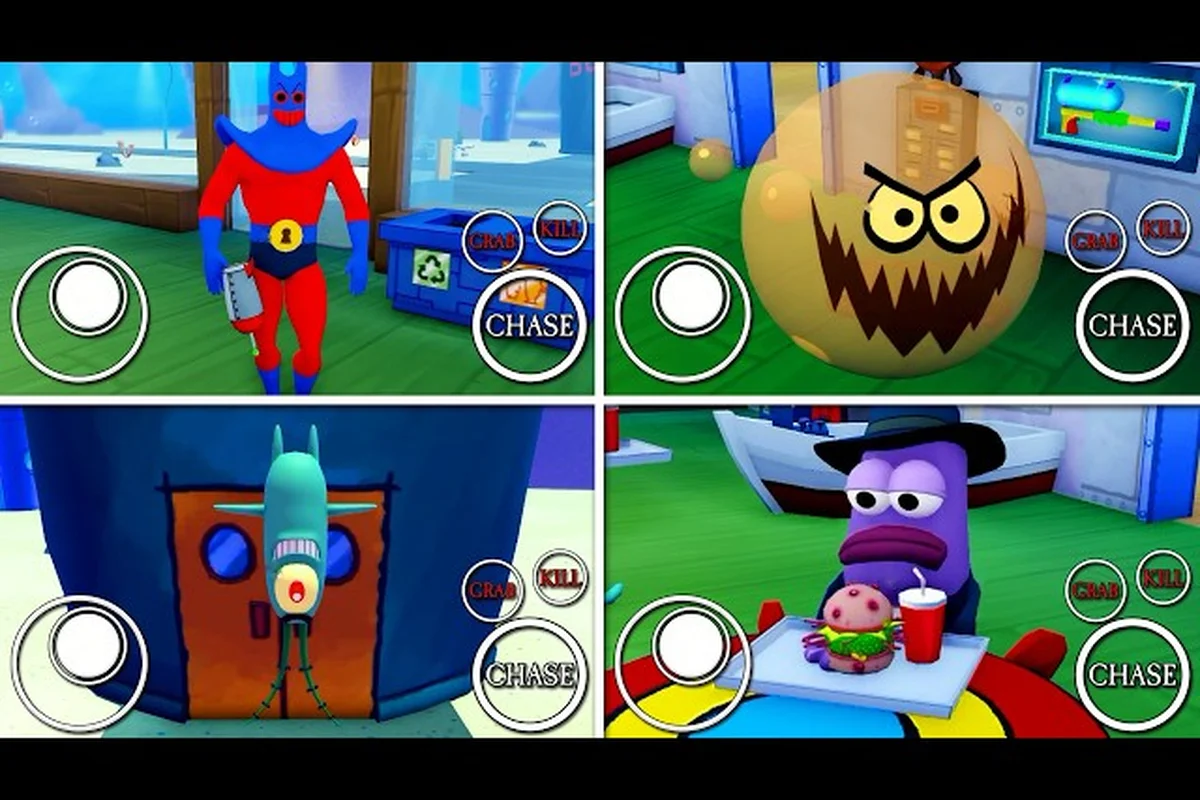
Save the Krusty Krab customer types shape each shift’s difficulty: ordinary customers place simple Krabby Patty orders, impatient customers demand faster service, and bulky customers require extra handling time. Special visitors such as Plankton introduce harder objectives, from obstructing the register to using the Plankton formula, stealing valuables, and interrupting the kitchen. Recognizing these differences helps you prioritize orders, protect your tips, and respond quickly when a Dirty Bubble or other disruptive customer derails service.
Community gameplay such as Zaku's villain-focused video shows how differently each interruption can play out during a shift, which is why the patterns below focus on observable behavior rather than fixed scripts.
Customer types and normal-service patterns
The standard customer queue is the foundation of every successful shift in Save the Krusty Krab. Understanding the difference between a simple order, a rushed order, and a table request lets you prioritize work before the kitchen becomes crowded. The most useful distinction is not a customer’s name alone, but the number of stations each order requires and how much attention the customer expects.
Community field notes for the game emphasize two recurring patterns: Anchovy rushes create many orders in a short window, while the health inspector triggers a specific meal and a scripted nasty-patty sequence. These reports are useful because they describe observable behavior rather than an unverified timer or formula.
| Customer pattern | Main challenge | Practical response |
|---|---|---|
| Anchovy rush | Several orders arrive close together | Pre-cook patties and pre-pour drinks |
| Single-burger order | Low complexity, but patience still matters | Serve directly and clear the table |
| Multi-item order | More stations and handoffs are required | Build the order in a fixed sequence |
| Special request | A nonstandard item changes the normal flow | Read the request before starting |
| Scripted interruption | A special customer changes the required action | Finish the current step, then adapt |
The best preparation is not memorizing a rigid route for every customer. It is recognizing the order pattern from the moment a customer appears. If a customer needs a burger, drink, and table service, complete the food and drink before moving to the table; that keeps the same order moving through the kitchen instead of restarting it after every interruption.
Recognizing the queue pressure
An order rush becomes difficult when the player treats each ticket as an isolated task. A better approach is to group compatible work. When several customers want burgers, prepare the patties in sequence, then transfer the completed burgers to the assembly station. When drinks are already waiting, pour them while a patty cooks if your kitchen layout permits that overlap. This approach reduces station switching, which community reports identify as the main source of delay during an Anchovy rush.
The customer flow guide explains how the register, grill, assembly, and table stations can be used in a more deliberate order. That station-rotation information pairs well with customer recognition: once you know what the next customer will require, you can plan a short path through the kitchen instead of wandering between stations.
Prioritizing by station and urgency
Use a simple three-part priority system during a rush. First, finish any order that is already partly prepared, because restarting it may waste the work done. Second, begin the most time-sensitive request, such as a drink that can be poured quickly while the grill is occupied. Third, complete the remaining orders in a consistent order so you do not forget an item between stations.
| Priority | Situation | Reason to act |
|---|---|---|
| 1 | Partly completed order | Existing progress is protected |
| 2 | Drink-only request | Quick completion can clear a customer |
| 3 | Standard burger order | Predictable assembly sequence |
| 4 | Special request | Requires attention and a different action |
| 5 | Table cleanup | Usually can wait until the kitchen is clear |
This priority system is a practical method rather than an official score formula: it protects progress, keeps the kitchen moving, and reserves focused attention for Save the Krusty Krab special customers. For example, a partly completed standard burger order remains ahead of a Plankton formula request, while a drink-only order can clear a customer quickly; by contrast, Dirty Bubble’s special customers warrant a deliberate handoff because their actions can disrupt the shift.
Special customers and their interruptions
Special customers are the biggest source of confusion because they often do not follow the normal order path. They may demand an unusual meal, enter with a separate objective, or require you to leave the grill and complete a specific interaction. Treating them like a standard ticket is the fastest way to lose time or fail the request.
The health inspector is one of the clearest examples. Community field notes describe a flow in which the inspector requests a specific meal, then triggers the nasty-patty sequence. The player must read the clipboard, take the patty to the dumpster, and serve the result. The important point is the sequence: the patty is not simply another burger to assemble, and the dumpster action is part of fulfilling the request.
| Special customer | Requested behavior | Common mistake | Better approach |
|---|---|---|---|
| Health inspector | Specific meal followed by nasty-patty handling | Serving the patty directly | Read the clipboard and follow the dumpster step |
| Plankton | Takes control or interferes with service | Continuing normal orders blindly | Interrupt the routine and use the required counter-action |
| Dirty Bubble | Creates a messy, hazardous situation | Cleaning at the wrong moment | Remove the hazard while protecting the active path |
| Anchovy | Accelerates a normal order rush | Starting every order separately | Batch compatible preparation |
These are special customers, not merely decorative cameos. Each one changes what “good service” means for that moment, so a clean-looking kitchen is not enough. The correct objective may involve stopping an intruder, handling a strange patty, or clearing a hazard before normal customers can be served.
Read the request before touching the grill
The health-inspector sequence is easiest when the clipboard is treated as the source of truth. Read it before cooking, identify the requested meal, and note the later nasty-patty step. Trying to remember the sequence while the kitchen is busy is unnecessary risk, because a missed dumpster interaction can turn a manageable interruption into a larger failure.
A reliable order for this customer follows a fixed interruption sequence, so check the request and confirm the intended meal before starting the grill. For example, if the ticket calls for a specific burger and a later nasty-patty pickup, treat that dumpster stop as part of the order rather than an optional side task. This matters for Save the Krusty Krab’s special customers because missing the Plankton-related step can derail the visit, interrupt normal service, and leave the required meal unserved.
-
Read the clipboard request.
-
Prepare the specified meal.
-
Complete the nasty-patty pickup at the dumpster.
-
Serve the required result.
-
Resume ordinary service only after the interruption is resolved.
The table-cleaning customer guide is also useful for understanding how a visit can affect the dining room, since tables and spill-related interruptions may compete for your attention. For example, a customer who keeps the table occupied can force you to prioritize wiping and clearing the dining area before returning to the grill, while a spilled order can redirect attention away from the specified burger or the nasty-patty pickup. Managing these interruptions prevents ordinary table service from delaying a Save the Krusty Krab special customer’s required meal, particularly when the visit includes a Plankton-related step.
Treating interruptions as separate objectives
When a special customer appears, avoid forcing every objective into one workflow. A Plankton event, a Dirty Bubble hazard, and a health-inspector request each need a clear response. Draw a mental line between the normal queue and the interruption, finish the safest active task, and then concentrate on the new objective.
This separation matters because a standard service tutorial cannot cover every special sequence. The special-customer pattern is more useful: identify the character, read the requested action, perform that action immediately, and return to the queue. That approach keeps the solution flexible even if a customer appears during a busy period.
Customer-type comparison and priority
Customer priority should reflect both service speed and disruption risk. Anchovy is difficult because of volume, while Plankton and Dirty Bubble are difficult because they can redirect or obstruct the whole shift. The health inspector sits between those cases: the order itself may be manageable, but the nasty-patty sequence adds a nonstandard step that must be completed correctly.
| Difficulty | Customer type | Primary pressure | Best preparation |
|---|---|---|---|
| Easy | Standard regular | One ordinary order | Keep the standard station path ready |
| Moderate | Multi-item customer | Several required items | Prepare components in a fixed order |
| High | Anchovy | Rapidly increasing queue | Hold a small buffer of prepared items |
| Very high | Health inspector | Request plus nasty-patty sequence | Read the clipboard first |
| Very high | Plankton | Loss of normal control | Follow the counter-action promptly |
| Very high | Dirty Bubble | Hazard blocks the service area | Clear the hazard without delaying the objective |
The ranking above is a practical service-priority guide based on community observations, not an official tier list. Exact patience windows, spawn schedules, energy values, and burn thresholds are not published in a consistent developer dataset, so they should not be treated as fixed numbers. The responsible approach is to use visible order behavior, such as queue length and repeated requests, rather than an imaginary formula.
Anchovy versus scripted interruptions
Anchovy creates a volume problem; the health inspector creates a process problem. With Anchovy, batching reduces wasted movement because several compatible orders are waiting. With the inspector, batching is less useful because the request must follow a specific sequence that includes a patty and the dumpster.
| Test | Anchovy rush | Health inspector request |
|---|---|---|
| What creates difficulty | Many simultaneous orders | Unusual required actions |
| Main optimization | Batch compatible work | Follow the scripted sequence |
| Best preparation | Patties and drinks ready | Clipboard read before cooking |
| Common error | Starting orders in scattered order | Forgetting the dumpster step |
| Recovery action | Return to a fixed assembly order | Re-read the request and resume the sequence |
This distinction is useful when a shift becomes hectic, because each special customer demands a different response. For example, an Anchovy rush can be handled by combining compatible orders into one batch, but the health inspector requires the clipboard to be read before cooking and the dumpster step to be completed afterward. Do not apply the Anchovy solution to every problem: a fast batch may clear a queue, yet it cannot replace the specific interaction required by a special customer, and skipping that sequence can cause the service to fail.
When to delay the regular queue
Delay normal service when the special customer creates a hazard, changes control of the restaurant, or requires an item that is unavailable in the normal assembly path. Continue regular service when the special request is simple and can be completed without leaving your current station. This judgment keeps you from overreacting while still recognizing that a scripted interruption is more important than another regular burger.
For progression context, the day guide can help you track which customer challenges appear as later shifts become more demanding. Do not assume that a customer seen on one day follows a published spawn schedule, because the available community data does not establish a reliable universal schedule.
Plankton guide and counter-actions
Plankton is a control disruption, not a normal order. The relevant objective is to stop him before he causes a broader service failure. This Save the Krusty Krab Plankton guide focuses on the practical counter-action rather than pretending that a published damage formula exists.
The available community data does not verify a universal Plankton formula, including exact damage, health, energy loss, or timing values. It is safer to describe the encounter as a prompt-response event: notice Plankton, identify the available counter-control, and activate it before the restaurant reaches a failed state. Players who have documented runs generally treat the control prompt as the key signal, not a hidden stat calculation.
| Plankton moment | What to check | Counter-priority |
|---|---|---|
| Plankton appears | The on-screen prompt or objective | Act immediately |
| Kitchen is occupied | Whether a task can be paused safely | Finish only if the interruption is harmless |
| Multiple customers wait | Whether the prompt is still active | Do not lose focus on the prompt |
| Counter action becomes available | Whether it is ready to use | Activate it |
| After the encounter | The queue and kitchen state | Resume from the safest unfinished task |
This approach also avoids a common misconception: there is no reliable evidence for a simple Plankton health percentage that would work across every version. Community reports can describe patterns, but they should not be promoted into exact values that were never verified.
A clean Plankton response routine
Use the same short routine every time so you do not panic during the interruption. First, locate the prompt associated with Plankton. Next, stop starting a new multi-step customer order. Then, activate the required counter-action, and only afterward resume the nearest unfinished task.
The wording above is intentionally control-focused because the encounter is best understood as an interruption-management problem. If the prompt is missing, recheck the screen and customer positions rather than continuing to cook blindly. This is more reliable than following a remembered number that may reflect an older game version.
How to stop Plankton without losing the queue
Stopping Plankton is not only about pressing the correct control. You also need to prevent ordinary service from creating a second problem. Do not begin a three-station order during the final moment of the encounter. Complete a short drink request if necessary, but otherwise keep your attention on the active prompt. Once Plankton is stopped, check whether the regular customer has moved forward before resuming the original task.
A useful recovery sequence is to treat Plankton as an interruption layered onto the active customer queue, not as a separate objective that resets the shift. If a customer has already reached the grill, for example, preserve that completed grill state while handling the Plankton prompt, then return to the customer at the next available station instead of starting a new three-part order. This protects the normal customer flow and reduces table congestion, especially when Dirty Bubble is occupying part of the floor.
-
Confirm that the Plankton objective has ended.
-
Locate the customer whose order was interrupted.
-
Rebuild that order from its last completed component.
-
Clear nearby tables if the customer can now be served.
-
Resume the established station rotation.
This recovery matters because restarting an entire order from scratch can create a visible backlog even when the player has technically stopped Plankton. The beginner guide can help with the basic station controls, while the Plankton section should focus on preserving that basic flow under pressure.
Dirty Bubble and health-inspector sequences
Dirty Bubble creates an environmental obstacle around the restaurant. Unlike Anchovy, the pressure is not merely more orders; it is a messy situation that can obstruct movement, tables, or the service route. The player’s goal is to deal with the bubble before it makes the active objective unreachable.
A dedicated Save the Krusty Krab Dirty Bubble guide should focus on hazard removal and route control. Based on player reports, the encounter rewards immediate attention because the mess is more disruptive when the kitchen is already busy. However, the available data does not establish a universal number of cleanup actions, an exact cleanup duration, or a fixed spawn frequency.
| Hazard stage | Visible task | Likely consequence of delay |
|---|---|---|
| Bubble appears | Identify its position and active cleanup prompt | More of the service area is obstructed |
| Cleanup starts | Follow the required interaction | Normal movement becomes difficult |
| Bubble cleared | Reopen the main service path | Queue can resume efficiently |
| Tables affected | Clear or serve the affected customer | A completed order may be blocked |
| Kitchen busy | Balance the hazard with an active order | Two objectives compete for attention |
The safest general rule is to finish the current safe action, then remove the bubble immediately. Starting a long order before clearing the hazard is risky because you may have to abandon it mid-assembly. The mop Dirty Bubble guide focuses on the dedicated cleanup interaction, which can be combined with the priority methods in this guide.
How to beat Dirty Bubble by protecting your route
The key is route protection. While the bubble is present, keep the path between the grill, assembly area, register, and tables as clear as possible. Avoid stacking disposable items in the affected area, and do not leave an important drink where the bubble may spread. Once the cleanup interaction is complete, return to the station that was interrupted rather than starting a different order.
| Priority | Dirty Bubble response | Practical result |
|---|---|---|
| 1 | Stop before starting a long order | Prevents wasted components |
| 2 | Complete a safe short action | Avoids freezing the kitchen |
| 3 | Use the required cleanup interaction | Removes the environmental obstacle |
| 4 | Clear the affected route | Restores efficient movement |
| 5 | Resume the interrupted order | Prevents an unnecessary restart |
This sequence is more reliable than trying to “outserve” the bubble. Dirty Bubble wins when the restaurant becomes too cluttered and slow, so make space, clear the hazard, and restore your working path. For example, if the bubble covers the route from the grill to the assembly area, prioritize clearing that connection instead of rushing another customer order; once the environmental obstacle is removed, you can move ingredients, plates, and drinks through the normal station flow and resume the interrupted task without restarting it.
The nasty-patty request from the health inspector
The health inspector is different because the request is not completed by ordinary burger assembly. The clipboard specifies the meal, and the nasty-patty sequence requires a trip to the dumpster before the result is served. This is why the inspector should be treated as a guided process rather than a queue target.
| Step | Health-inspector action | Failure-prevention point |
|---|---|---|
| 1 | Read the clipboard | Identify the exact requested meal |
| 2 | Prepare the specified food | Do not substitute a standard order |
| 3 | Obtain the patty at the dumpster | Do not serve it immediately |
| 4 | Complete the nasty-patty handling | Preserve the required sequence |
| 5 | Serve the requested result | Confirm the interruption is finished |
| 6 | Resume regular customers | Reassess the remaining queue |
Players should not search for an exact star-rating formula or energy bonus to complete the inspector event. Neither is required by the documented interaction, and presenting guessed percentages would give unreliable guidance. The observable steps are the clipboard request, the dumpster pickup, and the final service action.
Shift-planning tactics for every customer
A good shift plan is flexible because customer mixes change. Save the Krusty Krab customer types can appear in combinations that make a previously safe sequence inefficient. The best routine is therefore a small set of rules: identify the customer, classify the order, protect active interruptions, and return to a consistent station path.
Community observations support pre-cooking patties and pre-pouring drinks before an Anchovy rush. They also support treating the health inspector as a scripted sequence that should be read carefully. No consistent community dataset verifies exact patience timers, customer growth rates, burn thresholds, or villain schedules, so those values should remain unverified.
| Shift situation | Preparation | Primary action | Recovery rule |
|---|---|---|---|
| Several burger orders | Pre-cook patties | Assemble in a fixed sequence | Finish the order closest to completion |
| Drink-heavy queue | Pre-pour drinks | Clear simple orders quickly | Keep the grill active |
| Anchovy appears | Maintain a small buffer | Batch compatible items | Return to the standard route |
| Health inspector appears | Keep the clipboard visible | Follow the nasty-patty sequence | Resume the interrupted order |
| Plankton appears | Keep the prompt in view | Activate the counter-action | Rebuild any interrupted order |
| Dirty Bubble appears | Keep the route open | Clean the bubble promptly | Clear the affected path |
This table turns changing customer combinations into a repeatable shift plan rather than relying on a perfect solution for every rush. For example, pre-cook patties during a burger-heavy queue, then keep the grill active while clearing simple drink orders; when an Anchovy, Plankton, Dirty Bubble, or health inspector interrupts the route, finish the compatible batch first, preserve the active order, and rebuild the standard sequence afterward. The result is faster recovery because each customer type changes what the station should protect, while unverified patience timers and growth rates are not treated as fixed rules.
A six-step shift checklist
Before the first order appears, confirm that the grill and assembly area are ready. During the rush, use a buffer of prepared items instead of repeatedly starting from nothing. When a special customer arrives, stop and read the new objective. During a bubble event, protect the path. After any interruption, reconstruct the unfinished order. At the end of the wave, clear the affected tables and reset your station route.
Those six actions cover the most important transitions. They also make the difference between reacting randomly and using a consistent method. If you are still learning the normal route, review the Save the Krusty Krab beginner guide before the next busy shift, then return to this guide when a special customer appears.
Handling Two Emergencies at Once
When multiple problems overlap, classify them by reversibility. A partly completed regular order can usually be resumed. Plankton’s counter-action and the health inspector’s scripted request should take priority because missing an active objective is harder to recover from. Dirty Bubble cleanup becomes urgent when it blocks the route or an affected table. An Anchovy queue can wait briefly if you finish the current special interaction.
| Condition | Immediate focus |
|---|---|
| Active Plankton prompt | Stop the control disruption |
| Unfinished health-inspector sequence | Continue the scripted request |
| Bubble blocking movement | Clear the hazard |
| Partly assembled normal order | Finish it if safe |
| Waiting standard customers | Resume after the interruption |
This hierarchy prevents a common mistake: treating every visible problem as equally important. Save the Krusty Krab special customers are special because their objectives can block normal progress, not simply because they occupy more space in the queue. For example, an active Plankton prompt can interrupt customer flow and must be stopped before resuming a partly assembled order, while a waiting Anchovy customer can remain queued briefly. The health-inspector sequence and Dirty Bubble hazard are priority targets when they interrupt movement or trigger a required interaction, because failing to address them can leave normal service and the rest of the shift stalled.
Customer-type FAQ and final strategy
The best way to improve is to diagnose the active objective before taking action. If the issue is volume, batch compatible work. If it is a control disruption, use the active prompt. If it is a messy hazard, clear the route. If it is a scripted request, follow every required step in order.
Frequently Asked Questions
What are the hardest Save the Krusty Krab customer types?
Anchovy, Plankton, Dirty Bubble, and the health inspector create different forms of pressure. Anchovy increases order volume, Plankton interrupts control, Dirty Bubble obstructs the restaurant, and the inspector adds a specific nasty-patty sequence. A good shift plan treats each pressure type with the response it actually requires.
How should I handle an Anchovy order rush?
Pre-cook patties and pre-pour drinks before the wave whenever possible. Then build compatible orders in a consistent sequence instead of restarting each ticket from the beginning. Finish the order closest to completion when the queue grows, and reserve a short window for special customers rather than letting the rush completely control your attention.
What is the best way to stop Plankton?
Focus on the active counter-control prompt and stop beginning new multi-step orders. Once Plankton is stopped, identify any customer order that was interrupted and rebuild it from its last completed component. Community accounts support this response pattern, while exact Plankton damage or health percentages remain unverified.
How does the health inspector request work?
Read the clipboard, prepare the specified meal, retrieve the patty at the dumpster, complete the nasty-patty handling, and serve the requested result. The order cannot be completed correctly by treating the patty as a normal burger. The sequence itself is more dependable than any guessed formula for score, energy, or timing bonuses.
Should Dirty Bubble be handled before normal customers?
Usually, yes, when the bubble blocks movement, tables, or the route to an active station. Complete any harmless short action, use the required cleanup interaction, and then resume the interrupted order. If the bubble is not obstructing the current task, finish that safe action first rather than abandoning a partly prepared meal.